

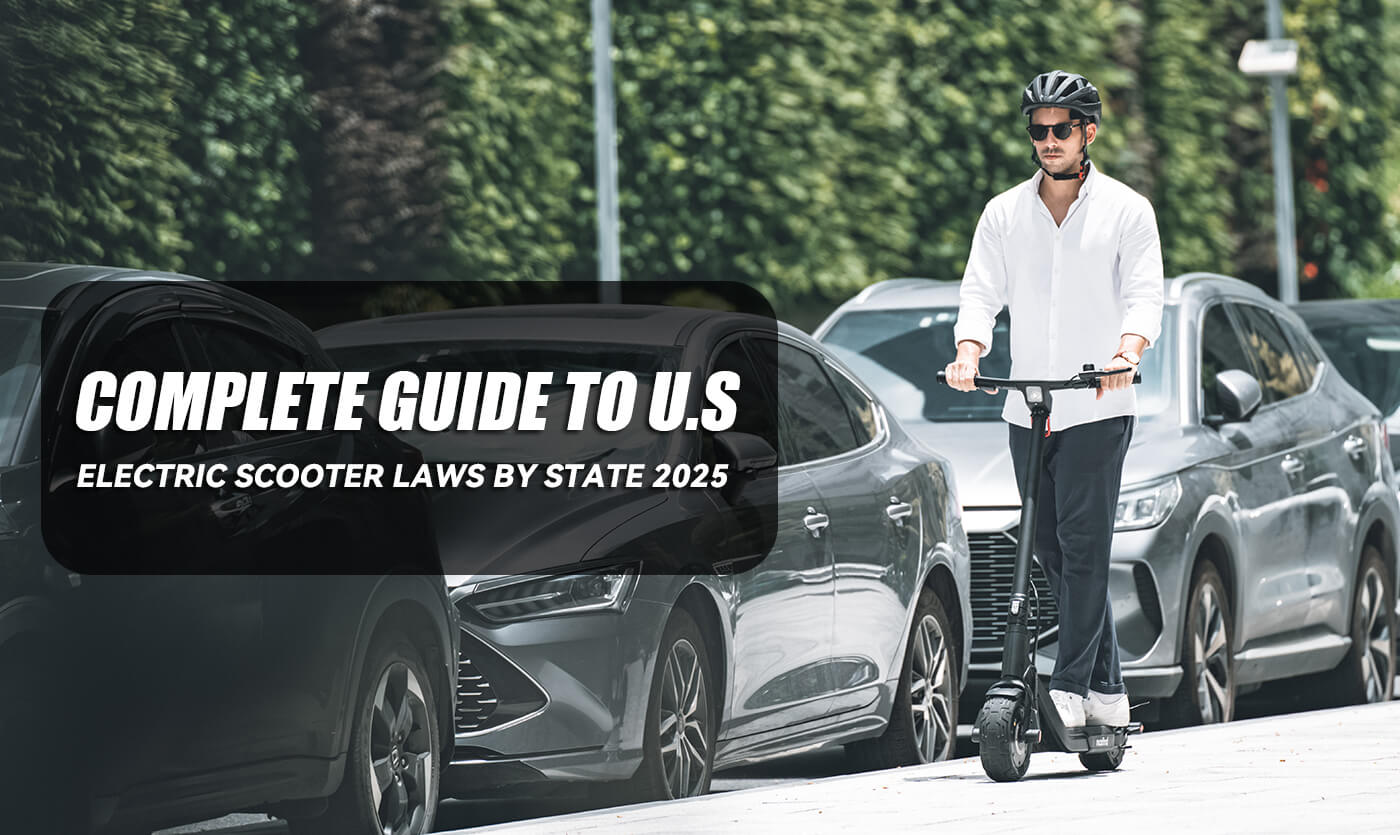
You can ride an e-scooter legally in 2025 if you keep it at or below 20 mph, wear a helmet where required, and meet your state’s age, sidewalk and licensing rules.
This guide unpacks the fresh federal safety cues, state-by-state speed caps, helmet laws, fines, local quirks

Quick-Start Rider Checklist 2025
Can-I-Ride Flowchart
Answer yes to all three questions below and you’re almost certainly legal to ride anywhere bicycles are permitted:
Road Speed ≤ 25 mph? Most states allow e-scooters only on roads posted 25 mph or below or cap your scooter’s own speed at 15 – 20 mph.
Helmet On If Required? About a dozen states mandate helmets for riders under 18; a few require helmets for everyone when a scooter can exceed 20 mph.
Old Enough & Licensed? The common minimum age is 16. A handful of states (CA, AR, MA, MO) also expect you to carry a basic driver’s license or permit.
One-Minute State Lookup Table
Bookmark the directory in the next section—or print a wallet card—that lists for your state: top speed, helmet rule, minimum age, and sidewalk / bike-lane permissions.
What’s New for 2025
Federal safety guidance now recommends lights, dual brakes, and VIN-style serial numbers—and many states are adopting it.
More legislatures spell out when cities may set stricter speed caps or sidewalk rules, reducing the gray areas.
New York and Texas have rolled out low-cost liability-insurance pilots (about $25 – $40 per year) for personal scooters up to 20 mph.

Understanding U.S. Electric Scooter Laws
Legal Definitions — Scooter vs. Moped vs. PMD
A motorized kick-scooter usually means a standing deck, handlebar steering, an electric motor ≤ 750 W, and a top speed under 20 mph. Cross either limit and your ride may be re-classified as a moped or motorcycle with plate, insurance, and helmet requirements.
Why Rules Vary Across States and Cities
Manufacturing standards are set nationally, but operating rules are left to each state. States then let cities tighten or loosen details—so Denver, Austin, and Seattle feel very different from Philadelphia or Manhattan.
Shared-Fleet vs. Private-Owner Regulations
Dockless fleets sign permits that cap fleet size, parking zones, or per-ride speed. Private owners follow only the traffic code, so your own scooter may go places rentals can’t—or vice-versa—depending on local permits.

Understanding U.S. Electric Scooter Laws
Legal Definitions — Scooter vs. Moped vs. PMD
A motorized kick-scooter usually means a standing deck, handlebar steering, an electric motor ≤ 750 W, and a top speed under 20 mph. Cross either limit and your ride may be re-classified as a moped or motorcycle with plate, insurance, and helmet requirements.
Why Rules Vary Across States and Cities
Manufacturing standards are set nationally, but operating rules are left to each state. States then let cities tighten or loosen details—so Denver, Austin, and Seattle feel very different from Philadelphia or Manhattan.
Shared-Fleet vs. Private-Owner Regulations
Dockless fleets sign permits that cap fleet size, parking zones, or per-ride speed. Private owners follow only the traffic code, so your own scooter may go places rentals can’t—or vice-versa—depending on local permits.
Core Legal Requirements by State
Speed Limits and Motor-Power Caps
-
20 mph is the sweet spot nationwide; exceed it and 16 states bump your vehicle into moped territory.
-
Many states add a 750 W motor cap; anything more powerful must be registered.
Helmet and Safety-Gear Mandates
-
No state has a universal adult helmet law yet.
-
Twelve states plus D.C. require helmets for riders under 18 (or 16 / 17 in a few cases).
-
Reflectors and a bell after dusk are compulsory in Massachusetts, Oregon, and Washington.
Minimum Age, License, and Permit Rules
-
A driver’s license or permit is required only in CA, AR, MA, MO.
-
Idaho and New Hampshire leave minimum age entirely to local ordinances.
Where You Can Ride — Roads, Bike Lanes, Sidewalks
-
State-wide sidewalk bans exist in 17 states (Florida and Texas among them).
-
Bike-lane riding mirrors bicycle rules unless posted otherwise.
-
Roads signed over 35 mph are off-limits almost everywhere.
Registration, Insurance, and Equipment Standards
-
Registration is triggered only in Hawai‘i, Alabama, and Tennessee when a scooter can exceed 20 mph.
-
Personal-scooter liability insurance is optional everywhere, but two states now offer inexpensive pilot policies.

State-By-State Law Directory 2025
Western Region (AK | AZ | CA | CO | HI | ID | MT | NV | NM | OR | UT | WA | WY)
|
State |
Max Speed (mph) |
Helmet Rule |
Sidewalk Riding |
Min Age / License |
Registration |
|
Alaska |
— |
<18 Required |
Local |
14+ / Class M2 |
No |
|
Arizona |
20 |
Local (city-by-city) |
Some cities allow |
18+ |
No |
|
California |
15 |
<18 Required |
No |
16+ / Driver License |
No |
|
Colorado |
30 road / 6 sidewalk |
<18 Required |
Yes ≤ 6 mph |
16+ |
No |
|
Hawai‘i |
15 |
<16 Required |
No |
15+ |
One-time fee |
|
Idaho |
Local |
Local |
Local |
— |
No |
|
Montana |
Local |
— |
Local |
— |
No |
|
Nevada |
20 |
None |
Local |
— |
No |
|
New Mexico |
20 |
None |
Local |
— |
No |
|
Oregon |
20 |
<16 Required |
No |
16+ |
No |
|
Utah |
20 |
<18 Recommended |
Yes |
— |
No |
|
Washington |
20 |
Local |
No (Seattle) |
— |
No |
|
Wyoming |
20 |
None |
Local |
— |
No |
Midwestern Region (IA | IL | IN | KS | MI | MN | MO | NE | ND | OH | SD | WI)
|
State |
Max Speed (mph) |
Helmet Rule |
Sidewalk Riding |
Min Age / License |
Registration |
|
Illinois |
20 |
None |
No (Chicago) |
— |
Yes (if classed as motorcycle) |
|
Indiana |
20 |
None |
Local |
— |
No |
|
Iowa |
20 |
None |
Local |
— |
No |
|
Kansas |
20 |
None |
Local |
— |
No |
|
Michigan |
20 |
<19 Required |
Allowed |
— |
No |
|
Minnesota |
15 |
<18 Required |
No |
12+ |
No |
|
Missouri |
15 |
None |
Local |
Driver License |
No |
|
Nebraska |
20 |
None |
Local |
— |
No |
|
North Dakota |
20 |
None |
No |
— |
No |
|
Ohio |
20 |
None |
Local |
16+ |
No |
|
South Dakota |
— |
— |
Local |
— |
No |
|
Wisconsin |
20 |
None |
No (Milwaukee) |
— |
No |
Southern Region (AL | AR | DE | FL | GA | KY | LA | MD | MS | NC | OK | SC | TN | TX | VA | WV)
|
State |
Max Speed (mph) |
Helmet Rule |
Sidewalk Riding |
Min Age / License |
Registration |
|
Alabama |
20 |
<16 Required |
Local |
Class M/B license |
No |
|
Arkansas |
15 |
None |
Local |
16+ |
No |
|
Delaware |
— |
— |
No (Ban) |
— |
— |
|
Florida |
15 (on sidewalk) |
None |
Yes ≤ 15 mph |
16+ |
No |
|
Georgia |
20 |
<16 Required |
No |
— |
No |
|
Kentucky |
20 |
None |
Local |
— |
— |
|
Louisiana |
20 |
<17 Required |
Local allow |
— |
No |
|
Maryland |
20 |
<16 Required |
No |
— |
No |
|
Mississippi |
20 |
None |
Local |
— |
No |
|
North Carolina |
20 |
<16 Required |
No |
— |
No |
|
Oklahoma |
25 |
<18 Required |
No |
— |
No |
|
South Carolina |
— |
None |
Local |
— |
No |
|
Tennessee |
20 |
<18 Required |
Local |
Registration if > 20 mph |
Yes (if fast) |
|
Texas |
35 mph road cap |
Optional > 18 |
Local |
— |
No |
|
Virginia |
20 |
Local |
Local |
— |
No |
|
West Virginia |
20 |
<15 Required |
Local |
— |
No |
Northeastern Region (CT | MA | ME | NH | NJ | NY | PA | RI | VT)
|
State |
Max Speed (mph) |
Helmet Rule |
Sidewalk Riding |
Min Age / License |
Registration |
|
Connecticut |
20 |
<16 Required |
No |
15+ |
No |
|
Maine |
20 |
<16 Required |
Local |
— |
No |
|
Massachusetts |
20 |
Helmet (all ages) |
No |
Driver License |
No |
|
New Hampshire |
Local |
None |
Local |
— |
— |
|
New Jersey |
20 |
<17 Required |
Allowed |
— |
No |
|
New York |
20 (NYC 15) |
<18 Required |
No (NYC) |
16+ |
No |
|
Pennsylvania |
Proposed |
— |
Illegal (ban) |
— |
— |
|
Rhode Island |
20 |
<15 Required |
Local |
— |
No |
|
Vermont |
20 |
<16 Required |
Allowed |
— |
No |
Staying Safe and Avoiding Penalties
Common Violations and Typical Fines
-
Exceeding the speed cap: $50 – $150 (Ohio, California).
-
Riding on a banned sidewalk: $75 (Florida, Texas).
-
Ignoring a mandatory helmet rule: $25 – $100 depending on state and rider age.
Real-World Enforcement Stories (2024-2025)
Seattle police impounded 43 modified scooters topping 30 mph last year. During a single festival week, Austin issued more than 1 000 sidewalk-riding citations—proof that “gray areas” can get pricey fast.
Insurance and Liability Tips
Even where coverage isn’t compulsory, a personal-scooter liability rider typically costs under $30 a year and can save thousands after an accident. Homeowners or renters policies often offer an add-on—ask your insurer.
Updates, Resources, and FAQs
Email and SMS Law-Change Alerts
Many state Departments of Transportation now offer opt-in alerts; several scooter blogs run free “Rule Refresh” newsletters.
Downloadable State Cheat-Sheets (PDF)
Print a one-page summary for your glove box or backpack—handy in areas with patchy cell coverage.
Frequently Asked Questions
-
Do I need a license? Only in four states; check your row in the directory.
-
Can kids ride? Eleven states ban riders under 16 on public roads.
How fast can I go? Twenty mph is the hard ceiling in most jurisdictions unless posted lower.

Considering A Commuter Scooter? Meet The Maxfind Glider G5 Pro
Why It Stands Out
-
Street-legal performance – Dual 750 W hub motors (1,500 W combined) whisk you to 25 mph yet stay under the 20 mph governor found in many states, so you can drop to the local limit with a tap of the ride-mode button.
-
Real-world range for the daily grind – The Samsung 48 V battery delivers 19–36 miles per charge, plenty for most round-trip commutes; a fast-swap pack doubles that without waiting at an outlet.
-
Three-hour quick charge – Top up over lunch and be ready for the ride home.
-
All-terrain comfort – Big 10-inch pneumatic tires and triple-brake setup (electronic + disc + fender), smooth cracked asphalt, loose sand, or light snow while giving confident stopping power.
-
Hill-climb hero – Tackles 35 % grades, so parking-garage ramps and viaducts won’t slow you down.
-
Portability first – One-step fold shrinks it for subway runs or car trunks in seconds; the thumb-throttle layout means zero learning curve.
-
Peace-of-mind warranty & local shipping – Up to nine months of coverage and fulfillment from U.S. warehouses keep downtime to a minimum.
At-a-Glance Specs
|
Spec |
Glider G5 Pro |
|
Top Speed |
25 mph (40 km/h) |
|
Range |
19–36 mi (30–50 km) |
|
Motor Power |
750 W × 2 hub motors |
|
Battery |
Samsung 48 V, 8.7 Ah (fast charge ≈ 3 h) |
|
Tires |
10-inch pneumatic |
|
Hill Climb |
35 % |
|
Brakes |
Electronic + mechanical disc + fender |
|
Weight |
≈ 44 lb (20 kg) |
|
Fold Time |
< 5 seconds |
Bottom line: If your local regulations allow electric scooters on the road and you’re shopping for a reliable daily commuter, the Maxfind Glider G5 Pro pairs state-friendly speed with long range, quick charging, and go-anywhere ride quality—making it a smart, future-proof upgrade for your weekday travel.
Final Word
Rules shift fast. Check your city ordinance before every new route, ride predictably, and keep your lights on after dark. Staying informed is the easiest way to keep every trip smooth, safe, and ticket-free.

Share:
3 Best Electric Skateboards for Commuting in 2025 Reviewed
What Are The Do's And Don'ts With An Electric Skateboard?