

Autumn Miles. Limited-Time Deals 🏷️
--
Days--
Hours--
Mins--
SecsAn electric skateboard conversion kit with a battery is usually the easier option for a first build because it reduces the work involved in matching the main electrical components. However, an included battery does not guarantee that every required part is in the box or that the system will fit your deck, so you still need to check the package contents, specifications, and final cost.

A kit with a battery is generally worth considering when you do not already own compatible electrical parts. Buying the main system together can simplify component selection and make the total cost easier to estimate.
The tradeoff is flexibility. The included battery may limit your choice of capacity, enclosure shape, weight, or future upgrades. Its value depends on whether you prioritize a simpler build or greater control over the finished board.
The phrase “with battery” does not mean the package contains everything required to finish the conversion. Some kits provide most of the electrical system, while others leave the deck, enclosure, mounting parts, or tools to the buyer.
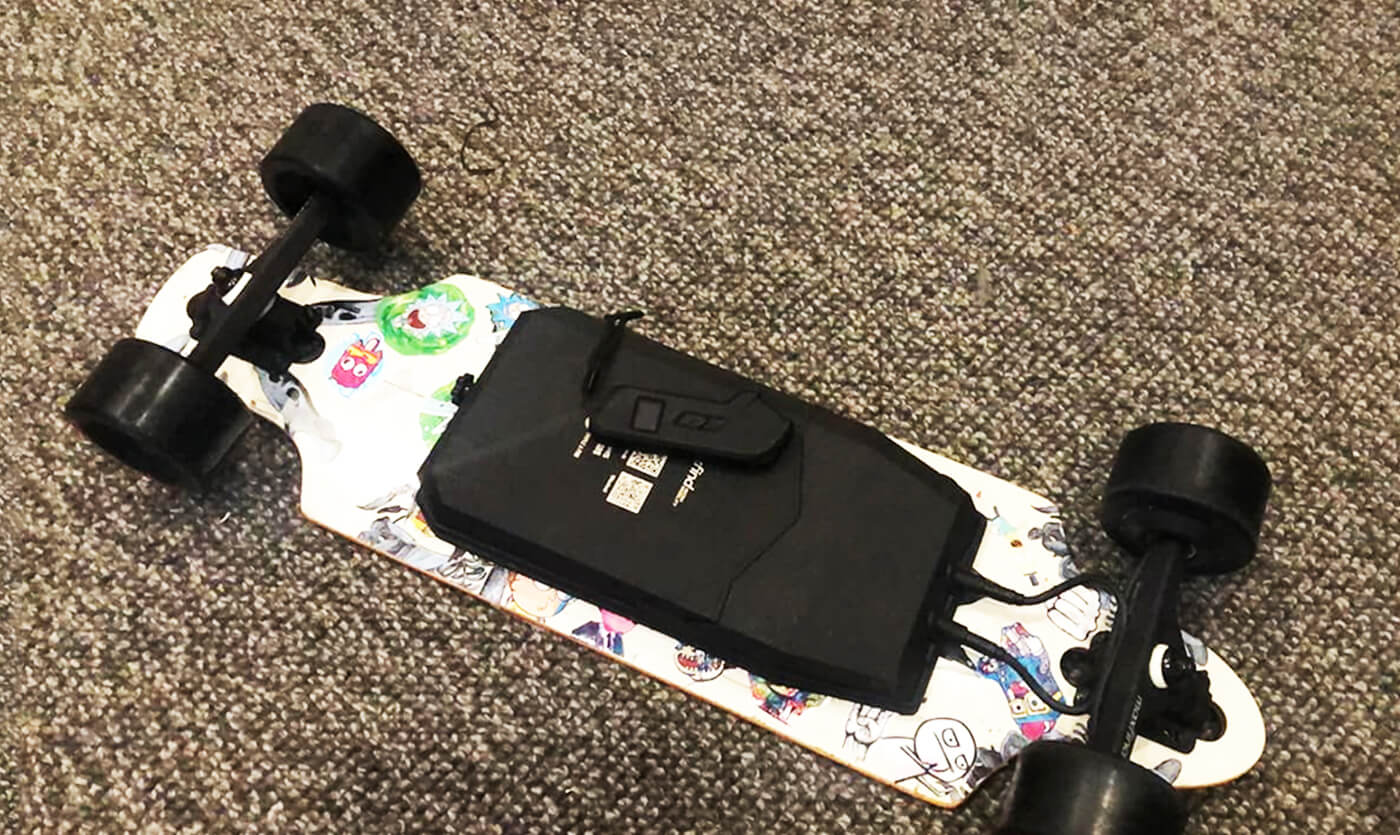
A reasonably complete electric skateboard conversion kit with a battery may include:
A battery pack and compatible charger
One or two motors
An electronic speed controller
A handheld remote
Trucks or motor mounts
Wheels, belts, pulleys, or hub sleeves
Power cables and basic mounting hardware
The battery, ESC, charger, and motor system are the most important components to verify. They should be intended for the same voltage range and operating requirements.
You may still need a suitable deck, battery enclosure, grip tape, risers, fasteners, cable protection, threadlocker, or battery padding. Some installations also require drilling or additional mounting hardware.
Read the complete packing list before comparing prices. A lower-priced kit may cost more after the missing enclosure, tools, and installation supplies are added.
Even when the battery is included, the kit still needs to match your deck, intended riding conditions, and future replacement needs. Review the electrical system first, then check installation space and support.

The battery must remain within the voltage range supported by the ESC. Check the battery series configuration, nominal voltage, full-charge voltage, and the controller’s maximum supported input voltage.
For example, a common 10S lithium-ion battery may be marketed as a 36V pack but reach about 42V when fully charged. The ESC must support the full-charge voltage, not only the advertised nominal voltage.
Battery capacity affects stored energy and potential range, while discharge capability affects how well the battery supports acceleration, hills, and heavier loads. Watt-hours are generally more useful than amp-hours when comparing batteries that use different voltages.
Actual range varies with rider weight, speed, terrain, temperature, wheels, and riding style. The complete battery pack and its BMS must also provide enough continuous current for the motor system, particularly in a dual-motor build.
Use the charger supplied with the battery or one that the manufacturer specifically confirms is compatible. It must match the battery’s charging voltage, supported charging current, connector, and polarity.
The main power connector between the battery and ESC must also be correctly wired and rated for the system. Do not assume that two parts are compatible simply because their plugs have the same shape.
Measure the available space beneath the deck before ordering. Compare the battery and enclosure dimensions with the deck length, width, ground clearance, truck position, and space needed for wiring.
Flexible decks require extra care because a long, rigid enclosure can restrict movement or place stress on the battery and cables. Also consider the added weight, since a larger pack may improve range while making the board harder to carry.
Check whether replacement batteries, chargers, remotes, and ESCs are available for the kit. A proprietary battery may create a clean installation but leave fewer replacement options when the original pack wears out.
Review the warranty terms for both the kit and the battery. The supplier should also be able to identify the correct replacement components without asking the buyer to guess from voltage alone.
The best route depends on your experience, existing parts, and desired level of customization. Compare the complete build cost rather than focusing only on the advertised kit price.

A kit with a battery usually makes more sense for a first-time builder who does not already own compatible parts. It reduces the number of separate decisions involving voltage, charging, connectors, and battery sizing.
For riders who prefer this route, the Maxfind CYBER Electric Skateboard Conversion Kit brings the main conversion components together in one setup. It can reduce the work of sourcing the battery, motor system, controls, and charging equipment separately, while still offering different motor and range options. Check the selected configuration, deck fit, and package contents before ordering.
Buying the battery separately gives you greater control over capacity, weight, enclosure shape, and upgrade potential. This route may suit builders who already have a confirmed compatible battery or need a specific range target.
However, you must verify the ESC voltage limit, battery discharge capability, BMS, charger, connectors, polarity, and installation space yourself. A mismatch can lead to extra costs, poor performance, or damaged components.
A complete electric skateboard may be more practical when the project requires extensive drilling, soldering, custom enclosure work, or controller configuration. A finished board already combines the deck, electrical system, controls, enclosure, and charger.
Compare its price with the full conversion cost, including tools, shipping, hardware, and replacement parts. DIY conversion offers more control, but it is not always the cheaper or simpler option.
Buy a conversion kit with a battery when the electrical components are clearly intended to work together, the package includes the parts your deck needs, and replacement support is available. Choose the battery separately only when you can verify the electrical and physical specifications yourself, and consider a complete board when the cost or technical work of the conversion outweighs the benefits of customization.
Installation time depends on the kit, deck, and builder’s experience. A mostly preassembled kit may take a few hours, while a build that requires drilling, wiring changes, enclosure fitting, or ESC setup can take considerably longer.
Some kits may arrive with a configured ESC and paired remote, while others require setup before riding. Depending on the system, settings may include wheel size, gear ratio, acceleration, braking, and current limits.
That depends on how the kit was installed. Drilled holes, attached enclosures, replaced trucks, and routed wiring can make it difficult to return the deck to its original setup.
Do not assume a kit is suitable for wet conditions unless the manufacturer provides clear protection information for the battery enclosure, ESC, motors, connectors, and charging port. Avoid charging the system when it is wet.
More reading: How to Choose the Best DIY Electric Skateboard Kit


Share:
How to Ride an Electric Skateboard Safely at Night
How to Assess Commute Safety and Reliability for Electric Skateboards