

Autumn Miles. Limited-Time Deals 🏷️
--
Days--
Hours--
Mins--
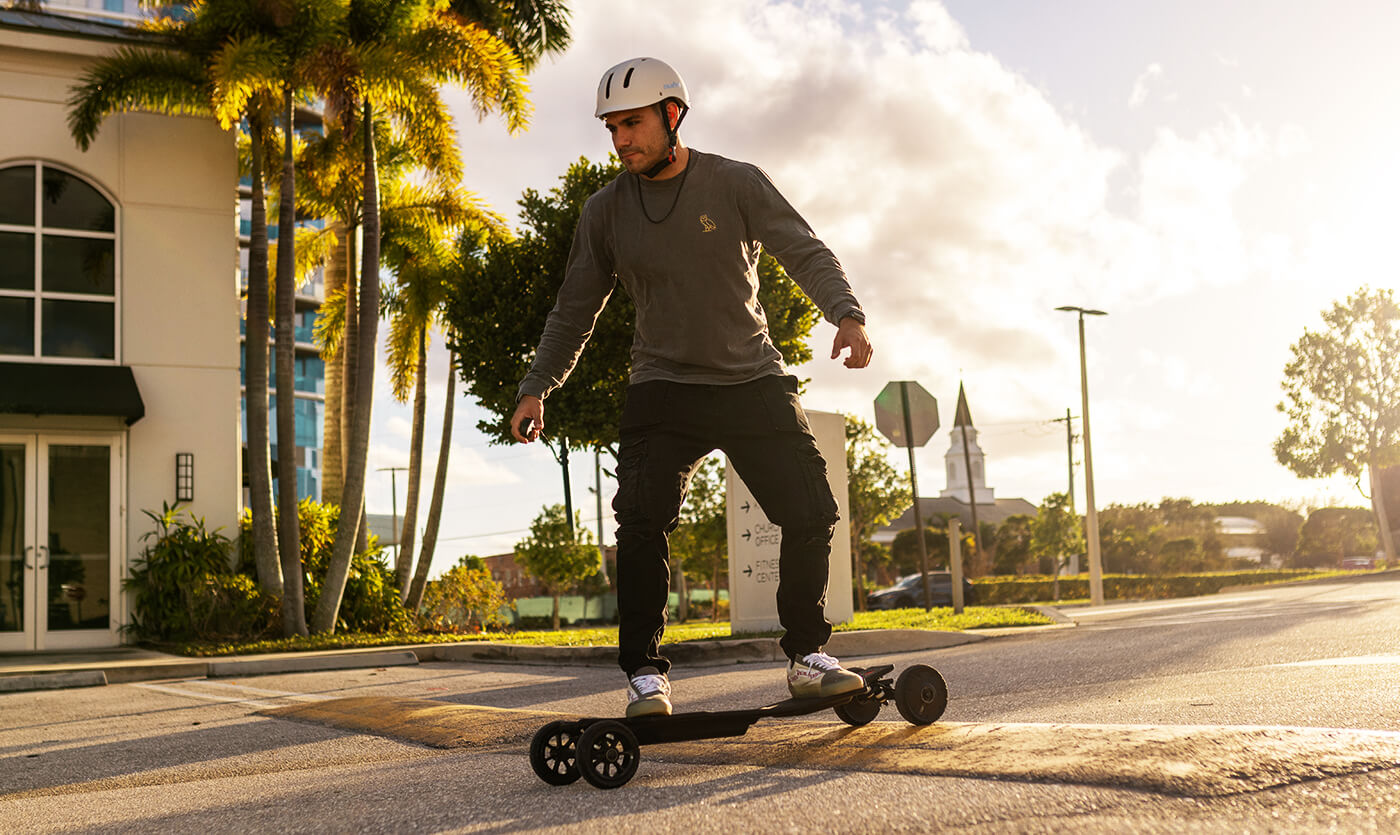
SecsNavigating the concrete jungle on an electric skateboard offers freedom and speed. However, the urban environment presents unique challenges that require specific skills and careful preparation. This guide covers everything you need to master city streets safely while transforming your daily commute into a highlight of your day.

Always put on your protective gear before every ride. A certified helmet, wrist guards, and knee pads are the essential protective gear to minimize injury risk on city streets. Attach lights to your helmet or the underside of your deck so that drivers can spot you in low-light conditions or through the deep shadows cast between tall city buildings. Reflective strips on your clothing or bag add an extra layer of protection at no cost.
Run through these checks before every ride:
Wheels:give each one a firm tug to confirm nothing has come loose from vibration
Battery and trucks:visually inspect the battery casing and truck hardware for any loose screws or cracks
Throttle and brakes:test the response of your controller to ensure full, predictable control from the moment you push off

Maintain a flexible posture with your knees slightly bent to act as natural shock absorbers. This allows you to shift your center of gravity instantly when you need to swerve around a sudden obstacle or a pedestrian stepping off the curb.
Understanding your board's speed range is the first step to riding safely in traffic. In city conditions, keep your cruising speed between 15–20 km/h (9–12 mph) on open roads and drop to 8–10 km/h (5–6 mph) near intersections, crosswalks, and busy pedestrian areas.
Practice applying gradual pressure to the electric skateboard remote brake trigger to avoid skidding or being thrown forward by sudden deceleration in heavy traffic. Always begin braking earlier than you think is necessary — city surfaces amplify stopping distances.
Electronic systems can occasionally face interference or battery depletion, leaving your remote unresponsive without warning. When this happens, drag the sole of your rear foot along the pavement to bring the board to a controlled stop, then move to a safe area before troubleshooting any connection issues. This skill should be practiced regularly — not just relied upon in emergencies.
Operating an electric skateboard in a busy environment requires a proactive approach to safety and positioning.
|
Strategy |
Implementation |
Benefit |
|
Lane Positioning |
Occupy the center of the bike lane or the right side of the road |
Prevents cars from squeezing past you in narrow spaces |
|
Active Communication |
Use clear hand signals and make eye contact with drivers |
Removes the element of surprise for other road users |
|
Defensive Awareness |
Stay at least one car door width away from parked vehicles |
Eliminates the risk of being hit by a driver exiting their car |
Beyond what the table covers, two situations deserve extra attention. At intersections, a simple nod or hand gesture confirms a driver has seen you before you proceed through a turn — never assume. When waiting at a red light, position yourself at the front of the bike lane, keep one foot lightly on the ground for stability, and accelerate smoothly when the light changes rather than surging at full throttle.
For route planning, a slightly longer path with better road quality is often faster than a direct route filled with cracks and stop lights. Hold a consistent line rather than weaving between cars so motorists can anticipate your movements and give you the space you need.
When you encounter vertical gaps like trolley tracks, cross them at a 45-degree angle to prevent an abrupt stop. Riders who frequently deal with uneven urban surfaces may also want to consider upgrading to electric skateboard wheels with larger cloud wheels, which roll over gaps and cracks with significantly less disruption.
Manhole covers and painted road lines become incredibly slick when damp. Keep your board straight and avoid sharp turns or sudden braking until you reach dry ground again.
After dark, reduce your speed by at least 20% compared to your daytime pace and rely on a front deck light plus a helmet-mounted headlight to identify hazards early. Avoid poorly lit streets where potholes and debris are difficult to spot in time.
If you must use a sidewalk, slow to no faster than a brisk walking pace and always yield to pedestrians. This habit helps maintain a positive reputation for the skating community in urban spaces.

Using a carry handle or a small grab — holding the board by the truck axle with the deck facing outward — makes it easy to bring your board into a coffee shop or office without obstructing narrow hallways or doorways.
Maintain a steady cruising speed and use regenerative braking on downhill sections to extend range and reduce wear. For daily commuters, make sure your electric skateboard batteries and chargers are in good condition, charge after every ride, and avoid letting the battery drop below 20% to preserve cell lifespan.
A few minutes after each ride goes a long way:
Wipe down the board:use a damp cloth to remove city grime, road salt, and debris from the deck and components
Check the wheels:spin each one to confirm the bearings are running smoothly and there is no unusual resistance
Inspect the trucks: tighten any screws that may have worked loose during the ride
Mastering urban riding turns the city into an efficient and enjoyable part of your daily routine. By combining the right gear with defensive habits, smart route planning, and solid technical skills, you can enjoy a fast commute while keeping yourself and those around you safe on the road. If you are still looking for the right electric skateboard for your commute, browse Maxfind's full lineup to find a model that fits your route and riding style.
In most cities, electric boards are treated similarly to bicycles and are encouraged to use dedicated bike lanes whenever available. Always check your local regulations, as rules vary by city and state.
Use regenerative braking to maintain a controlled speed, keep your weight centered over the board, and resist the urge to shift your weight backward as this can cause instability on steep gradients.
Sidewalk riding should be a last resort. If the road feels unsafe, it is often better to dismount and walk your board until you find a calmer street or a designated path.
Charge your battery after every significant ride and avoid regularly depleting it below 20%, as deep discharge cycles over time reduce the overall capacity and lifespan of the cells.
More reading: Best Electric Longboard for a Smooth Ride

Share:
Electric Skateboard Deck Technology: Inside MAXFIND's Xcomposite™ Composite Deck
All-Terrain Electric Skateboard Use Review: CYBER ULTRA for Rough Roads and Hills