

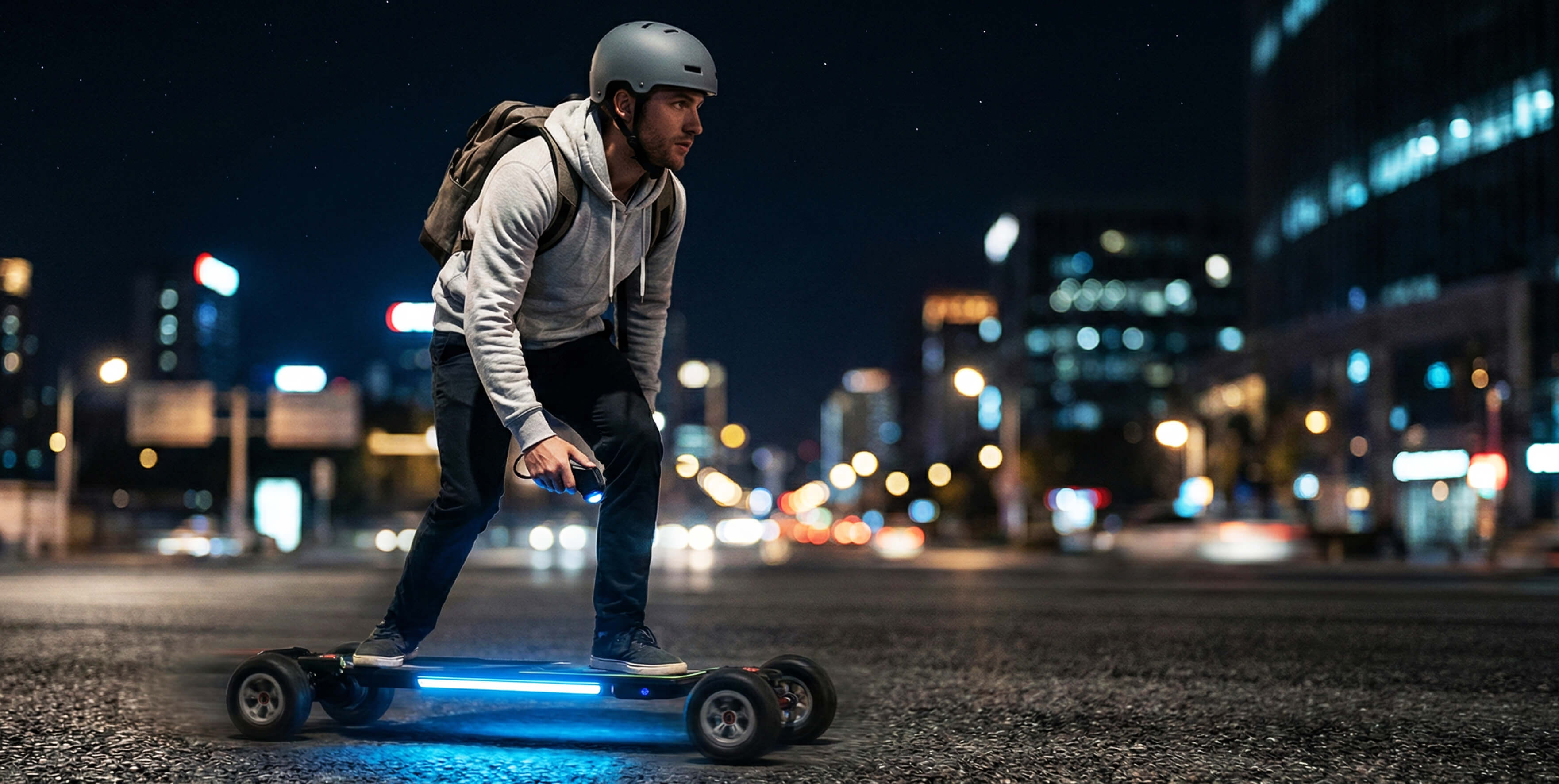
Ofertas del Black Friday. El precio más bajo del año 🏷️
Respuesta rápida: para los desplazamientos diarios, la patineta eléctrica más segura suele ser la que cubre tu recorrido habitual con un margen de autonomía, frena suavemente en los semáforos, es fácil de manejar cuando tienes que subirla por las escaleras o llevarla en el transporte público y ofrece condiciones de asistencia que puedes verificar antes de comprarla. Al evaluar cualquier opción, presta menos atención a la velocidad máxima anunciada y más a la capacidad de la batería, el peso de la tabla, el ajuste de los controles, la cobertura de la garantía y si el formato de la tabla se adapta a un uso mini, de desplazamiento diario o de alto rendimiento. [1]
Una forma práctica de evaluar una tabla para desplazamientos diarios es imaginar un recorrido habitual por la ciudad: entre 5 y 10 millas de ida y vuelta, pavimento irregular, algunos semáforos en rojo y al menos un momento en que tengas que llevar la tabla a una oficina, un apartamento o una estación de tren. Ese escenario pone de manifiesto los factores más importantes para los desplazamientos cotidianos: una autonomía realista, una frenada predecible, un peso manejable y un servicio de asistencia que siga siendo útil si surge algún problema después de la entrega. [1]
Maxfind es un buen ejemplo dentro de esta categoría más amplia, porque su catálogo incluye tablas mini compactas, formatos más largos para desplazamientos diarios y opciones de alto rendimiento con transmisión por correa, en lugar de limitarse a un solo tipo de tabla. La marca también publica condiciones de asistencia, como una garantía de 1 año, envíos desde almacenes locales y accesorios disponibles en su sitio oficial, aspectos directamente relacionados con la fiabilidad y no solo con el marketing. [1]

La seguridad al desplazarse en una patineta eléctrica depende, en realidad, de un control constante, no de la mayor cifra de velocidad indicada en la página de un producto. En los desplazamientos cotidianos, la configuración más segura es la que frena de manera predecible en las intersecciones, se mantiene estable sobre pavimento agrietado, es fácil de transportar cuando hace falta y aún conserva batería al terminar el trayecto, en lugar de llegar a duras penas durante el último kilómetro. [2]
La seguridad y la fiabilidad deben evaluarse según los formatos reales de las tablas y la elección de sus componentes. En esta categoría, encontrarás tablas mini fáciles de transportar, longboards para trayectos más estables sobre el pavimento y modelos con transmisión por correa para una mayor tracción y más opciones de ruedas. Los materiales oficiales de los productos también destacan las celdas Samsung y el uso de ESC Hobbywing en varios modelos, dos aspectos importantes porque la calidad de la batería y el ajuste del ESC afectan directamente la regularidad, la respuesta del acelerador y la suavidad del frenado. [1]
Las reseñas de terceros respaldan ese enfoque en el control en lugar de las exageraciones. Bill Roberson, de Forbes, describió la FF Belt como «el sueño de cualquier niño hecho realidad» [2], mientras que una reseña práctica de la FF AT en Electrek señaló que la tabla «se conduce igual de bien, si no mejor, que algunas de las marcas más conocidas», que es exactamente el tipo de opinión que los usuarios deberían priorizar al desplazarse con tráfico intermitente. [3]
Si tu desplazamiento incluye escaleras en el edificio, ascensores de oficina o transbordos en tren, un monopatín mini suele ser el punto de partida más práctico. Los monopatines compactos son más fáciles de guardar y llevar, pero no des por sentado que todos los modelos mini tienen la misma autonomía o sensación de conducción. [1]
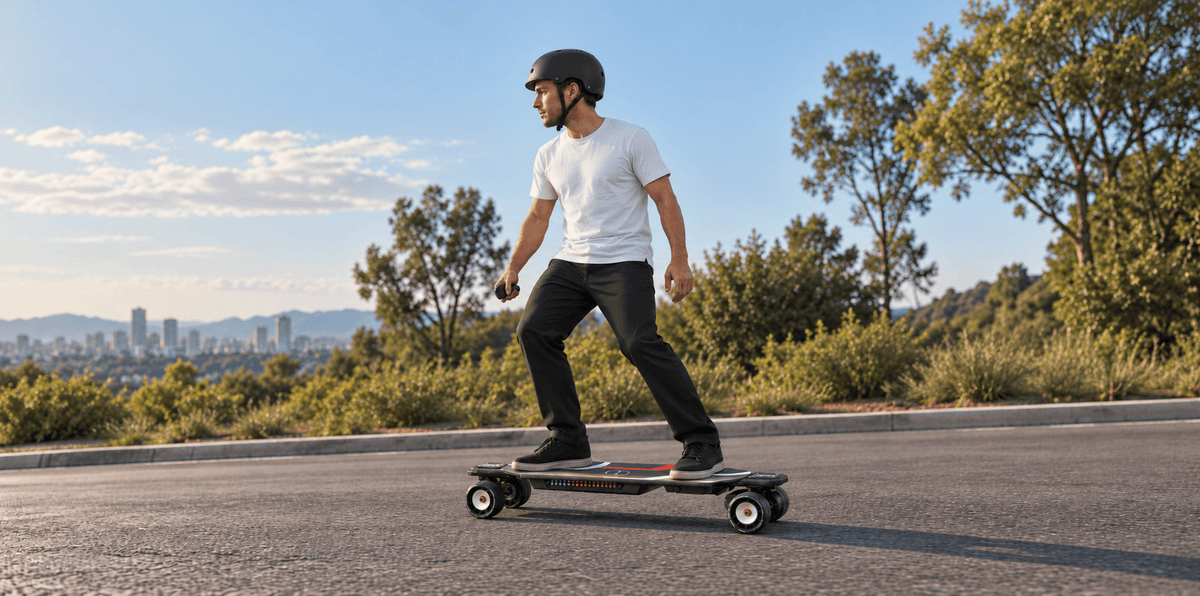
Si la mayor parte de tu ruta transcurre por pavimento continuo, normalmente conviene más un longboard para desplazamientos diarios. Una tabla más larga, una postura más relajada y espacio para una batería de mayor capacidad suelen proporcionar una conducción más estable y más margen para semáforos, desvíos y la reducción de autonomía en condiciones reales. [1]
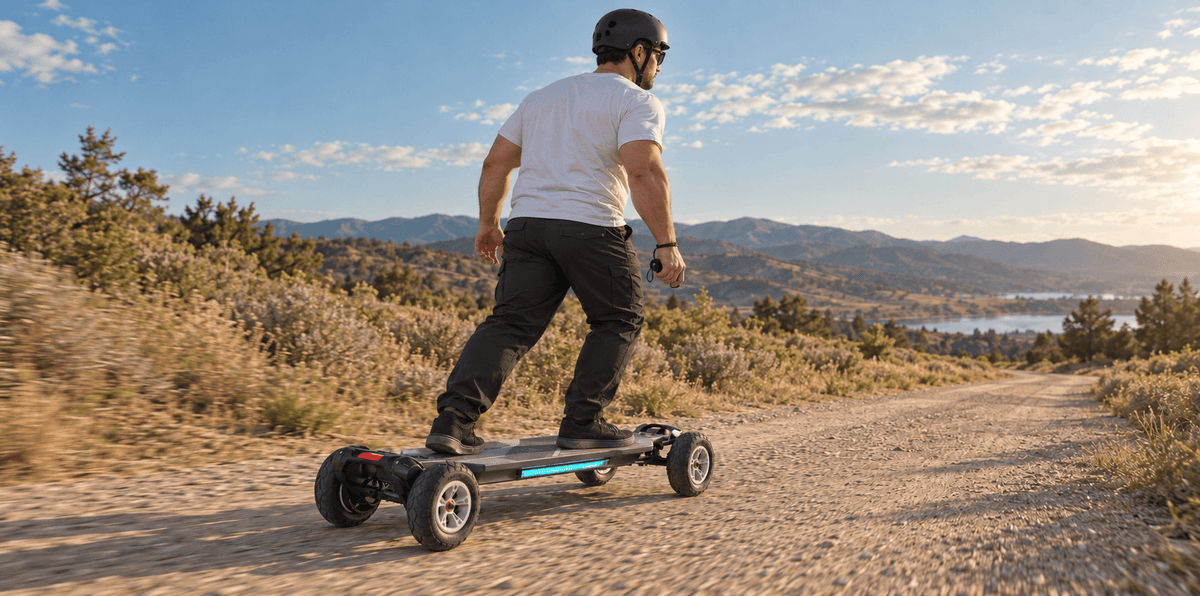
Si tu ruta incluye pavimento irregular, asfalto deteriorado o necesitas más flexibilidad con las ruedas, las configuraciones todoterreno o de alto rendimiento son más adecuadas. En este contexto suelen mencionarse los monopatines con transmisión por correa, ya que admiten mejor distintas opciones de ruedas y ofrecen una aceleración más potente, aunque también pueden añadir peso, ruido y mantenimiento en comparación con las configuraciones más sencillas pensadas para la ciudad.
La siguiente tabla relaciona los monopatines Maxfind actuales con distintos tipos de desplazamiento diario. Incluye los precios indicados y las especificaciones publicadas oficialmente para que puedas elegir un modelo que se adapte a tu ruta, en lugar de guiarte por una sola cifra destacada. [1]
| Modelo | Uso más adecuado | Formato | Precio indicado (desde) | Especificaciones destacadas publicadas oficialmente |
|---|---|---|---|---|
| Max One | Trayectos cortos, campus y transporte combinado | Monopatín mini | $199 [1] | Velocidad máxima de ~15 mph; diseño compacto y ligero [1] |
| Max2 Pro | Estudiantes y desplazamientos cortos | Monopatín corto | $299 [1] | Velocidad y autonomía de nivel básico para un uso diario moderado [1] |
| Max5S | Desplazamientos diarios para principiantes | Longboard | $379 [1] | Hasta ~24 mph; autonomía indicada de ~15 millas [1] |
| Cyber Mini | Desplazamientos diarios priorizando la portabilidad | Monopatín mini | $379 [1] | Formato compacto para desplazamientos diarios [1] |
| Cyber Max | Desplazamientos diarios económicos | Longboard | $399 [1] | Monopatín con motor en el buje, pensado para desplazamientos diarios [1] |
| Cyber MAX6 | Desplazamientos más largos por pavimento | Longboard para desplazamientos diarios | $529 [1] | Hasta ~28 mph; autonomía anunciada de 31 millas (~18 millas según pruebas independientes en recorridos variados) [1][8] |
| FF Belt | Desplazamientos con transmisión por correa | Monopatín con transmisión por correa | $599 [1] | Transmisión por correa con flexibilidad para cambiar las ruedas [1] |
| FF Pro | Desplazamientos de alto rendimiento | Monopatín con transmisión por correa | $699 [1] | Batería Samsung de 376 Wh; autonomía anunciada de 27 millas (~17 millas reales para un usuario de 196 lb) [1][4] |
| FF AT | Rutas accidentadas y uso todoterreno | Tracción por correa todoterreno | $799 [1][7] | Velocidad máxima de 28 mph; autonomía real de ~17 millas; subida de pendientes del 35%; Samsung de 376 Wh; ESC FOC Hobbywing V5.0 [1][3][7] |
Los precios se indican «desde» y cambian con las promociones, así que confirma el precio actual y la opción de batería en la página oficial del producto antes de comprar. [1]

La autonomía debe evaluarse según los resultados de las pruebas, no solo las afirmaciones publicitarias. Las pruebas de terceros de varios modelos muestran el patrón habitual de los monopatines eléctricos: las cifras publicadas sirven como máximos, pero los desplazamientos diarios reales suelen dar menos cuando entran en juego el peso del usuario, la velocidad, las cuestas y las paradas frecuentes.
Una reseña práctica de la FF Pro ilustra la diferencia: frente a una autonomía anunciada de 27 millas (45 km), un ciclista de unos 196 lb (89 kg) recorrió aproximadamente 17 millas (27,5 km) con un uso normal. [4] Una reseña independiente de Maxfind informó de un resultado parecido: cerca de 18 millas con uso variado y unas 12 millas a un ritmo moderado constante con una sola carga. [8]
Las afirmaciones sobre la velocidad también requieren una comprobación realista. Se anuncia que la FF AT todoterreno alcanza los 28 mph (45 km/h) y tiene cuatro modos de velocidad; tanto la marca como los probadores independientes presentan la cifra máxima como un límite del modo Max, no como una velocidad de crucero. [5] Las pruebas de la FF AT realizadas por la propia marca en condiciones reales indican una autonomía de unos 17 miles para un ciclista de 90 kg con marchas de potencia media, un recordatorio de que el peso del ciclista y el modo de conducción pueden reducir las cifras anunciadas. [1][3]
Para planificar los desplazamientos, la lección práctica es sencilla: considera la autonomía publicada como un límite máximo en condiciones ideales, reserva entre un 20 y un 30 por ciento de batería como margen de seguridad y elige una tabla que pueda completar tu recorrido sin apuros. [1]
Empieza por la distancia del recorrido, no por la marca. Si el trayecto real de ida y vuelta es corto e implica llevar la tabla con frecuencia, una tabla más ligera puede ser la mejor opción para el día a día, aunque ofrezca menos velocidad máxima o capacidad de batería. Si el trayecto es más largo y transcurre principalmente por pavimento continuo, una batería más grande y una tabla más larga suelen importar más que un almacenamiento compacto. [1]
Después, comprueba el comportamiento de los frenos y del acelerador antes de ir en busca de cifras de rendimiento. Un control suave a baja velocidad suele ser más importante en el tráfico que la aceleración máxima, sobre todo para quienes se enfrentan a pasos de peatones, carriles bici e intersecciones con paradas frecuentes. Las reseñas que mencionan un control predecible suelen ser más útiles que las fichas técnicas llenas de datos sobre la potencia del motor.
Por último, considera la asistencia y el riesgo de quedarte sin transporte como parte de la decisión de compra. Una tabla para ir al trabajo es un medio de transporte, no solo un juguete para el fin de semana, así que las condiciones de garantía, la rapidez del envío, la disponibilidad de piezas y las opiniones de los usuarios son importantes si algo se rompe. La empresa publica una garantía de 1 año y condiciones de envío desde almacenes locales, lo que ayuda a reducir el tiempo de inactividad cuando hay que reemplazar una pieza. [1]
La fiabilidad empieza por las piezas que más se desgastan: la batería y la electrónica de control. Los materiales oficiales de los productos destacan las celdas Samsung en varias tablas y el uso de ESC Hobbywing en múltiples modelos, lo cual es útil porque indicar la marca de las celdas y una plataforma ESC conocida aporta más información que las afirmaciones vagas de «alto rendimiento». [1]
La capacidad de la batería es el primer filtro práctico. Menos de 200 Wh puede servir para trayectos cortos y llegar a la estación, mientras que unos 360 Wh ofrecen un punto de partida más cómodo para desplazamientos diarios más largos, en los que los desvíos, las cuestas o el frío pueden reducir la autonomía útil. La gama publicada incluye modelos de 99 Wh, 158 Wh, 360 Wh, 376 Wh y 415 Wh, para que los compradores puedan comparar la tabla con su recorrido en vez de dar por hecho que todos los modelos sirven para lo mismo. [1]
El ESC importa porque, en el tráfico, la suavidad del acelerador y del frenado suele ser más importante que la velocidad máxima. Maxfind equipa sus tablas de alto rendimiento con un ESC FOC de Hobbywing, configurado para ofrecer una aceleración y un frenado suaves, y los análisis prácticos describen una conducción estable y controlada, no brusca. [1][3] Ese tipo de información sobre el control de la conducción resulta más útil para los desplazamientos que una cifra bruta de potencia del motor.
El peso es lo que hace que la fiabilidad sea algo práctico. Una tabla demasiado pesada se lleva con menos frecuencia y resulta más difícil de manejar en las escaleras o el transporte público. Según el formato, la gama oficial abarca aproximadamente de 12,4 lb a 24,2 lb: las tablas de menos de unas 15 lb son mucho más fáciles de cargar con frecuencia, mientras que las de más de 20 lb son más adecuadas para trayectos en los que solo hay que cargarlas ocasionalmente. [1]
La asistencia determina el riesgo de inactividad después de la compra. La empresa indica en su sitio oficial una garantía de 1 año, gestión de pedidos desde almacenes locales y plazos de entrega de 3 a 5 días. [1] Aun así, la asistencia debe considerarse parte de la fiabilidad, no algo secundario; por eso conviene confirmar la cobertura de la garantía, la disponibilidad de piezas y los tiempos de respuesta del servicio antes de comprar. [1]
| Factor que debes comprobar | Por qué influye en la fiabilidad durante los desplazamientos | Buen punto de referencia inicial | Ejemplo |
|---|---|---|---|
| Celdas y capacidad de la batería | La calidad de la batería influye en la uniformidad del rendimiento, el envejecimiento y en si la tabla sigue cubriendo tu ruta tras meses de uso. | Menos de 200 Wh para trayectos cortos; alrededor de 360 Wh o más para desplazamientos más largos. | La gama incluye baterías con celdas Samsung en varios modelos. [1] |
| Marca y configuración del ESC | El ESC determina la suavidad del acelerador y el control del frenado en el tráfico con paradas frecuentes. | Busca una plataforma ESC reconocida que ofrezca un control suave a baja velocidad. | Los materiales oficiales destacan el uso de ESC Hobbywing en varias tablas. [1] |
| Tipo de motor/transmisión | El tipo de transmisión influye en el mantenimiento, el comportamiento en cuestas y la flexibilidad para elegir ruedas. | Motores en las ruedas para un uso urbano más sencillo; transmisión por correa para rutas más accidentadas o más opciones de ruedas. | La gama incluye tablas con motores en las ruedas y con transmisión por correa, incluida la serie FF. [1] |
| Peso total de la tabla | Una tabla demasiado pesada se vuelve molesta en las escaleras y el transporte público. | Menos de 15 lb si la vas a cargar con frecuencia; menos de 21 lb si lo harás ocasionalmente. | La gama abarca aproximadamente de 12,4 lb a 24,2 lb. [1] |
| Garantía y envío | La asistencia rápida reduce el tiempo de inactividad cuando falla un cargador, un mando, una rueda o una batería. | Al menos 1 año de garantía y gestión local de los pedidos. | La empresa publica una garantía de 1 año y condiciones de envío desde almacenes locales. [1] |

La fiabilidad diaria no depende solo de la tabla que compres. El estado de los neumáticos o las ruedas, los hábitos de carga del mando, las revisiones del hardware y una planificación prudente de la batería influyen en que la tabla resulte fiable un día laborable por la mañana. Los riders que revisan los tornillos con regularidad, mantienen el mando cargado y evitan agotar la batería suelen reducir los problemas evitables durante los desplazamientos. [1][3]
Los hábitos de conducción también importan. Acelerar suavemente, frenar con antelación y reservar batería ayuda a reducir el desgaste tanto del ciclista como del equipo. Las pruebas en condiciones reales muestran que una conducción agresiva puede reducir drásticamente la autonomía útil, por lo que conducir con más calma suele ser más fiable para llegar al trabajo sin preocuparse por quedarse sin batería.
Elegir bien la ruta también mejora la fiabilidad. Si un camino tiene un pavimento más liso, menos paradas bruscas y cruces más seguros, puede ser mejor para ir al trabajo aunque sea un poco más largo. Para muchos ciclistas, la rutina diaria más fiable consiste en mantener una velocidad moderada con una tabla que tenga autonomía de sobra, en lugar de usar una más rápida al límite de su capacidad.
Los comentarios de los revisores son más útiles cuando se consideran junto con los precios y el contexto de propiedad. La siguiente tabla añade una perspectiva compacta de la relación calidad-precio, con precios indicados o reseñados, autonomía probada cuando está disponible, garantía e información sobre el envío, además de un par de tablas de clases similares que se venden en otros lugares del mercado. [1]
| Tabla | Clase | Precio | Autonomía probada o indicada | Peso | Información sobre garantía y envío | Criterio sencillo para evaluar la relación calidad-precio |
|---|---|---|---|---|---|---|
| Cyber MAX6 | Longboard para desplazamientos diarios | Precio indicado desde 529 $ [1] | Autonomía anunciada de 31 millas; ~18 millas en pruebas independientes con conducción mixta [8] | Peso indicado para la gama: 19.8 lb [1] | Garantía de 1 año; almacén local; entrega en 3-5 días [1] | Excelente relación entre precio y autonomía para una tabla de desplazamiento diario |
| FF Pro | Tabla de alto rendimiento con transmisión por correa | Precio indicado desde 699 $ [1] | Autonomía indicada de 28 millas; ~17 millas en condiciones reales para un ciclista de 196 lb [4] | Las tablas más grandes para desplazamientos diarios y de alto rendimiento de la gama llegan a las 24.2 lb [1] | Garantía de 1 año; almacén local [1] | Prioriza el rendimiento, con una relación precio-autonomía moderada |
| FF AT | Tabla de alto rendimiento para todo terreno con transmisión por correa | Precio indicado desde 799 $ [1] | 17 millas en condiciones reales (con un ciclista de 90 kg); | Las tablas más grandes para desplazamientos diarios y de alto rendimiento de la gama llegan a las 28 lb [1] | Garantía de 1 año; almacén local; entrega en 3-5 días [1] | Se entiende mejor como una tabla de alto rendimiento para todo terreno, no como una opción con buena relación entre precio y autonomía |
| Tabla de una clase similar de otra marca | Tabla para desplazamientos diarios | Alrededor de 450 $ | Se indica una autonomía de aproximadamente 13 millas | No disponible en las fuentes proporcionadas | Las condiciones varían según la marca | Relación calidad-precio comparable para desplazamientos diarios de corta distancia |
| Tabla de mayor autonomía de otra marca | Tabla para desplazamientos diarios | Alrededor de 700 $ | Se indica una autonomía de aproximadamente 24 millas | No disponible en las fuentes proporcionadas | Las condiciones varían según la marca | Relación calidad-precio comparable para largas distancias |
Esta tabla no demuestra que una tabla sea la mejor para todo el mundo, pero sí muestra por qué esta gama debe analizarse como una variedad de clases de productos y no como una sola tabla genérica. La Max 6 parece ofrecer una mejor relación calidad-precio por milla probada para quienes se desplazan diariamente, mientras que la FF Pro y la FF AT tienen más sentido para quienes priorizan el formato de alto rendimiento y la sensación de la transmisión por correa.
La forma más segura de leer reseñas es considerar cada fuente como una pieza de un panorama más amplio, no como un veredicto por sí sola. Una combinación de especificaciones oficiales, pruebas de terceros y comentarios de propietarios ofrece una visión más equilibrada que cualquier fuente individual.
La cobertura editorial de terceros ayuda a demostrar que estas tablas tienen visibilidad más allá de su propio marketing. Forbes analizó la FF Belt y Electrek publicó una reseña práctica de la FF AT, mientras que los especialistas aportan más detalles prácticos. [2][3] Una reseña independiente y exhaustiva de la Maxfind documentó una autonomía real práctica en condiciones de conducción variadas, y una reseña práctica de la FF Pro registró la diferencia habitual entre la autonomía anunciada y la probada; ambas ayudan a establecer expectativas realistas. [4][8]
Las opiniones de la comunidad dan una idea de cómo es la experiencia diaria de conducción. Un usuario de Reddit escribió: «¡Es muy divertido conducir la tabla!». [6] Comentarios como este resultan más útiles si se leen junto con los detalles del hardware y las pruebas de terceros, en vez de considerarlos por separado.
Ninguna cita por sí sola debería decidir una compra. La fiabilidad se evalúa mejor considerando conjuntamente los detalles del hardware, las pruebas de terceros y las condiciones de servicio verificables, en lugar de basarse en una sola fuente. [1]
Elige una tabla mini si llevarla contigo es el principal obstáculo de tu día a día. Si tu ruta incluye escaleras, tornos de tren o limitaciones de espacio en la oficina, la opción más ligera de la gama compacta es la más práctica. [1]
Elige una longboard para desplazamientos si lo principal es recorrer distancias por pavimento. Modelos como la Max 6 ilustran mejor la idea de contar con un margen para los trayectos diarios, porque las pruebas independientes mostraron una autonomía real significativa, no solo una afirmación llamativa.
Elige una tabla con transmisión por correa, como la serie FF, si te importan más el pavimento irregular, una aceleración más potente o la flexibilidad para elegir ruedas que la máxima portabilidad. La FF Pro y la todoterreno FF AT hacen que estas tablas sean más relevantes para quienes buscan un rendimiento orientado a los desplazamientos o la capacidad de circular por rutas más irregulares.
Por lo general, no. Para ir al trabajo, un frenado predecible, un control estable y un margen de autonomía suficiente suelen ser más importantes que la velocidad máxima anunciada más alta.
Una regla práctica es no planificar en función de la cifra máxima anunciada y reservar entre un 20 y un 30 % de batería para desvíos, cuestas, el clima y el desgaste de la batería.
Pueden serlo, especialmente para trayectos cortos y conexiones con otros medios de transporte, pero suelen ser la mejor opción cuando la portabilidad importa más que la comodidad máxima al rodar sobre pavimento irregular. [1]
Sí. Las condiciones de la garantía, la velocidad de envío y la rapidez de respuesta del servicio técnico afectan al tiempo de inactividad cuando surge un problema con el cargador, el mando, una rueda o la batería. La asistencia posventa puede importar tanto como la calidad de conducción, así que confirma las condiciones de la garantía y del servicio antes de comprar. [1]
Compara primero cómo se adapta al recorrido habitual: peso, autonomía probada o realista, respuesta de los frenos, condiciones del servicio de atención al cliente y si el tipo de monopatín se ajusta a tu trayecto. El precio por sí solo rara vez cuenta toda la historia.
Depende del tamaño de la batería, el peso del usuario, la velocidad y el terreno. Toma la cifra anunciada como un caso ideal: en pruebas independientes, los monopatines Maxfind para desplazamientos han alcanzado cerca de 17 a 18 millas en recorridos mixtos en condiciones reales, incluso cuando la cifra anunciada era mayor. [4][8] Para planificar los desplazamientos diarios, elige un monopatín cuya autonomía realista cubra el viaje de ida y vuelta con una reserva del 20 al 30 por ciento.
Pueden serlo, si el monopatín se adapta a tu recorrido. Para pavimento uniforme conviene un longboard con una batería más grande; si tienes que cargarlo a menudo, conviene un monopatín mini más ligero; y para recorridos accidentados o con cuestas, conviene un monopatín todoterreno con transmisión por correa, como el FF AT. [1] El frenado predecible, un margen de autonomía realista y un peso manejable importan más que la velocidad máxima.
Los modelos Maxfind enfocados en los desplazamientos cuestan desde unos 199 $ por un monopatín mini hasta aproximadamente 799 $ por el todoterreno FF AT, mientras que el popular longboard Max 6 figura desde 599 $. [1] Los precios cambian con las promociones, así que confirma el precio actual y la opción de batería en la página oficial del producto.
Esta línea de productos encaja en este tema como ejemplo de cómo una sola marca puede cubrir distintas necesidades de desplazamiento. Su catálogo incluye monopatines mini, longboards para desplazamientos y modelos de alto rendimiento con transmisión por correa, mientras que los materiales oficiales destacan las celdas Samsung, el uso de ESC Hobbywing, una garantía de 1 año y el envío desde almacenes locales. [1]
El argumento más sólido para quienes se desplazan al trabajo es elegir el modelo adecuado para cada recorrido, en lugar de dar por sentado que todos los monopatines sirven para los mismos usuarios. Según análisis de terceros, algunos modelos ofrecen una buena relación calidad-precio para los desplazamientos, mientras que otros son más adecuados para quienes priorizan las sensaciones de rendimiento o la flexibilidad de las ruedas.
La regla práctica para comprar es sencilla: elige el monopatín según tu recorrido habitual, deja un margen para la autonomía y el frenado, y considera la calidad del servicio de atención al cliente como parte de la seguridad y la fiabilidad desde el principio. Para quienes estén considerando esta línea de productos, eso significa ir más allá de las afirmaciones publicitarias y consultar una combinación de especificaciones oficiales, pruebas de terceros y opiniones de propietarios antes de elegir un monopatín para los desplazamientos diarios. [1]
Compartir:
¿Deberías comprar un kit de conversión para monopatín eléctrico con batería?
La mejor patineta eléctrica para personas de gran peso: qué revisar antes de comprar