


¡Oferta de vuelta a clases! 🏷️ ¡Una excelente relación calidad-precio!
--
Días--
Horario--
Minutos--
SegundosMontar en un patinete eléctrico es fácil de aprender, pero conducir de forma segura requiere algo más que pulsar el acelerador. Los principiantes deben aprender a colocarse, acelerar, girar y frenar sin hacer movimientos bruscos. Empieza en una zona tranquila, mantén una velocidad baja y practica cada habilidad antes de circular entre el tráfico o los peatones.

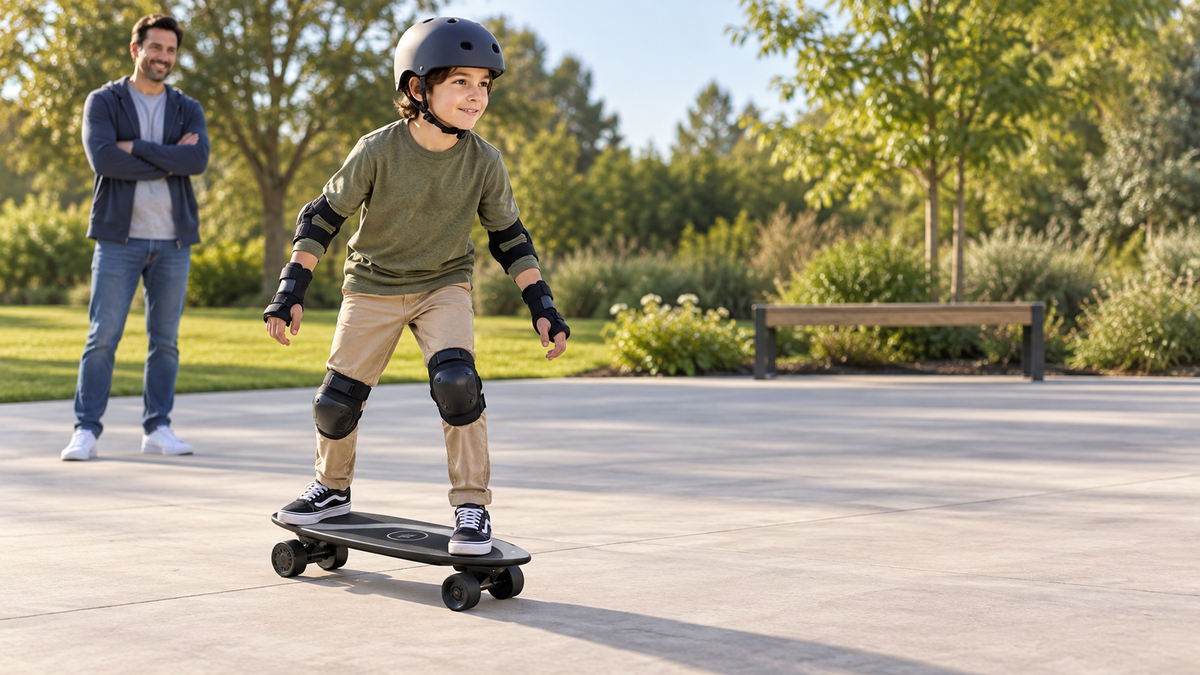
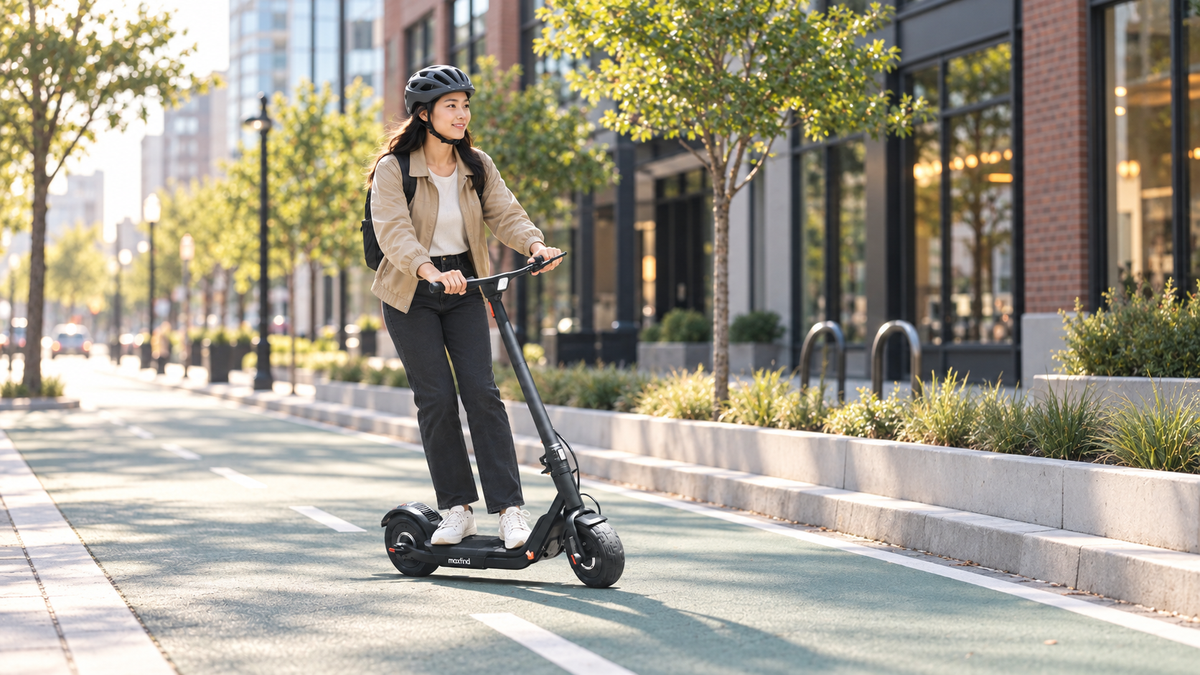
Usa un casco bien ajustado, calzado cerrado y ropa que no interfiera con las ruedas ni con los controles. Las rodilleras, coderas y guantes pueden proporcionar protección adicional mientras estás aprendiendo, y la ropa de colores vivos o reflectante puede ayudar a que otros usuarios de la vía te vean en condiciones de poca luz.
Antes de montar, haz una comprobación rápida de seguridad y aprende cómo funcionan los controles de tu modelo específico:
Bloquea el mástil y el mecanismo de plegado.
Comprueba los neumáticos, los frenos, el acelerador, la batería y las luces.
Localiza el timbre, los intermitentes y los modos de conducción.
Si estás montando en el MAXFIND GLIDER G5, familiarízate con su acelerador de pulgar, su pantalla LED y sus controles de frenado antes de ponerte en marcha. Prueba el acelerador y los frenos a baja velocidad para saber cómo responde el patinete.
Elige una zona llana, abierta y pavimentada, con poco tráfico y pocos peatones. Evita las cuestas pronunciadas, el pavimento mojado, la grava suelta, las aceras concurridas y las carreteras con mucho tráfico hasta que puedas arrancar, girar y detener el patinete de forma constante.

Coloca un pie cerca de la parte delantera de la plataforma y mantén el otro pie en el suelo para dar el impulso inicial. Sujeta el manillar con ambas manos, mantén los codos ligeramente flexionados y evita usar el manillar para soportar todo el peso de tu cuerpo. Cuando ambos pies estén sobre la plataforma, colócalos escalonados en lugar de directamente uno al lado del otro. Mantén las rodillas ligeramente flexionadas y mira hacia delante en vez de fijarte en los pies o en la rueda delantera.
Empuja el suelo con un pie para poner el patinete en movimiento y, después, pulsa suavemente el acelerador. Cuando notes que el patinete está estable, coloca el pie con el que te impulsabas en la parte trasera de la plataforma. Muchos patinetes eléctricos utilizan un sistema de arranque con impulso, por lo que el motor puede no responder mientras el patinete está completamente detenido. Acciona el acelerador gradualmente en lugar de pulsarlo hasta el fondo, ya que una aceleración repentina puede hacer que el patinete avance antes de que tu cuerpo esté preparado.
Mantén el peso centrado entre los pies y deja que las piernas sostengan el cuerpo. Las manos deben guiar el scooter, no mantenerte erguido. Comienza en el modo de menor velocidad y haz pequeños ajustes de dirección. Mover demasiado el manillar de un lado a otro puede provocar más tambaleo. Si empiezas a sentirte inestable, suelta el acelerador y detente en lugar de intentar acelerar para superar el problema.
Suelta el acelerador y reduce la velocidad antes de entrar en una curva. A baja velocidad, gira suavemente el manillar para dirigir el scooter. A mayor velocidad, tu cuerpo y el scooter pueden inclinarse ligeramente juntos, pero el movimiento debe ser suave y controlado. Mira hacia la dirección en la que quieres avanzar y evita movimientos bruscos del manillar. Si el espacio para girar parece demasiado estrecho, detente y lleva el scooter a pie en lugar de forzar un giro cerrado.
Suelta el acelerador antes de accionar los frenos. Aumenta gradualmente la presión sobre los frenos, desplaza ligeramente el peso hacia atrás y mantén las rodillas flexionadas mientras el scooter reduce la velocidad. Al aproximarte a una detención completa, apoya un pie en el suelo para mantener el equilibrio. Practica las detenciones en un punto determinado para aprender cuánta distancia de frenado necesita tu scooter a distintas velocidades.
Mira bien hacia delante para detectar baches, grietas, piedras, coches aparcados, entradas de vehículos y peatones. Mantente fuera de los ángulos muertos de los vehículos, reduce la velocidad cerca de las intersecciones y nunca des por hecho que un conductor te ha visto. Al acercarte a peatones, reduce la velocidad y lleva el scooter a pie por las zonas concurridas.
Reduce la velocidad antes de bajar una pendiente, porque el scooter puede seguir acelerando incluso después de soltar el acelerador. Diferentes scooters eléctricos varían en potencia del motor, rendimiento de frenado, iluminación y capacidad para subir pendientes, así que respeta los límites de tu modelo. Por la noche, usa las luces delanteras y traseras, lleva ropa visible y circula lo suficientemente despacio como para detenerte dentro de la distancia que puedas ver con claridad.
Las leyes sobre los scooters eléctricos varían según el estado y la ciudad. Consulta las normas locales sobre la edad mínima, el uso del casco, los límites de velocidad, las aceras, los carriles bici, las vías públicas y los requisitos del permiso de conducir antes de conducir.

Presionar demasiado el acelerador, accionar los frenos bruscamente o girar el manillar de forma repentina puede hacer que el conductor pierda el equilibrio. Acciona los controles suavemente, reduce la velocidad antes de girar y evita frenar con fuerza mientras el patinete está inclinado.
Mantén los pies escalonados, las rodillas flexibles y la parte superior del cuerpo relajada. No uses el teléfono, lleves objetos en una mano ni cuelgues bolsas pesadas del manillar, ya que estas acciones pueden dificultar la dirección y el frenado.
Deja de conducir si observas alguno de los siguientes problemas:
Un acelerador que se atasca o frenos poco fiables
Una barra de dirección o un mecanismo de plegado suelto
Un neumático dañado o una fuerte inestabilidad de la dirección
Pérdida de potencia repetida
Batería hinchada, humo, fugas o calor inusual
Apaga el patinete y haz que lo revisen antes de volver a conducirlo.
Aprender a conducir un patinete eléctrico consiste principalmente en desarrollar un control suave. Practica arrancar, avanzar en línea recta, girar y detenerte a baja velocidad antes de circular por vías públicas.Revisa el patinete antes de cada trayecto, presta atención al estado de la vía y no circules más rápido de lo que permitan tu experiencia o el entorno.
Conducir un patinete eléctrico bajo los efectos del alcohol puede dar lugar a un DUI u otro cargo relacionado con el alcohol en algunas jurisdicciones. Las normas exactas dependen de la legislación estatal y local.
Muchos patinetes eléctricos estándar de pie no requieren licencia de conducir, pero las normas locales pueden variar según el tipo de patinete y el lugar por donde se circule.
Circula bajo una lluvia ligera solo si el fabricante lo permite y reduce la velocidad, ya que las superficies mojadas disminuyen la tracción y aumentan la distancia de frenado. Evita la lluvia intensa, los charcos profundos y las carreteras inundadas.
Las normas sobre los patinetes en las aceras varían según la localidad, y muchas ciudades restringen o prohíben circular en patinete eléctrico por las aceras. Incluso cuando está permitido, los peatones siempre deben tener prioridad.
Más información: Desglose de los costos de los patinetes eléctricos para adultos

Compartir:
Reseña de uso de la patineta eléctrica todoterreno: CYBER ULTRA para caminos accidentados y colinas
Cómo montar de forma segura en una patineta eléctrica por la noche