

¡Oferta de vuelta a clases! 🏷️ ¡Una excelente relación calidad-precio!
--
Días--
Horario--
Minutos--
SegundosAlgunas rutas muestran muy rápidamente los límites de una tabla urbana. Cuando el pavimento accidentado, las transiciones irregulares, la grava y los caminos de parques pasan a formar parte habitual de tu semana, la comodidad, el control y la flexibilidad de las rutas empiezan a importar mucho más.

El asfalto parcheado, las grietas poco profundas y las reparaciones irregulares pueden hacer que un trayecto urbano normal se sienta más complicado de lo necesario. Una tabla urbana todavía puede superar estos tramos, pero con el tiempo la conducción suele sentirse menos estable y más agotadora.
Conducir por la ciudad a menudo implica enfrentarse a juntas, rampas y cambios repentinos de superficie. Estas pequeñas transiciones pueden romper rápidamente el ritmo, especialmente cuando la tabla se siente ligera o inestable bajo los pies.
Una ruta que alterna entre pavimento y grava suelta deja claro lo rápido que puede cambiar la tracción. Para quienes se enfrentan habitualmente a ese tipo de superficie, una configuración urbana suele empezar a sentirse menos predecible y más limitante.
Los caminos sencillos de parques y los tramos de senderos accidentados pueden parecer fáciles de recorrer, pero con una configuración enfocada a la ciudad suelen sentirse bruscos y agotadores. Aquí es donde empiezan a importar más el agarre adicional y una conducción más asentada.
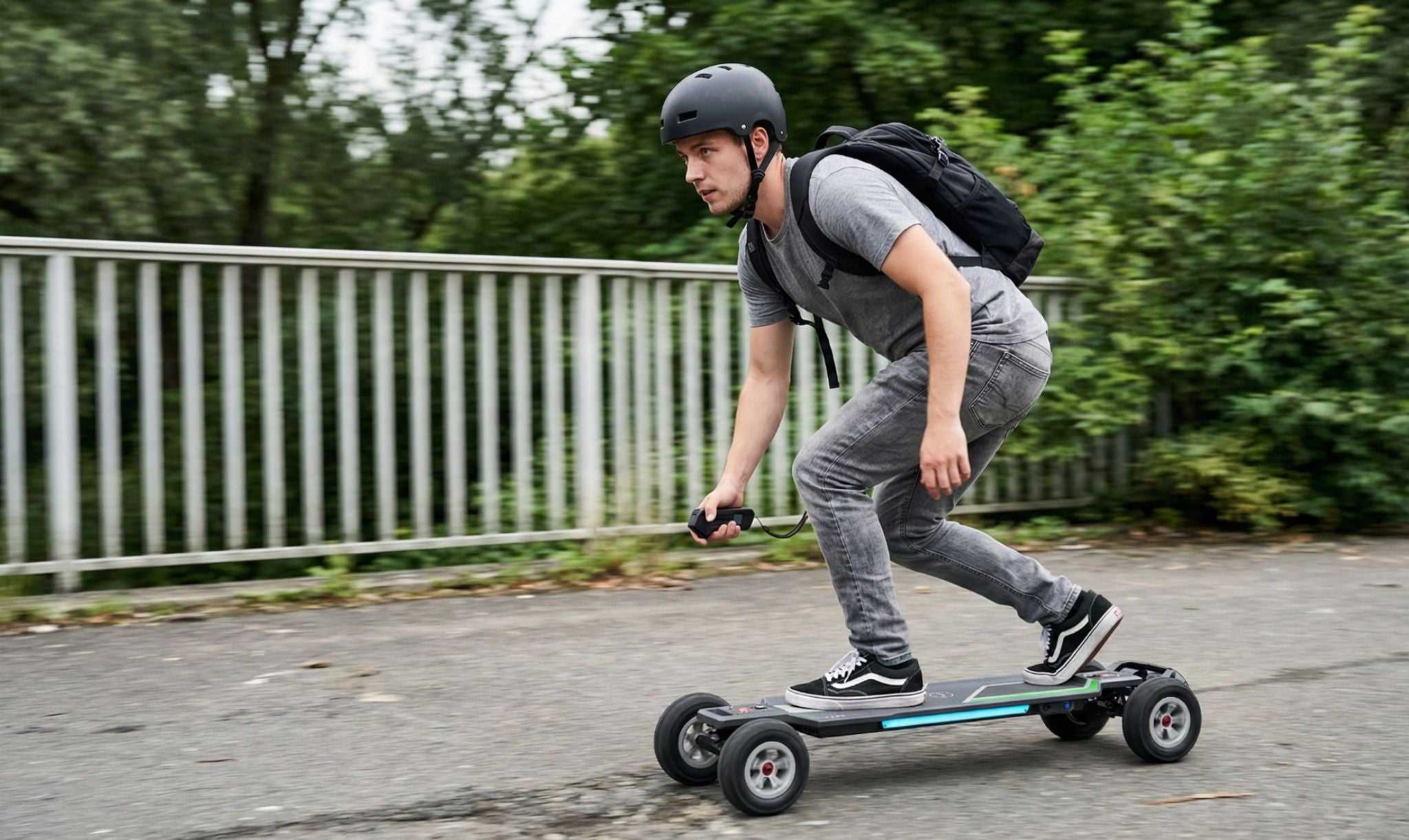
Estas situaciones no siempre parecen extremas, pero se acumulan rápidamente durante la conducción real. Una tabla urbana todavía puede superarlas, pero la ruta suele sentirse más lenta, menos estable y más agotadora que sobre un pavimento limpio. Ese suele ser el punto en el que una patinete eléctrico todoterreno empieza a sentirse menos como una opción de nicho y más como una opción práctica.

La primera diferencia perceptible es la estabilidad. Sobre terrenos accidentados, una configuración más capaz se siente más tranquila y asentada bajo los pies. En lugar de prepararte para cada grieta, junta o tramo de asfalto deteriorado, puedes concentrarte más en elegir la trazada y menos en superar el tramo.
Las superficies en mal estado hacen más que reducir la comodidad. También interrumpen el ritmo. Una tabla que se desenvuelve con más seguridad sobre terrenos irregulares te permite mantener la velocidad de forma más natural en los tramos accidentados, en lugar de tener que reducirla constantemente y recuperar el impulso. Así, las rutas mixtas se sienten menos fragmentadas y menos exigentes.
Una configuración más capaz ofrece a los ciclistas más libertad para elegir la ruta. En lugar de evitar conexiones de grava, senderos laterales irregulares o zonas desniveladas de parques, puedes recorrer rutas de superficie mixta con más confianza y menos dudas.
La comodidad no depende solo de la suavidad. También depende del esfuerzo necesario para mantener la tabla bajo control. Cuando la configuración absorbe mejor las irregularidades de la ruta, tus piernas gastan menos energía corrigiendo la conducción y tu concentración dura más. Los ciclistas a quienes les gusta una sensación más asentada y preparada para distintos terrenos suelen inclinarse por algo más parecido a una Tabla eléctrica de montaña estilo de configuración precisamente por esa razón.

Si la mayor parte de tus trayectos transcurre por carriles bici limpios, carreteras bien mantenidas y pavimento predecible, una tabla urbana sigue teniendo mucho sentido. A menudo es más ligera, más fácil de transportar y más que suficiente para trayectos diarios sencillos.
Algunos ciclistas pasan casi tanto tiempo cargando la tabla como montándola. Si tu ruta incluye escaleras, transporte público, entradas a oficinas o tener que guardarla repetidamente, el peso ligero importa. En ese tipo de rutina, la sencillez de una tabla urbana puede seguir siendo la opción más adecuada.
Tu ruta cambia de superficie con más frecuencia de la que tu tabla actual puede soportar cómodamente.
Reduces la velocidad por la textura del camino, no por el tráfico ni por las curvas.
Evitas ciertas calles, conexiones de grava o zonas irregulares de parques, incluso cuando te ahorrarían tiempo.
Quieres más libertad para elegir la ruta, en lugar de planificar cada trayecto en torno a pavimento liso.
Una configuración más capaz suele sentirse más robusta. Esa confianza adicional en caminos irregulares suele venir acompañada de mayor tamaño, más peso y menor portabilidad. La compensación puede valer la pena, pero aun así cambia lo fácil que resulta transportar, guardar y mover la tabla fuera de la carretera.
Más agarre y estabilidad no siempre significan que la conducción resulte mejor para todos los ciclistas. Algunas personas prefieren la sensación rápida y directa de una tabla urbana más ligera sobre pavimento limpio. Otras aceptan renunciar a parte de esa inmediatez a cambio de una configuración más tranquila y tolerante cuando la superficie deja de ser uniforme.

Las especificaciones pueden parecer impresionantes, pero lo que realmente determina si un monopatín tiene sentido es la ruta. Un usuario que se enfrenta a pavimento deteriorado, conexiones irregulares, parches de grava y tramos ligeros de sendero necesita algo más que velocidad sobre el papel. En terrenos mixtos, la comodidad, el control y la consistencia suelen importar más que las cifras destacadas. Por eso, el tipo de ruta suele importar más que la hoja de especificaciones por sí sola.
El CYBER ULTRA se adapta mejor a los terrenos mixtos porque está diseñado para rutas que van más allá del pavimento limpio. Para los usuarios que se enfrentan a carreteras irregulares, grava y conexiones desiguales, un monopatín eléctrico todoterreno diseñado específicamente para ello se adapta mejor a la ruta.
Un monopatín urbano sigue siendo la opción adecuada para muchos usuarios. Pero cuando el pavimento deteriorado, los tramos de grava, las transiciones irregulares y los caminos accidentados de los parques forman parte de tu semana habitual, resulta mucho más fácil justificar las ventajas de una configuración más capaz. La verdadera pregunta es sencilla: ¿tu ruta exige más de lo que un monopatín urbano puede ofrecer cómodamente?
A menudo, sí. Una ruta más corta con grietas, parches y superficies inestables constantes puede resultar más exigente que un trayecto más largo sobre pavimento liso.
Pueden serlo, especialmente cuando esos caminos forman parte de una ruta habitual en lugar de ser un desvío ocasional. El problema suele ser la combinación de superficies, no una sola sección por sí misma.
No. Puede ser igual de importante para los desplazamientos diarios cuando la ruta incluye calles deterioradas, transiciones irregulares y tramos con superficies mixtas.
Maxfind establece la carga máxima en 330 lb / 150 kg. La marca también señala que circular por encima de ese límite puede afectar al rendimiento y la velocidad, por lo que los usuarios más pesados deben considerar las 330 lb como un límite estricto, no como un objetivo de comodidad.
Más información: Cómo elegir el monopatín eléctrico todoterreno

Compartir:
Patinete eléctrico con motor en el buje frente a transmisión por correa: ¿cuál se adapta mejor a tu estilo de conducción?
Tecnología de plataformas para monopatines eléctricos: el interior de la plataforma compuesta Xcomposite™ de MAXFIND