

Promozione per il ritorno a scuola! 🏷️ Ottimo rapporto qualità-prezzo!
--
Giorni--
Orari--
Minuti--
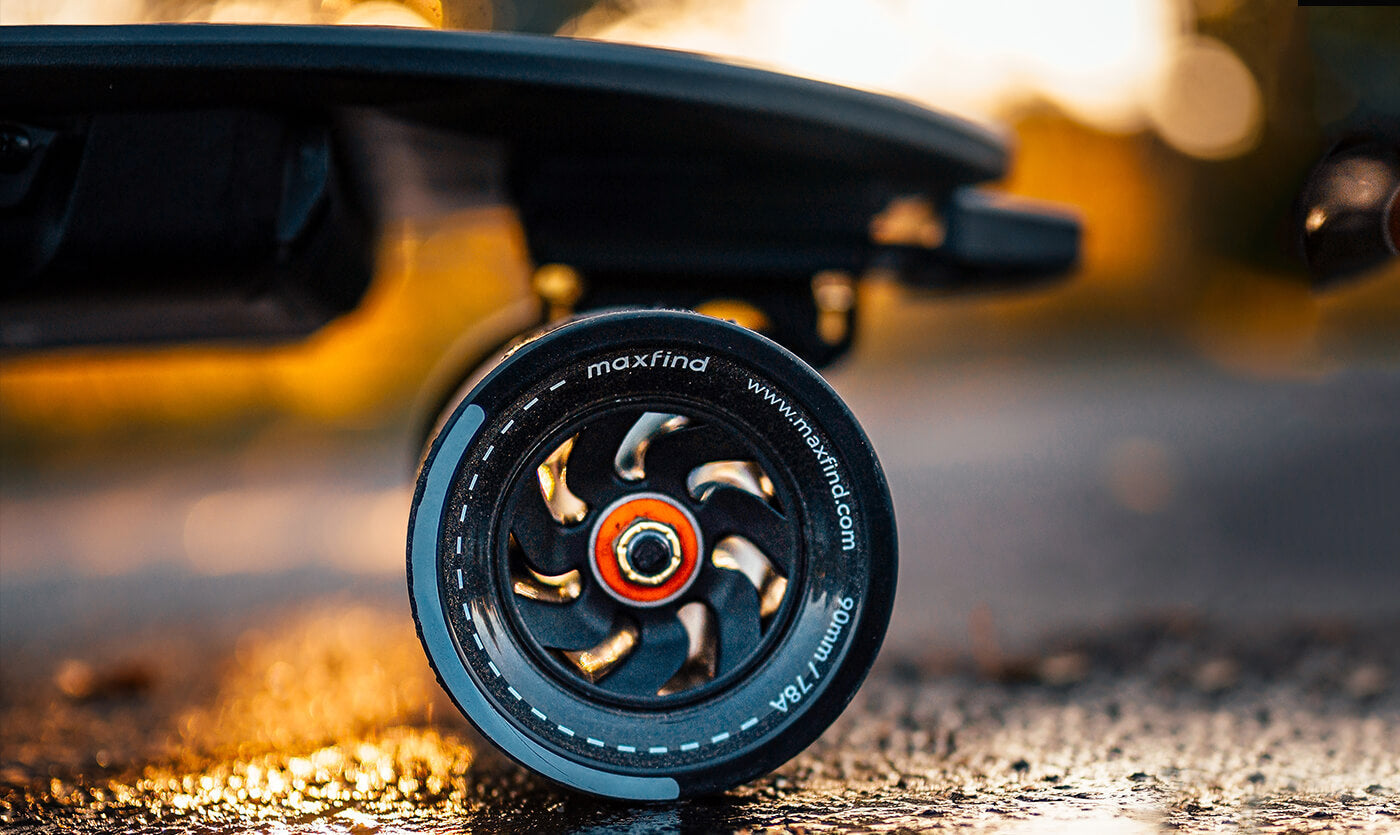
SecondiLe ruote dello skateboard elettrico influenzano più del semplice comfort di guida. Passare da 90 mm a 105 mm o 120 mm può modificare il superamento degli ostacoli, l'accelerazione, la sensazione in frenata, l'altezza da terra e l'autonomia. Questa guida confronta le tre misure e spiega la compatibilità, così puoi scegliere le ruote più adatte alla tua tavola, alle tue strade e alle tue priorità di guida.
Non esiste una singola misura di ruota ideale per ogni skateboard elettrico. Le ruote più piccole generalmente privilegiano una guida urbana reattiva, mentre quelle più grandi puntano maggiormente sulla capacità di superare gli ostacoli e sul comfort.
|
Dimensioni della ruota |
Ideale per |
Vantaggio principale |
Principale compromesso |
|
90 mm |
Strade lisce |
Guida rapida e reattiva |
Più vibrazioni dalla strada |
|
105 mm |
Pavimentazione mista |
Equilibrio tra comfort e controllo |
Leggermente meno reattive |
|
120 mm |
Strade sconnesse |
Superamento più fluido degli ostacoli |
Maggiore altezza da terra e limiti di compatibilità |
MAXFIND offre diverse ruote per skateboard elettrico in queste fasce di dimensioni, comprese le ruote standard in PU, le ruote ammortizzanti e le opzioni Cloudwheel per diversi sistemi di trazione.

Il diametro della ruota modifica la distanza percorsa a ogni rotazione e la capacità della ruota di superare le irregolarità della superficie. Il risultato finale dipende anche dal motore, dai rapporti di trasmissione, dal materiale della ruota, dal peso del rider e dalle condizioni della strada.
In genere, una ruota più grande supera più gradualmente i giunti della pavimentazione, le piccole crepe e i detriti, perché questi ostacoli sono proporzionalmente più piccoli rispetto al suo diametro. Una ruota da 120 mm può quindi risultare meno brusca di una da 90 mm sull'asfalto deteriorato, mentre le ruote da 105 mm offrono una soluzione intermedia per chi desidera più comfort senza usare la configurazione più grande.
A parità di motore e rapporti di trasmissione, le ruote più piccole generalmente offrono una risposta più immediata in accelerazione e frenata, mentre quelle più grandi aumentano il rapporto di trasmissione effettivo e possono rendere meno incisivi la coppia o la frenata a bassa velocità. L'entità di questa variazione dipende dalla potenza del motore, dal rapporto di trasmissione, dalle salite, dal peso del rider e dalle impostazioni del controller; pertanto, non va presentata come identica per ogni tavola.
A parità di velocità di rotazione della ruota, una ruota più grande percorre una distanza maggiore e può aumentare la velocità massima teorica, ma il motore deve comunque avere potenza sufficiente per raggiungerla sotto carico. L’autonomia può aumentare o diminuire in base alle abitudini di accelerazione, al peso delle ruote, al manto stradale, alle salite, alla velocità di guida e all’efficienza della trasmissione; pertanto, il solo diametro della ruota non consente di prevedere una variazione fissa dell’autonomia.
Le ruote più grandi sollevano maggiormente la tavola e gli alloggiamenti elettronici da terra e facilitano il superamento delle irregolarità della superficie, ma la posizione di guida più alta può risultare meno diretta nelle curve strette. Le ruote più piccole mantengono la tavola più bassa e generalmente offrono una sensazione di guida su strada più connessa, mentre quelle più grandi privilegiano la capacità di superare gli ostacoli e il comfort rispetto alla massima agilità.
Il diametro è solo uno degli aspetti delle prestazioni di una ruota. MAXFIND indica le sue ruote in PU da 90 mm con durezza 78A e larghezza di 60 mm, le sue ruote ammortizzanti da 105 mm con durezza 78A e PU ad alta elasticità e le sue Donut Cloudwheel con durezza 78A, battistrada a più livelli e struttura di ammortizzazione DFC; pertanto, ruote con durezza simile possono comunque offrire sensazioni diverse a causa della forma, della larghezza, del ritorno elastico e della struttura interna.
Un diametro preferito non è automaticamente un diametro compatibile. Controlla il sistema di trasmissione, il nucleo della ruota, la puleggia, lo spazio libero e i modelli di tavola supportati prima di ordinare ruote sostitutive per skateboard elettrici.
I motori nel mozzo sono integrati nelle ruote motrici, quindi le sostituzioni compatibili devono adattarsi all’alloggiamento del motore e non limitarsi a corrispondere al diametro originale. Attualmente MAXFIND offre varianti Donut Cloudwheel da 105 mm e 120 mm specifiche per il mozzo per i modelli indicati, ma la compatibilità deve comunque essere verificata usando la tavola, il motore e la variante del prodotto esatti, senza basarsi soltanto sulle dimensioni.
Le tavole con trasmissione a cinghia offrono generalmente più opzioni di ruote, ma il nucleo della ruota deve essere compatibile con la puleggia corretta, e il numero di denti della puleggia, il rapporto di trasmissione, la lunghezza della cinghia e la posizione del motore devono funzionare insieme. Una ruota più grande modifica la rapportatura effettiva, mentre combinazioni errate di puleggia o cinghia possono causare un allineamento o una tensione inadeguati della cinghia; verifica quindi l’intero sistema di trasmissione anziché solo il diametro della ruota.
Le ruote più grandi richiedono spazio sufficiente attorno alla tavola, ai truck, ai supporti del motore, ai copricinghia e agli alloggiamenti durante le sterzate complete e la flessione della tavola. Controlla entrambi i lati con i truck completamente sterzati prima di metterti alla guida, perché una ruota libera quando la tavola è ferma potrebbe comunque sfregare durante curve accentuate o sotto il peso del rider.
I telecomandi MAXFIND supportati includono il diametro delle ruote e il rapporto di trasmissione tra i parametri di configurazione, consentendo di calcolare più accuratamente velocità e distanza in base alla configurazione installata. Non tutte le tavole o i telecomandi offrono la stessa procedura di regolazione, quindi segui le istruzioni per il controller specifico invece di presumere che la calibrazione sia sempre disponibile.
Parti dalle superfici che percorri più spesso, poi considera comfort, risposta, portabilità e compatibilità. Un numero più grande non rende automaticamente una ruota migliore per ogni percorso.
Scegli ruote da 90 mm per skateboard elettrici quando percorri soprattutto asfalto liscio, strade ben tenute o piste ciclabili e preferisci un'accelerazione diretta e una risposta pronta in curva. L'attuale offerta di MAXFIND ruote in PU da 90 mm utilizzano poliuretano 78A e hanno una larghezza di 60 mm, risultando un'opzione orientata all'uso su strada anziché ruote pensate per sostituire configurazioni fuoristrada più grandi.

Scegli ruote da 105 mm quando il tuo percorso combina pavimentazione liscia con giunti, crepe e occasionali tratti sconnessi. MAXFIND offre sia ruote in PU ammortizzanti da 105 mm e diverse configurazioni Cloudwheel, rendendo questa misura un pratico compromesso, anche se il prodotto giusto dipende comunque dal fatto che la tavola utilizzi una trasmissione a mozzo o a cinghia.

Scegli ruote da 120 mm quando l’asfalto sconnesso e il superamento degli ostacoli contano più del mantenimento della risposta stradale più diretta. MAXFIND offre Cloudwheel da 120 mm opzioni, ma i tipi di trasmissione disponibili differiscono tra le linee di prodotti, quindi verifica la variante selezionata, i modelli supportati, lo spazio libero per le ruote e i requisiti della trasmissione prima di considerare i 120 mm un aggiornamento diretto.

Le ruote più grandi meritano di essere prese in considerazione quando risolvono un problema specifico della configurazione attuale. Effettuare l’upgrade solo per l’estetica può introdurre compromessi di compatibilità o prestazioni senza migliorare effettivamente il percorso del rider.
Valuta il passaggio da ruote da 90 mm a 105 mm quando vibrazioni ripetute, giunti del manto stradale o crepe poco profonde rendono scomode le normali uscite, ma desideri comunque una configurazione orientata alla strada. Restare con ruote da 90 mm ha più senso quando le strade sono lisce e l’accelerazione pronta, l’altezza da terra ridotta e la guida diretta sono le priorità principali.
Valuta il passaggio da ruote da 105 mm a 120 mm quando il tuo percorso abituale rimane scomodo e migliorare il superamento delle asperità è più importante che mantenere le attuali sensazioni in accelerazione e frenata. Se le ruote da 105 mm gestiscono già bene il percorso, le dimensioni maggiori e i requisiti di compatibilità delle ruote da 120 mm potrebbero offrire un beneficio pratico limitato.
Scegli ruote da 90 mm per skateboard elettrici per una risposta fluida sulle strade regolari, ruote da 105 mm per una configurazione quotidiana equilibrata e ruote da 120 mm quando il superamento delle asperità e il comfort sulle strade sconnesse sono le priorità principali. Prima dell’upgrade, verifica il tipo di trazione, la variante della ruota, la compatibilità con puleggia o mozzo, lo spazio disponibile e le impostazioni supportate dal telecomando, invece di scegliere le ruote basandoti solo sul diametro.
Non sempre. I rialzi possono essere utili quando le ruote più grandi si avvicinano alla tavola durante le curve accentuate, ma la necessità dipende dalla forma della tavola, dai truck, dall’offset delle ruote, dai bushings e dallo spazio disponibile.
La ferramenta dell’asse dovrebbe eliminare il gioco laterale eccessivo senza bloccare i cuscinetti o il gruppo ruota. Le ruote non motrici dovrebbero ruotare fluidamente, mentre le ruote con motore nel mozzo possono presentare una normale resistenza del motore; segui quindi le istruzioni di installazione specifiche per la ruota e il sistema di trazione.
Le ruote più larghe possono offrire una superficie di contatto maggiore e più aderenza, ma possono anche aumentare il peso e la resistenza al rotolamento. La larghezza va considerata separatamente dal diametro e abbinata ai truck della tavola, allo spazio disponibile e alla superficie prevista per la guida.
Altri approfondimenti:La migliore tavola elettrica lunga per una guida fluida: guida definitiva al comfort

Condividi:
Di quanta distanza di arresto ha bisogno uno skateboard elettrico per gli spostamenti quotidiani?
Lista di controllo dell’affidabilità dello skateboard elettrico per gli spostamenti quotidiani