

Black Friday Deals. Lowest Price of the Year 🏷️
Search for an “electric skateboard with a handle,” and you may see several different designs. In most cases, riders mean a handle for carrying or moving the board, but the term is sometimes confused with a handlebar used while riding.
In most electric skateboard product contexts, “with a handle” refers to a carry handle or towing grip, not a handlebar used while riding. The handle gives the rider a dedicated grip for moving the board when riding is impractical or not allowed. A handlebar is different. It is designed to be held while riding, while a carry handle is only there to make the board easier to move when you are off it.
Electric skateboards are convenient while they are moving, but portability can become more complicated as soon as the rider steps off. Batteries, motors, controllers, and protective enclosures add hardware that a regular skateboard does not have.

A regular skateboard can often be picked up by the deck or trucks without much thought. An electric skateboard may weigh considerably more, making the same grip uncomfortable even over a short distance. A properly positioned handle gives the rider a more predictable place to hold the board when switching between riding and walking.
Riders who frequently encounter short walking sections can also add an electric skateboard universal handle to a compatible setup instead of choosing a new board solely for a built-in carrying feature.
A handle becomes especially useful when a route includes places where the board cannot stay on the ground. Apartment stairs, train platforms, office buildings, classrooms, stores, crowded sidewalks, and other no-riding areas may require the rider to pick the board up repeatedly. In these situations, the value of a handle comes from making frequent short carries easier.
Not every handle works the same way. Some are designed for lifting the entire board, while others let the rider move a heavier board without supporting all of its weight.
A built-in handle is an opening formed directly into the deck, allowing the rider to place a hand through the board. It does not require a separate accessory and is always available when needed. Because the opening becomes part of the deck itself, it should be engineered as part of the original board design rather than treated as a simple DIY modification.
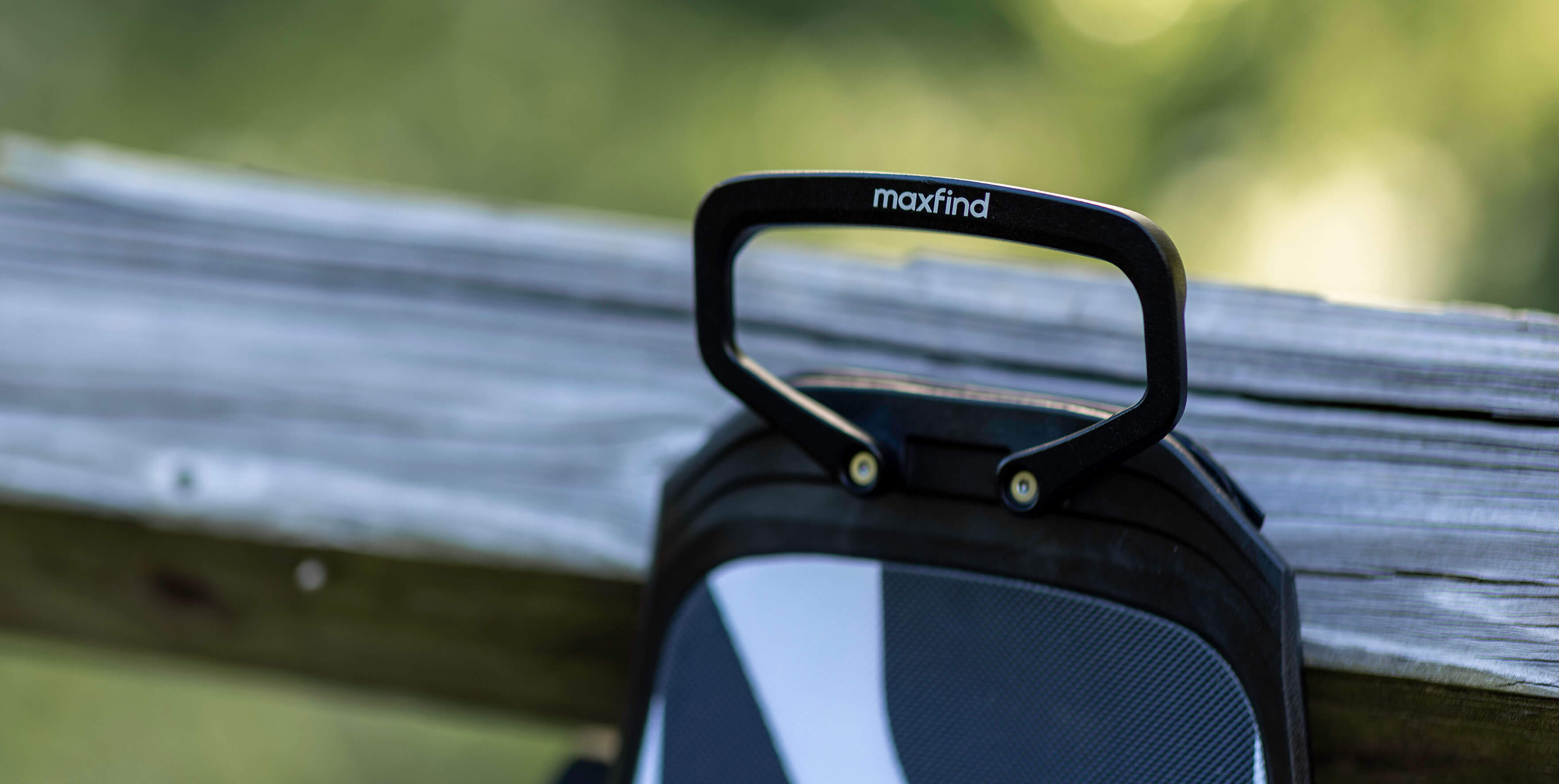
A removable or bolt-on handle attaches to the board instead of being cut into the deck. It gives the rider a dedicated grip and, depending on the design, may be removed when it is not needed. For example, the MAXFIND CYBER MINI uses a removable carry handle that can be installed when needed and removed for riding.

A towing handle is positioned so the rider can lift one end of the skateboard while leaving wheels at the opposite end on the ground. Instead of supporting the entire board weight, the rider rolls part of the load along the floor. This can be useful for heavier electric longboards on smooth, flat surfaces.
A handle improves how you grip a board, but it does not automatically make the entire setup lightweight or easy to carry. True portability still depends on the board’s weight, dimensions, balance, and the distance you need to move it.
A handle does not remove the weight of the battery, motors, trucks, wheels, and deck. A heavy electric longboard can still become tiring to hold even with a comfortable grip, while a lighter board may be relatively manageable without one.
If portability is an important part of your buying decision, compare different electric skateboards by complete board weight, size, riding purpose, and drivetrain rather than treating the presence of a handle as proof that a board will be easy to carry.
Placement matters because electric skateboard weight is not always distributed evenly. A handle located too far toward the front or rear can make the board tilt noticeably when lifted. A practical handle should provide enough room for the hand while keeping the board reasonably balanced during normal carrying.
Handles are most useful for short transitions such as climbing a flight of stairs, walking through a station, crossing an indoor space, or moving the board into storage. If your commute regularly includes long walking sections, holding the board in one hand may still become tiring. In that situation, another carrying method may be more practical.
A handle should fit the board without creating a new problem while riding. This is especially important when adding an aftermarket accessory to a board that was not originally designed around one.
Check whether the handle extends into the area normally used by your feet. A bulky side-mounted design may interfere with stance or carving if it sits too close to the deck edge. Low-profile or removable designs can reduce this concern, but actual clearance depends on the board and rider stance.
For aftermarket handles, check the manufacturer’s stated compatibility and installation requirements before mounting. Deck thickness, shape, flex, materials, mounting points, and fastener dimensions can all affect how the handle fits. Avoid permanent modifications unless the board or handle manufacturer specifically supports them.
Electric skateboards have batteries, motor cables, enclosures, trucks, and other hardware around or below the deck. A handle or its mounting hardware should not interfere with those components or contact the wheels during turning. Check the full range of truck movement rather than inspecting the board only while it is stationary.
A handle solves one specific problem: giving you a better place to hold or move the board. It is not necessarily the best solution for every portability or support issue.
If you regularly walk a significant distance with your board, distributing the weight across your shoulder or back may be more comfortable than holding it in one hand. Carrying straps and purpose-built backpacks can also free both hands, although their practicality depends on board length, wheel size, and overall weight.
If by “handle” you mean something to hold while accelerating, braking, or steering, a carry handle will not provide that function. Conventional electric skateboards are ridden without handlebars and are typically controlled through rider balance, the trucks, and a handheld remote. If you specifically want a vertical support bar while riding, an electric scooter or another handlebar-based vehicle may be a better fit.
An electric skateboard with a handle usually uses that handle for carrying or towing rather than steering. A handle can make stairs, transit transfers, and other short walking sections easier, but board weight and carrying distance still matter. For longer walks, a strap, backpack, lighter board, or rolling solution may be more practical.
Not automatically. A carry handle may provide an opening that physically fits some locks, but that does not mean it was designed as a secure locking anchor. Use it for security only if the board or handle manufacturer specifically supports that use.
It can affect warranty coverage if installation involves modifications or causes damage. Warranty terms vary, so check the board manufacturer’s current policy before drilling or making permanent changes.
Riders sometimes use the trucks as a grip for short carries, but the shape, motor layout, cables, and road dirt can make this uncomfortable on some boards. A dedicated carry point is usually more practical when the board needs to be picked up frequently.
Inspect the handle and its fasteners regularly, especially if the board is carried frequently or ridden over rough pavement. Tighten loose hardware according to the manufacturer’s instructions and stop using the handle if you notice cracks, deformation, or damage around the mounting area.
More reading: Best Electric Skateboards for Commuting in 2026
Share:
Maxfind MAX2 Pro vs CYBER MINI: Which Compact Board Should You Choose?
How to Improve Urban Commuting Efficiency With an Electric Skateboard