

Offerte del Black Friday. Il prezzo più basso dell’anno 🏷️
La MAXFIND CYBER MAX è un longboard elettrico a grandezza naturale progettato per la guida su strada, il carving e i tragitti quotidiani brevi. Questa recensione si concentra sulla versione standard con motori hub e ne valuta le probabili caratteristiche di guida sulla base delle specifiche pubblicate da Maxfind e dei dettagli di progettazione, anziché di un test su strada indipendente.
La gamma CYBER MAX comprende diverse versioni con motori, batterie, ruote e limiti prestazionali differenti. È importante distinguere queste configurazioni quando si valuta il modello standard.

Questa recensione riguarda la CYBER MAX standard, con doppi motori hub da 650 W, ruote in poliuretano da 90 mm e batteria Samsung da 158,4 Wh. Maxfind dichiara per questa versione una velocità massima fino a 28 mph, un’autonomia fino a 15 miglia e una capacità di salita del 30%. I valori superiori pubblicizzati per la gamma CYBER MAX si riferiscono a configurazioni potenziate come la CYBER MAX X.
|
Specifiche |
CYBER MAX standard |
|
Motori |
Doppi motori hub da 650 W |
|
Velocità massima dichiarata |
Fino a 28 mph |
|
Autonomia dichiarata dal produttore |
Fino a 15 miglia |
|
Batteria |
Samsung 18650 10S2P, 158,4 Wh |
|
Ruote |
Ruote in PU da 90 mm |
|
Dimensioni della tavola |
38 × 11 pollici |
|
Truck |
Truck forgiati Max III da 12 pollici con angolo di 45° |
|
Modalità di guida |
4 |
|
Tempo di ricarica dichiarato |
Circa 2 ore |
|
Peso della tavola |
19.8 lb |
|
Carico massimo |
330 lb |
|
Grado di resistenza all’acqua |
IPX5 |
Velocità effettiva, autonomia e capacità di salita possono variare in base al peso del rider, alla temperatura, al terreno, alla modalità di guida e alle condizioni della batteria. Anche i tempi di ricarica possono variare a seconda della carica residua, della temperatura, dell’età e delle condizioni della batteria, nonché del caricabatterie utilizzato.
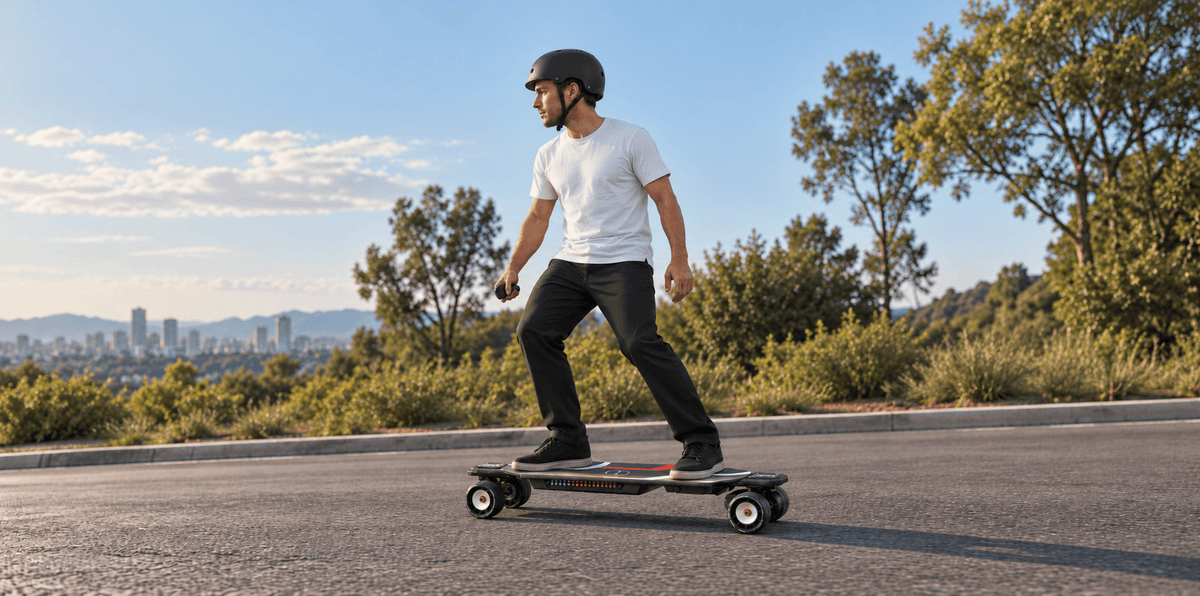
La CYBER MAX standard è pensata principalmente per il carving ricreativo, i giri nel quartiere, gli spostamenti nel campus e i tragitti brevi su strade asfaltate e ben tenute. La tavola a grandezza naturale e il sistema di motori hub sono più adatti ai rider che privilegiano una guida su strada prevedibile e una manutenzione semplice rispetto alla massima autonomia o a prestazioni aggressive.
La CYBER MAX abbina una piattaforma delle dimensioni di un longboard a un aspetto più spigoloso e tecnologico. Le dimensioni della tavola, la forma concava, la geometria dei truck e i componenti elettronici integrati influiscono anche sulla posizione e sul controllo della tavola da parte dei rider.
Con una lunghezza di 38 pollici e una larghezza di 11 pollici, la tavola offre molto più spazio per stare in piedi rispetto a uno skateboard elettrico compatto. I rider possono mantenere una posizione con i piedi alla larghezza delle spalle senza essere stretti tra il nose e il tail, con spazio sufficiente per regolare l’angolazione dei piedi e prepararsi ad accelerare o frenare.
Il deck combina il composito brevettato PPS e la fibra di vetro con una superficie opaca dall’aspetto in fibra di carbonio. I paraurti in silicone proteggono le estremità, mentre il vano integrato conferisce alla parte inferiore un aspetto più pulito rispetto alle tavole con diversi alloggiamenti dei componenti a vista. Il design geometrico e l’illuminazione RGB creano un look distintivo, anche se i rider che preferiscono i longboard tradizionali in legno potrebbero trovare il design visivamente aggressivo.
Una sede per i piedi profonda 7 mm e una superficie antiscivolo con motivo a rombi aiutano a definire la posizione del rider e offrono leva durante le curve in appoggio su talloni e punte. Il profilo concavo dovrebbe facilitare la percezione dei bordi del deck, ma i rider potrebbero comunque dover regolare la posizione in base alla propria altezza, al numero di scarpe e alle preferenze di guida.
Il comfort di guida dipende dall’effetto combinato del deck, delle ruote, della superficie stradale, della velocità e della postura del rider. Il modello standard è configurato per la guida su strada, non per isolare dalle asperità del terreno.
Il deck flessibile Xcomposite ha una maggiore elasticità rispetto a una piattaforma corta e rigida, permettendogli di assorbire alcuni piccoli movimenti delle normali pavimentazioni. Questo può ridurre le vibrazioni ad alta frequenza, ma la flessibilità del deck non può eliminare l’impatto di crepe profonde, giunti rialzati o asfalto ruvido. Quando cambia la qualità della superficie, è comunque necessario rallentare.
Le ruote in poliuretano da 90 mm sono adatte all’asfalto, ai percorsi in cemento e ad altre superfici ben tenute. Il diametro ridotto mantiene la tavola relativamente vicina al terreno e favorisce una risposta pronta su strada, ma crepe profonde, ghiaia, giunti rialzati e detriti si avvertiranno più che con ruote di diametro maggiore.
La piattaforma ampia e la sede sagomata per i piedi riducono la necessità di riposizionare continuamente i piedi. Tuttavia, le ruote da 90 mm possono comunque trasmettere le irregolarità della strada durante le sessioni più lunghe. Tenere le ginocchia rilassate, moderare la velocità, cambiare occasionalmente la pressione dei piedi e scegliere con attenzione il percorso di solito incide in modo significativo sulla fatica.

Il CYBER MAX standard è configurato come longboard elettrico stabile, anziché come una mini tavola estremamente agile. La risposta in curva è determinata dai truck larghi, dall’angolo della piastra base, dalle boccole, dalla concavità del deck e dalla configurazione del rider.
La tavola monta truck forgiati Max III da 12 pollici, con un angolo della piastra base di 45 gradi e boccole da 95A. Insieme al deck lungo, questa configurazione favorisce curve ampie e controllate e una carvata rilassata, anziché uno sterzo estremamente sensibile.
La concavità per i piedi permette ai rider di esercitare una leva su entrambi i bordi della tavola, ma per affrontare curve più strette è necessario applicare una pressione decisa con tallone e punta. La piattaforma larga offre spazio per regolare la posizione dei piedi, mentre le ruote da strada mantengono la tavola più bassa rispetto alle versioni PRO e X, dotate di ruote più grandi. I rider alle prime armi dovrebbero imparare gradualmente a curvare più stretto, invece di allentare subito i truck.
In genere, allentare i truck migliora la risposta in curva, ma può ridurre la sicurezza in rettilineo. Stringerli aumenta di solito la stabilità, ma richiede più sforzo per curvare. Regola entrambi i lati con piccoli incrementi uniformi e prova il risultato a bassa velocità prima di utilizzare una modalità di guida più veloce.
La CYBER MAX standard combina due motori nel mozzo con un regolatore elettronico di velocità Hobbywing V6.0 FOC e la frenata elettronica rigenerativa. Questi sistemi determinano la risposta della tavola ai comandi del telecomando.
La configurazione con motori nel mozzo e il controller Hobbywing sono pensati per garantire un’erogazione progressiva della potenza. La modalità di guida più bassa è quella giusta per imparare a gestire la risposta dell’acceleratore, la posizione dei piedi e lo spazio di frenata. Prima di accelerare, i rider dovrebbero trovare una posizione stabile, invece di cercare di sistemare entrambi i piedi dopo l’attivazione dei motori.
Il telecomando OLED include quattro modalità di guida, che consentono di aumentare la reattività man mano che migliora il controllo. I due motori da 650 W offrono una potenza sufficiente per la normale guida su strada, senza raggiungere quella dei motori delle versioni PRO e X. Le modalità più veloci comportano comunque un maggiore trasferimento del peso durante le partenze e in salita, quindi è consigliabile passare gradualmente dall’una all’altra.
Il freno rigenerativo è progettato per rallentare progressivamente la tavola quando si aziona il telecomando con gradualità. Lo spazio di frenata varia in base alla velocità, alla pendenza, al peso del rider, all’aderenza disponibile e alle condizioni della batteria. Provare il freno a passo d’uomo aiuta a capire come risponde prima di affrontare il traffico, le salite o le aree affollate.
Oltre alle specifiche tecniche, la praticità nell’uso quotidiano dipende da quanto facilmente i rider riescono a mantenere la velocità, leggere il telecomando, regolare le impostazioni e gestire la tavola tra un’uscita e l’altra.
La tavola lunga, i truck larghi, le boccole rigide e la geometria dei truck a 45 gradi favoriscono una configurazione da crociera relativamente stabile. È utile nei tratti rettilinei più lunghi, dove un’eccessiva sensibilità dello sterzo può diventare stancante. I rider dovrebbero comunque evitare di considerare i 28 mph di velocità massima indicati come una normale velocità di crociera senza prima verificare la configurazione dei truck, le condizioni della strada e lo spazio di frenata disponibile.
Il telecomando OLED consente di gestire accelerazione, frenata, modalità di guida e attivazione della tavola senza dover usare il telefono durante la corsa. Il laccetto da polso deve restare allacciato, per ridurre il rischio di far cadere il telecomando durante una fermata improvvisa o quando si scende dalla tavola.
Il CYBER MAX è compatibile con l'app smart Tuya di Maxfind, mentre il telecomando OLED resta il comando principale durante la guida. Le funzioni disponibili nell'app possono variare in base al firmware e alla versione dell'app; si consiglia quindi di seguire la guida di connessione Maxfind più aggiornata.
Il modello standard ha la batteria più piccola dell'attuale gamma CYBER MAX. È pensato per percorsi brevi o di media distanza, da ripetere, piuttosto che per uscite prolungate senza possibilità di ricarica.
Maxfind dichiara per la batteria da 158,4 Wh un'autonomia fino a 15 miglia. È consigliabile pianificare percorsi ben al di sotto di questo limite e tenere una riserva, anziché fare affidamento sull'intera distanza pubblicizzata. Gli usi più realistici sono brevi tragitti casa-lavoro, giri nel campus, spostamenti nel quartiere e uscite ricreative.
Velocità elevate, accelerazioni frequenti, salite, freddo, asfalto sconnesso e carichi più pesanti riducono in genere l'autonomia effettiva. Chi fa affidamento sulla tavola per gli spostamenti dovrebbe calcolare l'intero tragitto di andata e ritorno e non considerare l'autonomia dichiarata dal produttore come garantita in qualsiasi condizione.
Il tempo di ricarica indicato è di circa due ore con il caricabatterie UL da 1,5 A in dotazione. Il tempo effettivo dipenderà dalla carica residua della batteria, dalla temperatura, dall'età e dalle condizioni. La tavola va caricata in un luogo asciutto e ventilato, usando il caricabatterie specificato e seguendo le istruzioni più recenti per la cura della batteria.
Un longboard elettrico full-size può essere comodo su strada, ma meno pratico da trasportare o riporre. Il CYBER MAX include una maniglia rimovibile, anche se le sue dimensioni complessive restano un fattore importante.
Il modello standard pesa 19,8 libbre. Per molti utenti, trasportarla da un veicolo all'interno di un edificio dovrebbe essere gestibile, ma camminare a lungo o salire diverse rampe di scale può diventare faticoso. La maniglia rimovibile offre una presa più sicura rispetto a tenere la tavola da un truck e può essere staccata quando non serve.
La tavola da 38 per 11 pollici entra in molti bagagliai, sotto scrivanie più grandi o accostata a una parete, ma non in uno zaino o in un armadietto compatto. Chi combina la tavola con i mezzi pubblici dovrebbe valutare come posizionarla e controllarla negli spazi affollati.
CYBER MAX include dieci modalità di illuminazione ambientale RGB. Queste luci possono migliorare la visibilità per chi si trova nelle vicinanze in condizioni di scarsa illuminazione, ma non sostituiscono gli indumenti riflettenti, una luce sul casco o l’illuminazione richiesta dalle normative locali. Inoltre, la classificazione IPX5 non va interpretata come un’autorizzazione a guidare sotto la pioggia o nell’acqua stagnante senza rischi.
|
Pro |
Contro |
|
Tavola spaziosa da 38 pollici |
L’autonomia dichiarata può essere insufficiente per i percorsi più lunghi |
|
Truck forgiati da 12 pollici per una guida stabile |
Trasportare la tavola può diventare faticoso |
|
Configurazione meccanicamente semplice con motori hub |
Le ruote da 90 mm sono adatte alle pavimentazioni ben tenute |
|
Quattro modalità di guida e telecomando OLED |
Potenza inferiore rispetto a PRO e X |
|
Tempo di ricarica dichiarato: circa due ore |
Le dimensioni a grandezza naturale richiedono più spazio per riporla |
|
Maniglia di trasporto rimovibile |
Le luci RGB non sostituiscono un sistema di illuminazione di sicurezza dedicato |
I principali punti di forza del modello standard sono la tavola spaziosa, la maneggevolezza pensata per la strada e la configurazione relativamente semplice con motori hub. I suoi limiti sono più rilevanti per chi ha bisogno di maggiore autonomia, più potenza, ruote più grandi o deve trasportarla spesso.
La versione CYBER MAX giusta dipende dal percorso, dalle caratteristiche di guida desiderate e dalla frequenza con cui occorre trasportare la tavola. Specifiche superiori non sono automaticamente migliori per tutti.
La versione standard è adatta a chi usa soprattutto strade ben tenute, piste ciclabili, campus e strade di quartiere. I due motori hub e la piattaforma a grandezza naturale offrono una soluzione semplice per passeggiate silenziose, curve prevedibili e una manutenzione ordinaria più facile.
CYBER MAX LR mantiene i motori hub e le ruote da 90 mm, ma aumenta l’autonomia dichiarata a 31 miglia grazie a una batteria da 345 Wh. È più adatta a chi percorre strade asfaltate, ma regolarmente affronta distanze superiori a quelle che la batteria standard può sostenere comodamente. La batteria più grande aumenta il peso.
PRO e X utilizzano motori a cinghia e ruote Space da 107 mm, offrendo una potenza superiore e una migliore capacità di affrontare pavimentazioni irregolari. PRO monta due motori da 900 W e ha un’autonomia dichiarata fino a 34 miglia. X monta due motori da 1800 W, dichiara una coppia di 6 Nm per motore e un’autonomia fino a 37 miglia, con una velocità massima di 37 mph. Le prestazioni superiori comportano un peso maggiore e una manutenzione più complessa della trasmissione a cinghia.

La versione standard MAXFIND CYBER MAX offre una tavola spaziosa, la semplicità dei motori hub e una configurazione pensata per una guida controllata su strada. È una scelta pratica per chi apprezza una maneggevolezza prevedibile e non ha bisogno dell’autonomia estesa o della potenza superiore delle configurazioni più costose.
LR, PRO e X restano opzioni migliori quando si dà la priorità a percorsi più lunghi, prestazioni superiori o maggiore comfort su pavimentazioni irregolari.
Condividi:
Come usare uno skateboard elettrico in posizione goofy
Configurazioni della trasmissione e della coppia Maxfind per spostamenti silenziosi nel campus