

Black-Friday-Angebote. Niedrigster Preis des Jahres 🏷️
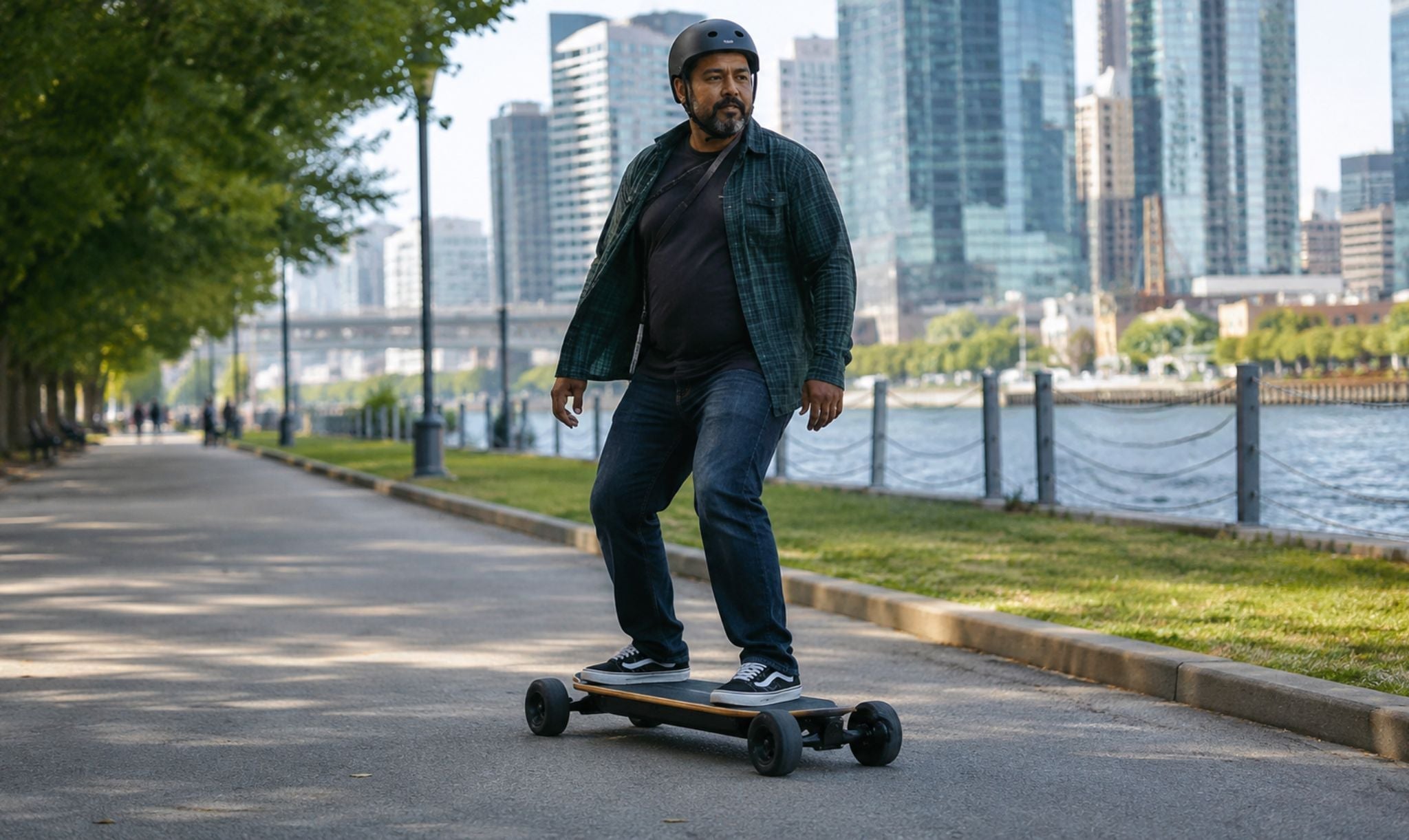
Ein gutes Elektroskateboard für schwere Fahrer sollte sich stabil anfühlen, berechenbar bremsen und auf echten Straßen genügend Leistung bieten. Die maximale Traglast ist wichtig, aber nur ein Teil der Entscheidung. Vergleiche vor dem Kauf das Deck, die Motoren, den Akku, die Räder, die Eignung für deine Strecke und wie nahe dein Fahrgewicht an der angegebenen Traglast des Boards liegt.
Schwere Fahrer sollten nach einem Elektroskateboard mit hoher offizieller Traglast, einem stabilen Deck, zuverlässigen Bremsen, ausreichend Motorleistung für Steigungen und einem Akku suchen, der auch bei zusätzlicher Last noch eine brauchbare Reichweite bietet. Ein längeres oder breiteres Deck kann sich außerdem sicherer anfühlen als ein sehr kurzes, kompaktes Board. Entscheide dich nicht nur anhand der Höchstgeschwindigkeit. Für schwerere erwachsene Fahrer sind Stabilität, Kontrolle und die Reichweite im Alltag meist wichtiger als der höchste Wert auf einem Datenblatt.
Die angegebene maximale Traglast hilft dir, Boards auszuschließen, die eindeutig zu klein sind. Sie zeigt aber nicht, wie sich das Board unter realen Fahrbedingungen anfühlt. Schwere Fahrer sollten sie als ersten Filter und nicht als endgültige Antwort betrachten.
Ein Board kann innerhalb seiner offiziellen Gewichtsgrenze liegen und sich trotzdem instabil anfühlen, wenn das Deck zu schmal, der Radstand zu kurz oder die Bremsreaktion zu schwach ist. Die angegebene Zahl verrät auch nicht, wie viel Reichweite du einbüßen könntest, wie gut das Board Steigungen bewältigt oder wie komfortabel es sich auf rauem Asphalt fährt. Liegt dein Körpergewicht nahe an der offiziellen Grenze, solltest du zusätzliches Gewicht durch Schuhe, Kleidung, einen Rucksack und alles, was du sonst noch mitnimmst, einkalkulieren.
Ein höheres Fahrergewicht kann Beschleunigung, Reichweite und Steigfähigkeit verringern. Außerdem kann sich der Bremsweg verlängern, besonders auf Gefällestrecken oder unebenen Straßen. Das bedeutet nicht, dass schwere Fahrer Elektroskateboards meiden sollten. Vielmehr muss das Board für deine tatsächliche Strecke ausreichend stabil und leistungsstark sein und nicht nur eine kurze Testfahrt auf ebener Strecke schaffen.
Wenn die Traglast passend erscheint, vergleiche die Teile, die Kontrolle, Komfort und nutzbare Leistung beeinflussen. Diese technischen Daten sind wichtiger als eine einzelne Höchstgeschwindigkeit.
Die Motorleistung ist vor allem beim Anfahren, Bergauffahren und Fahren mit zusätzlicher Last wichtig. Schwere Fahrer sollten darauf achten, wie gut ein Board beschleunigt und Steigungen bewältigt, nicht nur darauf, wie schnell es auf ebener Strecke fahren kann. Eine stärkere Ausstattung kann außerdem für ein angenehmeres Fahrgefühl sorgen, weil das Board beim Anfahren, Abbiegen oder Bergauffahren nicht jedes Mal so stark beansprucht wird.
Die angegebene Reichweite wird normalerweise unter kontrollierten Bedingungen gemessen, daher kommen schwerere Fahrer im Alltag möglicherweise weniger weit. Berücksichtige deine gesamte Hin- und Rückfahrt und nicht nur die einfache Strecke. Wenn deine Route Steigungen, Wind, unebenen Asphalt oder häufige Stopps umfasst, solltest du mehr Akkureserve einplanen, als du für die genaue Strecke benötigst.
Bremsen sind für schwere Fahrer besonders wichtig, da ein höheres Gewicht den Bremsweg verlängern kann. Das Board sollte vorhersehbar abbremsen, ohne verzögert, schwach oder zu abrupt zu wirken. Übe das Bremsen an einem ruhigen Ort, bevor du schnell fährst, damit du weißt, wie das Board reagiert.
Ein längeres und breiteres Deck bietet mehr Platz für die Füße und kann sich bei hohem Tempo stabiler anfühlen. Schwere Fahrer bevorzugen möglicherweise auch ein Deck, das sich unter Belastung nicht zu stark durchbiegt. Wenn deine Füße beengt sind oder deine Schuhe weit über die Seiten hinausragen, ist das Board möglicherweise zu klein für deinen Körper und Fahrstil.
Größere Räder bewältigen Risse, Fugen und unebenen Asphalt normalerweise besser als sehr kleine Räder. Für schwere Fahrer wirkt sich auch der Komfort auf die Kontrolle aus. Eine bessere Dämpfung von Unebenheiten kann das Board stabiler wirken lassen, wenn du auf älterem Asphalt, über kleine Hindernisse oder auf unebenen Radwegen fährst.
Verschiedene Boardtypen lösen unterschiedliche Probleme. Die beste Wahl hängt davon ab, wo du am häufigsten fährst, wie oft du das Board tragen musst und wie stabil sich die Fahrt anfühlen soll.
Elektro-Longboards sind für schwerere Fahrer oft eine gute Wahl, da sie normalerweise mehr Deckfläche und einen stabileren Stand bieten. Sie eignen sich besser zum Pendeln, entspannten Cruisen und für längere Fahrten, lassen sich aber weniger bequem tragen als Mini-Boards.
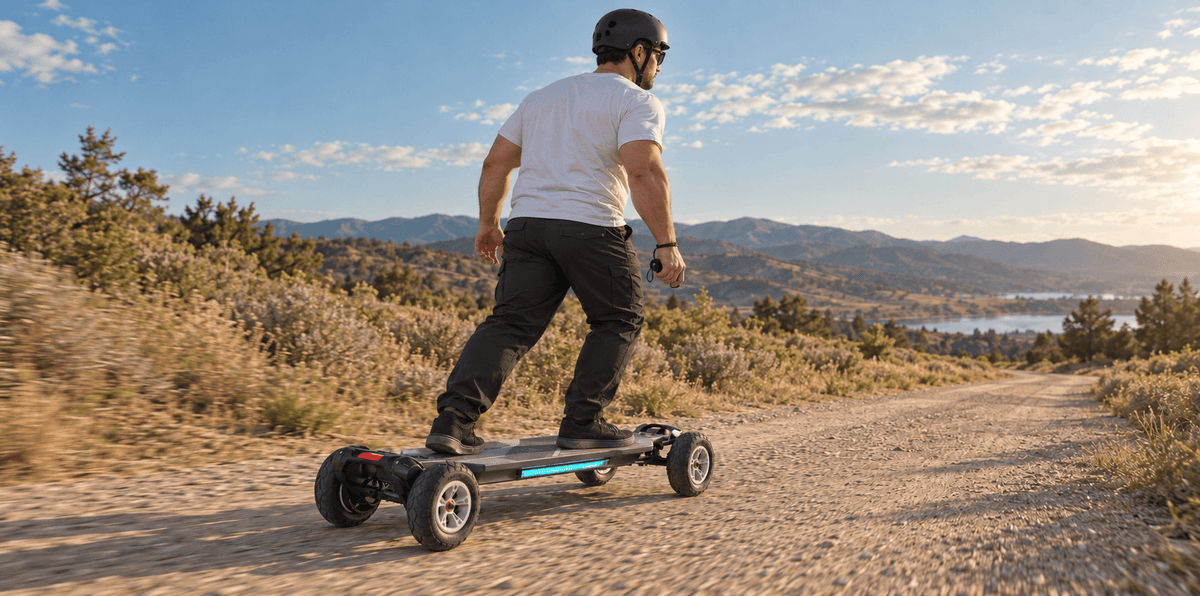
All-Terrain-Elektroskateboards sind sinnvoll, wenn deine Strecke unebenen Asphalt, rissige Wege, festgefahrene Erde oder andere unebene Oberflächen umfasst. Größere Räder und ein stabileres Setup können die Fahrt angenehmer machen, besonders wenn Komfort und Kontrolle wichtiger sind als geringes Gewicht und einfache Transportierbarkeit.
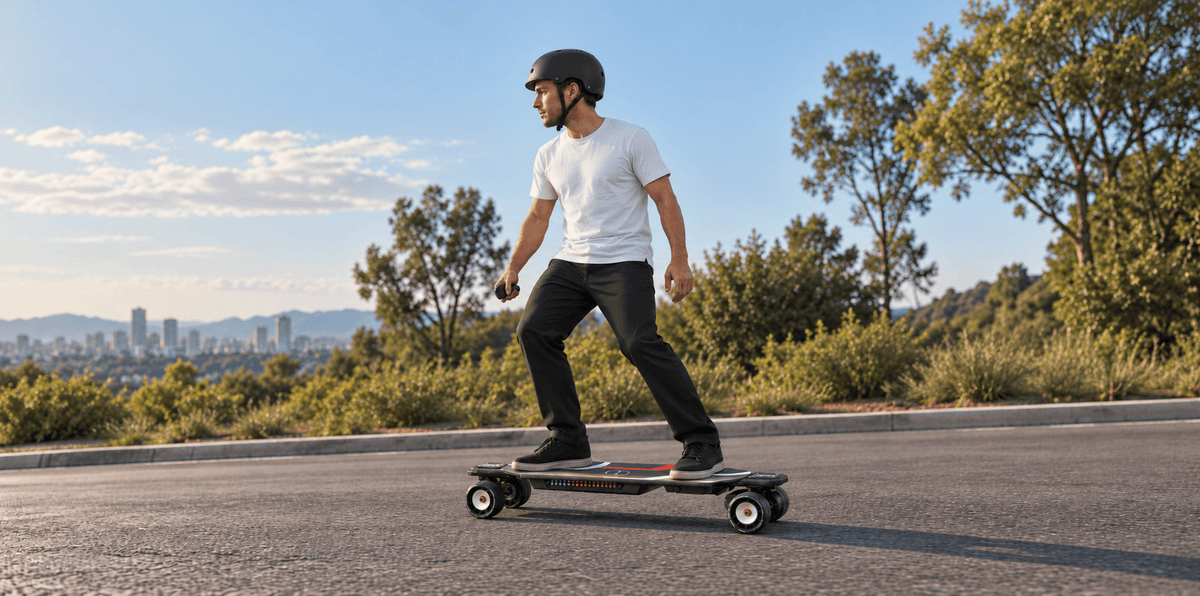
Mini-Elektroskateboards lassen sich leichter tragen und verstauen und eignen sich besser für kurze Strecken. Sie können für schwerere Fahrer geeignet sein, wenn die offizielle maximale Traglast, die Deckfläche und die Streckenbedingungen passen. Bei hohem Tempo oder auf unebenem Asphalt können sie sich jedoch weniger stabil anfühlen. Schwere Fahrer sollten ein Mini-Board nicht allein deshalb wählen, weil es leicht zu tragen ist.
Maxfind-Fahrer sollten Modelle nach Strecke, Komfort und Transportierbarkeit vergleichen, statt nach einem Board zu suchen, das für alle passt. Die beste Wahl hängt davon ab, wo du fährst und wie viel Stabilität du brauchst.
Für schwerere Fahrer, denen beschädigter Asphalt, zusätzlicher Komfort und ein sattes Fahrgefühl wichtig sind, ist das Maxfind CYBER ULTRA eine überzeugende Option, die sich zuerst zu vergleichen lohnt. Es passt besser, wenn deine Strecke unebene Oberflächen, längere Fahrten oder Abschnitte umfasst, auf denen sich kleinere Rollen hart anfühlen können. Fahrer sollten dennoch die offizielle Traglast, Reichweite und Rollenkonfiguration prüfen und sicherstellen, dass die Größe den Anforderungen an Aufbewahrung und Transport im Alltag entspricht.

Für Fahrer, die eine ausgewogene Kombination aus Reichweite, Komfort und Alltagstauglichkeit suchen, ist das Maxfind CYBER MAX eine praktische Option zum Vergleichen. Es eignet sich für den täglichen Arbeitsweg, da Pendler in der Regel ein stabiles Fahrverhalten, ausreichend Reichweite und ein Board benötigen, das nicht nur für unwegsames Gelände ausgelegt ist. Vergleiche es anhand deiner Hin- und Rückstrecke, der Steigungen, des Straßenbelags und der Frage, wie oft du das Board tragen musst.

Für Fahrer, die vor allem ein kompaktes Board für kurze Strecken, zur platzsparenden Aufbewahrung oder zum einfachen Tragen brauchen, ist das Maxfind CYBER MINI die passendste kompakte Option. Es eignet sich für glattere Straßen und den leichteren täglichen Einsatz, aber schwerere Fahrer sollten trotzdem die offizielle Höchstzuladung, den Platz auf dem Deck und die Rollenkonfiguration prüfen, bevor sie ein Mini-Board als ihr Hauptboard nutzen.

Ein Board mag attraktiv wirken, weil es schnell, leicht oder erschwinglich ist, aber das macht es nicht immer zu einer guten Wahl. In den folgenden Situationen sollten schwerere Fahrer besonders vorsichtig sein.
Vermeide ein Board, wenn dein Gesamtgewicht beim Fahren sehr nahe an der offiziellen Höchstzuladung liegt. Das Gewicht beim Fahren umfasst dein Körpergewicht sowie Schuhe, Rucksack, Kleidung und alles, was du sonst noch mitnimmst. Ein zusätzlicher Spielraum kann dazu beitragen, dass sich das Board stabiler anfühlt und Motor, Akku, Bremsen und Deck bequem arbeiten können.
Wenn deine Strecke lange Anstiege, steile Abfahrten oder beschädigten Asphalt umfasst, solltest du ein Board nicht allein deshalb auswählen, weil es die Gewichtsgrenze einhält. Ein schwererer Fahrer benötigt auf einer anspruchsvollen Strecke stärkere Unterstützung durch Motor, Bremsen, Akku, Deck und Rollen. In diesem Fall ist ein größeres Board oder ein Board im All-Terrain-Stil meist ein besserer Vergleichspunkt als ein kompaktes Board mit kleinen Rollen.
Ein enges Deck kann das Kurvenfahren, Bremsen und Balancieren erschweren, besonders für Fahrer mit größeren Schuhen oder einem breiteren Stand. Wenn du nicht bequem auf dem Board stehen kannst, ist es möglicherweise nicht die richtige Wahl, selbst wenn Motor- und Akkudaten gut aussehen.
Prüfe vor dem Kauf die offiziell angegebene maximale Traglast und plane eine zusätzliche Reserve für Dinge ein, die du täglich mitnimmst. Vergleiche die Motorleistung für Steigungen, prüfe die Akkukapazität im Hinblick auf die Reichweite im Alltag und vergewissere dich, dass das Bremssystem zu deinen Strecken passt. Achte außerdem auf Decklänge und -breite, Standfläche, Radgröße, Ersatzteile, Garantie und Support. Wenn du mehrere Maxfind-Boards vergleichst, beginne mit deinen Strecken: unebene Straßen, tägliches Pendeln oder kurze Fahrten auf engem Raum.
Das beste elektrische Skateboard für schwere Fahrer ist nicht immer das schnellste oder leichteste Modell. Es ist das Board, das ausreichend Traglastreserve, einen sicheren Stand, berechenbares Bremsverhalten und eine ausreichende Reichweite für deine üblichen Strecken bietet. Entscheide dich für Stabilität statt Geschwindigkeit, denn ein Board, das sich auf deinen täglichen Strecken gut kontrollieren lässt, ist langfristig meist die bessere Wahl als eines, das nur auf dem Papier beeindruckt.
Achte auf ein elektrisches Skateboard mit einer offiziell angegebenen maximalen Traglast von mindestens 300 Pfund. Prüfe außerdem Deckstabilität, Bremsen, Motorleistung, Radgröße und Reichweite, denn die Traglast allein garantiert keine komfortable Fahrt.
Fahrer mit Schuhgröße 12 fühlen sich auf einem längeren und breiteren Deck eines elektrischen Skateboards meist stabiler. Bei elektrischen Skateboards sind Standfläche, Deckbreite und Gesamtstabilität wichtiger als die Größenangaben für herkömmliche Skateboard-Decks allein.
Ein leichteres Board lässt sich einfacher tragen, während ein schwereres Board möglicherweise stabiler auf der Straße liegt und Platz für größere Akkus oder stärkere Komponenten bietet. Schwere Fahrer sollten Tragbarkeit, Stabilität, Reichweite und Bremskontrolle gegeneinander abwägen.
Ein elektrisches Skateboard mit 2WD treibt zwei Räder an, während ein Setup mit 4WD vier Räder antreibt. 4WD kann die Traktion und Beschleunigung verbessern, aber auch das Gewicht, die Kosten und den Akkuverbrauch erhöhen. Deshalb sollten die meisten Fahrer vor der Entscheidung das gesamte Setup vergleichen.
Weitere Lektüre: Wie viel Gewicht kann ein elektrisches Skateboard tragen?
Teilen:
So beurteilen Sie Sicherheit und Zuverlässigkeit von Elektro-Skateboards im Pendelverkehr
So fährst du ein elektrisches Skateboard im Goofy-Stance