

„Black Friday“-Preisgarantie 🔒
--
Tage--
Stunden--
Minuten--
SekundenQuick Answer: For cracked pavement, rough brick, and patched asphalt, prioritize wheel or tire construction and diameter first, then use deck flex to soften the remaining chatter. [1] Within Maxfind’s CYBER range, the CYBER ULTRA pneumatic configurations are the strongest options to consider for persistently rough routes, while CYBER MINI and CYBER MAX configurations with 107mm Space Wheels offer a street-oriented comfort option. [2][3][4][5]
A useful starting point is to identify what makes your commute uncomfortable: individual jolts at cracks and seams, continuous buzzing through your feet, or both. That distinction helps you choose a setup that matches the road surface.

Wheels handle the first impact from the road, so they should be the first hardware priority for a rough commute. Deck flex then helps manage the vibration that gets past them. [1]
For seams and shallow cracks, diameter matters because a larger wheel meets an obstacle more gradually. In effect, the obstacle is smaller relative to the wheel, which can make the transition feel less abrupt on worn asphalt. [6] If your ride is repeatedly interrupted by sharp knocks at pavement joints, rollover should be high on your list.
For continuous chatter across brick and coarse asphalt, look beyond diameter alone. Wheel shape, width, rebound, and internal design can change ride feel even when two wheels have the same hardness rating. [6] A wheel’s ability to deform under load matters too.
Pneumatic tires use air-filled construction to provide shock absorption. They offer a comfort-oriented approach to rough surfaces, with the practical trade-off of tire maintenance and puncture risk. [7] That makes them especially worth considering when uneven pavement makes up a large part of the route.
Before choosing hardware, identify the stretches that consistently cause discomfort. A mostly smooth commute with a few shallow seams calls for a different compromise than several miles of broken asphalt and brick. If you already have a board, wheel changes also need to fit its clearance and drive system; larger wheels can change acceleration, braking feel, ride height, and range. [6]
A flexible deck is most useful when the wheels already handle the route’s larger impacts reasonably well. It acts as a second layer of vibration control, taking the edge off the high-frequency road texture that reaches your stance. [1]

This matters on longer rides. If the board already rolls over seams acceptably but a persistent buzz makes the ride tiring, deck behavior becomes more important in the comfort decision. The goal is a wheel-and-deck combination that manages both kinds of disturbance.
For a 10-mile commute, judge comfort across the whole ride. Notice whether harshness builds gradually, whether one particular surface triggers it, and whether you start stiffening your legs to cope. Use those observations to evaluate a change rather than choosing by deck flexibility alone.
Reduced road harshness is a comfort benefit, not a treatment for joint pain or numbness. Stop and take a break if your feet lose sensation or if pain affects your control. Persistent or recurring numbness, knee pain, or ankle pain deserves medical attention rather than being managed only through board upgrades.
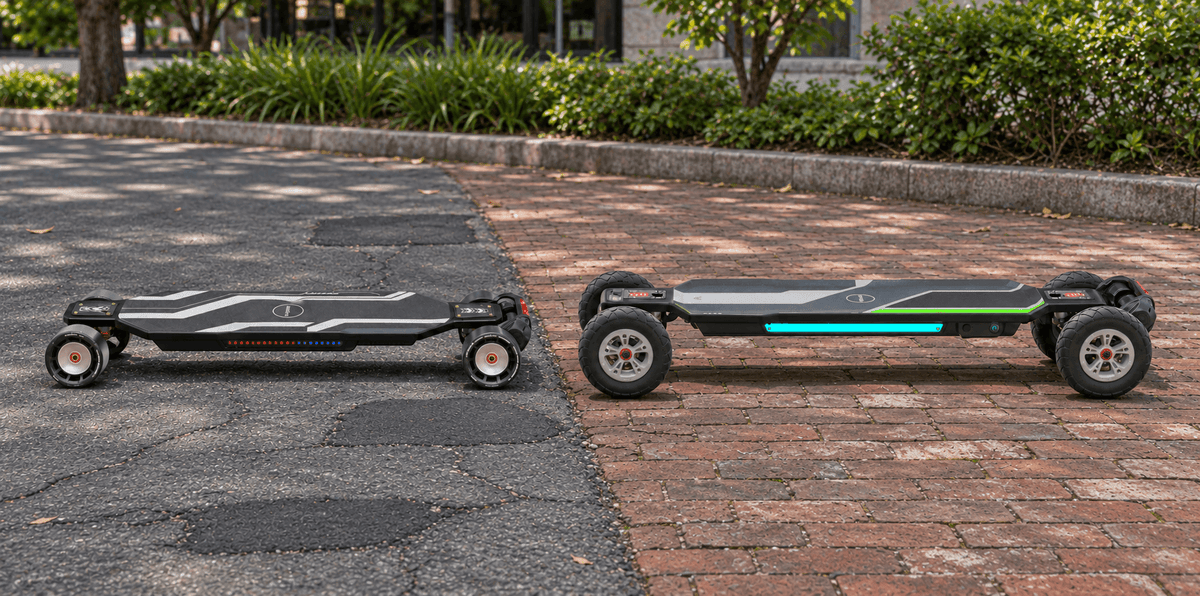
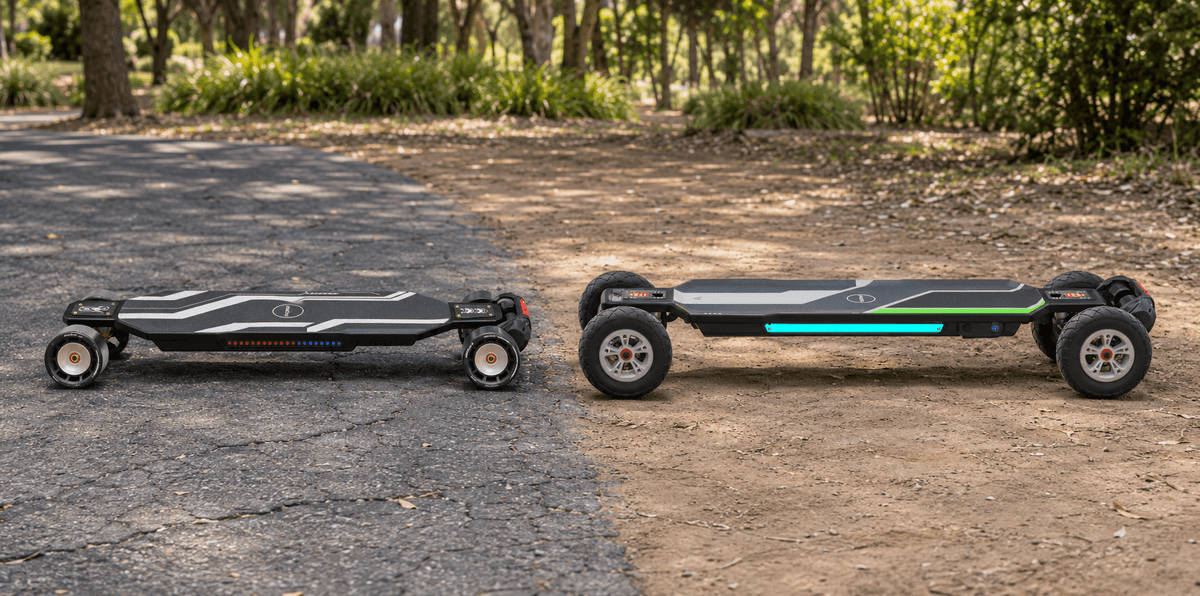
Within the CYBER range, the key distinction is the actual wheel configuration. Check the configuration for standard street wheels, hollow-pocket urethane wheels, or pneumatic tires.
| CYBER series | Comfort-relevant wheel configurations | Deck construction and practical fit |
|---|---|---|
| CYBER MINI | MINI and AIR: 90mm PU wheels. PRO and X: 107mm Space Wheels. [3] The Space Wheels use 74A urethane and 10 hollow pockets that allow the polyurethane to flex. [3] | PPS composite + glass fiber deck. [3] For a street-oriented setup on mixed pavement, prioritize the 107mm configuration; reserve the 90mm option for a smoother route. |
| CYBER MAX | Standard and LR: 90mm PU wheels. PRO and X: 107mm Space Wheels. [4] The Space Wheels use 74A urethane and 10 hollow pockets. [4] | PPS composite + glass fiber deck, with a 38-inch board length. [4] This is the longer street-oriented option to consider if you want the hollow-pocket wheel setup alongside a flex-oriented deck. |
| CYBER ULTRA | Belt motor: 175mm AT pneumatic wheels. Hub motor: 165mm AT pneumatic wheels. The belt 2-in-1 configuration includes 175mm pneumatics + 107mm Space Wheels. [2] | PPS composite + glass fiber deck. [2] The pneumatic configurations are the priority for routes dominated by cracked pavement and repeated rough sections; the clearest independent comfort observations concern the belt version with 175mm tires. [5] |
For mostly smooth city riding with intermittent rough patches, the 107mm street-oriented configurations are a reasonable first option to consider. Their hollow-pocket construction adds compliance while keeping a urethane-wheel format. [4][3] Choose between the MINI and MAX based on your preferred platform.
For persistent rough pavement, the CYBER ULTRA belt configuration with 175mm pneumatic tires is the strongest single step to consider. In Electric Skateboard HQ’s review of that configuration, the tires absorbed road vibration well and rolled over cracks and gravel comfortably, while the semi-flex composite deck also softened vibration. [5] That combination directly addresses both the first impact and the chatter that remains.
Maxfind positions its PPS/Xcomposite construction around road-chatter absorption, and the CYBER MAX’s Xcomposite deck is also described as flexible and comfort-oriented. [8][4] For the reviewed ULTRA, the independent ride impressions support considering the tires and deck together.
The same reviewed CYBER ULTRA configuration sits relatively high because its deck is only slightly dropped and the 175mm tires add height. [5] The review describes a stable ride at speed, but says the higher center of gravity slightly reduces how deeply the rider can lean into carves. [5]
For a 10-mile commute, that means smoother handling over rough pavement can come with a taller, less low-slung carving feel. Give yourself time on a short, familiar route to assess turning, braking, and stance before committing to the full commute.
Pneumatic tire maintenance is also part of the decision. If rough pavement is a daily problem, the comfort-oriented setup may justify that upkeep; include tire checks in your preparation and use the pressure specified for your tires. [7]
Keep your knees slightly bent rather than locked straight. That lets your legs move with the board through every small disturbance.

Use a balanced, comfortable stance that allows you to steer and brake without stretching to maintain foot contact. There is no need to chase a precise foot angle or spacing as a vibration cure. If you need to reposition your feet substantially, slow down and do so on a smooth, predictable section.
Keep the standing surface clean and dry; damp shoes and a wet deck can compromise your footing. [9] If fatigue makes you stiffen up or grip the deck awkwardly with your feet, stop somewhere safe and reset before continuing.
Not always. Wheel diameter, construction, and road surface all matter. For cracked pavement, prioritize the wheels because they handle the initial impact; deck flex then helps with the remaining chatter. [6][1]
Seams and shallow cracks create distinct impacts, while coarse pavement can produce continuous chatter through the board. Larger wheels improve rollover, and a flex-oriented deck can soften the remaining road texture. [6][1] Numbness by itself cannot tell you the cause. Stop riding if sensation or control is affected, and seek medical advice if it recurs.
Electric Skateboard HQ found the CYBER ULTRA belt version with 175mm pneumatics comfortable and stable, while noting that its taller stance reduced the low, planted feeling during deep carving. [5] Build up to the full commute after checking how the setup feels on a shorter familiar ride.
Keep your knees slightly bent and your stance balanced, with enough freedom to steer and brake comfortably. Avoid locking your legs through rough sections, and take a break when fatigue or numbness starts affecting your control.

Teilen:
So wählen Sie ein elektrisches Skateboard für holprige Straßen, Schotterwege und steile Hügel aus