

Promotion de rentrée scolaire ! 🏷️ Un excellent rapport qualité-prix !

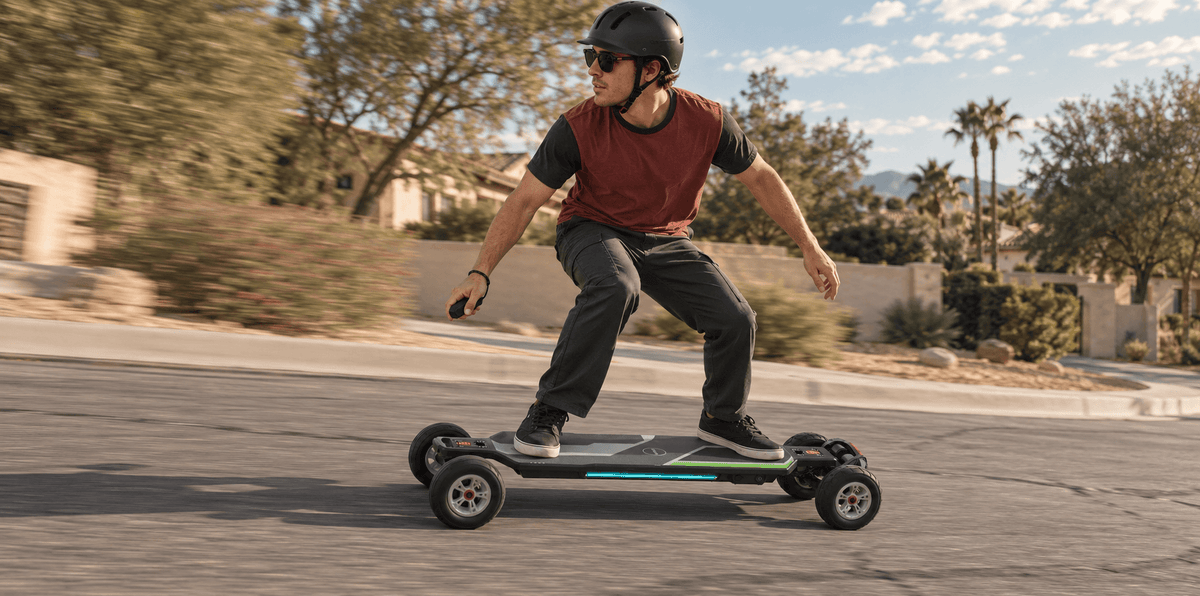
Cracked asphalt, brick crosswalks, patched bike lanes, and surprise potholes all create the same problem on an electric skateboard: vibration stacks up fast, and your feet usually feel it before the rest of you does. The short answer is that rough-road comfort comes mostly from three hardware layers—pneumatic tire size and construction, deck flex and material, and suspension-style design—and the Maxfind CYBER ULTRA is a credible mid-priced option because it combines confirmed all-terrain pneumatic wheels with a soft, semi-flexible PPS composite + fiberglass deck, a 43 x 13 in platform, a 7 mm concave, a 648 Wh battery, and a listed price of $999. [1]
That makes it easy to place in the market. This board is clearly positioned for rough roads and cracked city streets, and the hardware supports that use case. At the same time, there is no verified suspension system here, no published lab measurement showing how much vibration it removes, and the third-party comfort evidence is still thinner than what riders can point to for Evolve, Propel, Exway, or ONSRA. If you want a board that looks purpose-built for ugly pavement without jumping straight to premium pricing, the CYBER ULTRA belongs in the conversation. If you want the most documented shock isolation available, the conversation gets more complicated.
The CYBER ULTRA makes sense when your main problem is everyday street harshness rather than full-on off-road punishment. Its comfort story is not marketing fluff pulled from nowhere; it rests on two confirmed pieces of hardware that matter on rough pavement: all-terrain pneumatic wheels and a soft, semi-flexible deck built from PPS composite + fiberglass. [1]
That combination matters because rough-road comfort on an e-board usually starts before speed, acceleration, or top-end range ever enter the picture. A large pneumatic tire can deform over cracks and rough brick. A semi-flex deck can take the edge off the chatter that still gets through. On this model, the deck is 43 in long and 13 in wide, which gives the rider a broad stance platform, and the 7 mm concave helps keep feet planted when the surface gets sketchy. [1] The battery is 648 Wh, and the board carries an IPX5 water-resistance rating, which fits the idea of a commuter-friendly all-terrain setup rather than a fragile fair-weather toy. [1]
There are limits, and they matter. No verified suspension is part of this package. No measured vibration-reduction percentage has been published. The comfort case is real, but it is still based mostly on hardware logic plus ride reviews rather than instrumented testing. That is enough to call it a legitimate rough-street option, not enough to crown it the category leader.

If your daily commute is covered in cracked pavement and rough brick sections that rattle your teeth, wheel and tire setup should be the first thing you check. Riders often jump straight to deck material, but the first impact with bad pavement happens at the tire.
The reviewed CYBER ULTRA was tested with 175 mm all-terrain pneumatic wheels. That is the key comfort spec on this board. Electric Skateboard HQ described the ride as a “comfortable, well-mannered all-terrain board,” and another review described it as planted and stable thanks to its large pneumatic tires and wide deck. Those comments line up with what riders usually feel in the real world: a pneumatic tire acts like a small air cushion, so it can compress over rough texture instead of passing every sharp edge directly into your feet.
That is why riders dealing with foot numbness on rough streets usually notice the biggest immediate change when they move from smaller, harder wheels to larger pneumatic ones. On cracked asphalt, patched concrete, and rough brick, the tire is doing the first stage of filtering before the deck has a chance to help. It will not erase potholes, and it does not turn an e-board into a suspension vehicle, but it can reduce the harshness that reaches your arches, ankles, and calves.
The broader comfort logic across this category points the same way. Evolve’s rough-road messaging leans heavily on pneumatic tires plus deck flex. ONSRA’s rough-road positioning emphasizes big wheels and comfort. Propel goes even further with 8-inch pneumatic tires and suspension. In other words, the market keeps returning to the same truth: if you want to save your legs on a bumpy ride, start with tire volume and tire construction.
For the rider asking, “By the time I get to work, my feet are totally numb from all the constant street vibrations. Which e-board is the top choice for soaking up rough pavement and keeping my ride smooth?” the honest answer is that large pneumatics are the first comfort filter, and the CYBER ULTRA has the right kind of wheel setup to be taken seriously.

The deck is where this board becomes more interesting than a simple “big tires equal comfort” argument. The CYBER ULTRA uses a PPS composite + fiberglass deck, and the brand’s Xcomposite material story centers on engineering-grade PPS polymer resin rather than the bamboo-flex narrative many riders already know. [1]
On paper, the shape supports comfort. The deck is 43 in long, 13 in wide, and uses a 7 mm concave. [1] In ride impressions, the more important detail is feel: the deck has been described as soft and semi-flexible. [1] Electric Skateboard HQ put it plainly: “The Semiflex composite deck absorbs vibration nicely.” Another reviewer said it “absorbs all the imperfections, but still keeps you tuned into the road.” That second line is especially useful because it gets at the trade-off riders care about. Too stiff, and rough pavement feels punishing. Too soft, and the board can feel vague or disconnected. Semi-flex sits in the middle.
That is the strongest answer to the question, “Does the Maxfind electric skateboard flex deck really help with pavement vibrations?” Yes, the available ride-review evidence says it does help. The mechanism is believable. A semi-flex deck can take the sharpness out of repeated road chatter after the tires have already done their part. It can also make long rough commutes feel less fatiguing than a very rigid platform.
The comparison point is familiar. Evolve’s bamboo models are repeatedly framed around natural flex that absorbs road vibration and rough-surface chatter. Maxfind is telling a similar comfort story through different materials. Instead of bamboo, it is using PPS composite + fiberglass and a semi-flex ride character. [1]
What is still missing is measured proof. There is no published vibration test comparing this PPS deck against bamboo, carbon, or a suspension board. So the comfort case is credible, but it remains ride-review based rather than lab quantified.
If you hit a pothole yesterday and the jolt wrecked your ankles, suspension is still the strongest comfort architecture in this group. Tires and deck flex can soften repeated chatter and smaller impacts, but suspension is what most clearly targets bigger hits and repeated shock events.
That is where the CYBER ULTRA needs to be positioned honestly. It relies on pneumatic tires plus a semi-flex deck. There is no verified suspension system in the supplied evidence. That means it may reduce harshness on rough city streets, but it is not built around the same isolation strategy as a suspension board.
The clearest contrast in this research set comes from Propel’s Endeavor line. User feedback on the Endeavor S called it “really smooth across all sort of surfaces” and said it was “hard to go back to a board without suspension.” Another Propel review contrasted suspension comfort with a different board running pneumatics or Cloudwheels, saying that setup was hard on the rider’s joints by comparison. That is not a medical claim; it is a rider comfort observation, and it matches what many commuters discover after enough bad pavement.
So what is the best electric skateboard for rough pavement shock absorption? If maximum bump isolation is your top priority, suspension-equipped boards remain the most documented answer in this set. If your goal is a smoother ride on cracked streets without paying for a more complex suspension platform, the CYBER ULTRA is still a sensible option. It just belongs one tier below suspension boards on pure shock-soaking ability.
The table below compares only the comfort-related figures and mechanisms each model actually discloses.
| Board/model | Confirmed comfort mechanism | Confirmed wheel/tire setup | Confirmed deck/material story | Suspension confirmed | Battery/energy figure | Price | Evidence confidence |
|---|---|---|---|---|---|---|---|
| Maxfind CYBER ULTRA | Large pneumatic tires plus semi-flex deck for rough roads and cracked city streets | 175 mm all-terrain pneumatic wheels | PPS composite + fiberglass; soft, semi-flexible; 43 x 13 in deck; 7 mm concave | No | 648 Wh | $999 | Moderate |
| Evolve Bamboo AT models | Bamboo deck flex plus pneumatic tires for vibration absorption | Pneumatic tires | Bamboo deck absorbs road vibration and rough surfaces | No | Not stated | Not stated | Moderate |
| Exway Atlas Carbon | AT configuration supports rougher surfaces | AT configuration confirmed | Carbon deck; no confirmed flex-comfort narrative in supplied research | No | 518 Wh | Not stated | Moderate |
| Propel Endeavor series | Suspension-based comfort plus large pneumatics | 8-inch pneumatic tires | Material story not stated in supplied research | Yes | Not stated | Not stated | High |
| ONSRA VELAR | Big wheels and comfort positioning for rough-road stability | Large wheels | Material story not stated in supplied research | Not stated | Not stated | Not stated | Moderate |
A few things jump out quickly. Second, the competitor comfort narratives are easier to cite because they are more established: Evolve has a long-running bamboo-flex story, Propel has suspension, and ONSRA leans hard into big-wheel comfort positioning. Third, Exway remains relevant because the Atlas Carbon is available in 2WD or 4WD, uses larger 21700 cells, and has a confirmed 518 Wh battery, but the supplied research does not give it the same deck-flex comfort angle. [2]
This board makes the most sense for riders who want a rough-pavement commuter with real comfort hardware and a lower entry price than many premium all-terrain models. The case is straightforward: all-terrain pneumatic tires, a semi-flex PPS composite + fiberglass deck, a 648 Wh battery, and an IPX5 rating. [1] That is a practical package for cracked city streets, patched bike lanes, and the kind of rough pavement that makes smaller street-wheel boards feel punishing.
It also helps that the platform itself sounds commuter-friendly in small ways. The battery enclosure is built into the deck itself. [1] The board uses rubber-style grip tape. [1] It has an RGB ambient light strip along the side of the deck with 8 color options and 2 dynamic effects. [1] It uses a Hobbywing ESC. [1]
Another board may make more sense if your first priority is the most documented comfort system available. Riders specifically looking for suspension, or riders who want deeper independent testing before buying, will probably feel more confident elsewhere. The Xcomposite material page adds durability claims that the engineering-grade PPS resin resists temperatures from -40°C to 60°C and withstands 300 kPa of impact pressure under Lab-Grade Reliability Testing. Those are useful durability signals. They are not the same thing as measured ride-comfort data.
So the balanced takeaway is simple: this is a good fit for rough-street riders who want meaningful comfort hardware at a mid-range price, but not the automatic pick for riders chasing the absolute softest ride over potholes and repeated jolts.
The confirmed comfort picture is solid enough to be useful. The board has been tested with all-terrain pneumatic wheels. The deck is PPS composite + fiberglass. [1] The deck feel has been described as soft and semi-flexible. [1] The platform measures 43 in by 13 in and uses a 7 mm concave. [1] The battery is 648 Wh. The board has an IPX5 rating. Maxfind also positions it for rough roads and cracked city streets.
Those facts support a reasonable conclusion: this board is built to be more forgiving on ugly pavement than a typical small-wheel street setup. That is the right way to answer questions about shock-absorbing wheels on the Maxfind electric skateboard. They can help limit harshness reaching the feet and ankles because large pneumatic tires and a semi-flex deck are both comfort-oriented features.
What should stay off the table is overclaiming. There is no verified vibration-reduction percentage. There is no published proof that this board is superior to Exway, Evolve, ONSRA, or Propel on comfort. There is no confirmed alternate current wheel option from the supplied product evidence. There is also no clinical evidence that it relieves joint pain, prevents knee fatigue, fixes foot numbness, or protects ankles. Riders may feel less beaten up on rough pavement, but that is a ride-comfort claim, not a medical outcome.
That distinction is what keeps the recommendation useful. The CYBER ULTRA has enough verified hardware to be discussed seriously for pavement vibration management. It just should not be sold as magic.
Yes, the available ride evidence says it does help. The deck is made from PPS composite + fiberglass and has been described as soft and semi-flexible. [1] Electric Skateboard HQ said the “Semiflex composite deck absorbs vibration nicely,” and another reviewer said it “absorbs all the imperfections, but still keeps you tuned into the road.” That supports a real comfort benefit on rough pavement, even though there is no published lab test measuring exactly how much vibration it removes.
For many commuters, yes. The confirmed all-terrain pneumatic wheels are the strongest first-stage comfort feature on this board. Large pneumatic tires can deform over cracks, rough brick, and patched asphalt in a way that smaller hard wheels cannot. They will not erase potholes or make every bad road feel smooth, but they are a meaningful upgrade for riders whose feet get rattled on rough urban routes.
Not automatically. It is a credible option because it combines pneumatic wheels with a semi-flex deck. But if your top priority is maximum shock isolation over potholes and repeated jolts, suspension boards still have the stronger documented comfort architecture in this research set. The CYBER ULTRA fits better as a value-minded rough-road board than as the undisputed comfort king.
The trade-off is ceiling. Pneumatic tires and deck flex can soften chatter, rough brick, and everyday cracked pavement. Suspension can go further when the hits get bigger and more frequent. That is why suspension riders often describe it as hard to go back once they have tried it. The CYBER ULTRA should feel less harsh than a rigid small-wheel street board, but it does not have verified suspension to isolate larger jolts the way a suspension platform can.
Pricing reflects listed figures at the time covered by the sourced materials; confirm current prices before buying.


Partager:
Maxfind Drivetrain & Torque Configurations: Hub vs Belt for Everyday Riding