

Black-Friday-Angebote. Niedrigster Preis des Jahres 🏷️
Ein elektrisches Skateboard kann Wege zwischen Wohnheimen, Parkplätzen, Hörsälen und nahe gelegenen Wohnungen verkürzen. Das beste Board für den Campus ist nicht einfach das schnellste Modell. Gewicht, Kontrolle bei niedriger Geschwindigkeit, nutzbare Reichweite, Straßenbelag, Aufbewahrungsmöglichkeiten, regionale Verfügbarkeit und Hochschulregeln beeinflussen die endgültige Wahl.
Bevor Sie Motoren oder Akkus vergleichen, sollten Sie prüfen, ob ein elektrisches Skateboard an Ihrer Hochschule überhaupt praktisch ist. Die Campusregeln können das Fahren im Freien, das Mitführen in Innenräumen, die Registrierung, das Parken, die Aufbewahrung und das Laden als getrennte Aspekte behandeln.
Informieren Sie sich auf den Seiten Ihrer Hochschule zu Verkehr, Parken, öffentlicher Sicherheit, Wohnen und Brandschutz, statt sich auf die Regeln für herkömmliche Skateboards zu verlassen. Ein akkubetriebenes Board kann als privates Elektrofahrzeug oder Mikromobilitätsgerät eingestuft und auf ausgewiesene Straßen, Wege oder Parkbereiche beschränkt sein. Die im Juni 2024 eingeführte Richtlinie von Princeton verbietet den Betrieb, die Aufbewahrung, das Abstellen und das Laden elektrischer und motorisierter Skateboards innerhalb der ausgewiesenen Sperrzone.
Die Erlaubnis, im Freien zu fahren, bedeutet nicht automatisch, dass ein Board in Hörsäle, Bibliotheken, Mensen, Büros oder Sportanlagen mitgenommen werden darf. Princeton verbietet das Abstellen, Aufbewahren oder Laden privater Elektrofahrzeuge in akademischen, Verwaltungs- und Sportgebäuden der Universität. Rowan erlaubt unter bestimmten Bedingungen die Nutzung zugelassener Geräte auf dem Campus, verbietet sie jedoch in akademischen, Verwaltungs- und Sportgebäuden. Studierende, die ihr Board während des Unterrichts neben sich haben möchten, sollten vor dem Kauf prüfen, ob das Mitführen in Innenräumen erlaubt ist.
Die Regeln für Wohnheime können von den allgemeinen Gebäudebestimmungen abweichen, da Universitäten für Lithium-Ionen-Akkus und Fluchtwege häufig zusätzliche Einschränkungen festlegen. Rowan beschränkt das Laden auf Wohnräume, verbietet Verlängerungskabel und untersagt die Aufbewahrung privater Elektrofahrzeuge in Gemeinschaftsbereichen, Fluren oder Treppenhäusern; andere Hochschulen verbieten möglicherweise die Aufbewahrung in Innenräumen vollständig. Informieren Sie sich über zugelassene Fahrradständer im Freien, ausgewiesene Mikromobilitäts-Parkplätze, Ladebereiche im Freien oder Aufbewahrungsmöglichkeiten außerhalb des Campus, bevor Sie davon ausgehen, dass ein Board im Wohnheim bleiben darf.
Einige Universitäten verlangen, dass Elektro-Skateboards registriert werden, bevor sie auf dem Campus gefahren, geparkt oder abgestellt werden dürfen. Die UNH bezieht E-Skateboards ausdrücklich in ihre Registrierungspflicht für Mikromobilität ein. Rowan verlangt von zulassungspflichtigen persönlichen Elektrofahrzeugen, dass sie ein Registrierungskennzeichen tragen und die Campusregeln zu Fußgängern, Zebrastreifen, Beleuchtung und Verkehrsfluss einhalten. Informiere dich auch über Helmpflicht, lokale Gesetze, zugelassene Wege und Geschwindigkeitsbegrenzungen auf dem Campus, denn die angegebene Höchstgeschwindigkeit setzt die Universitätsregeln nicht außer Kraft.
Auf dem Campus gibt es viele kurze Fahrten, belebte Wege, Treppen, begrenzte Abstellmöglichkeiten und häufige Wechsel zwischen Fahren und Tragen. Dadurch ändern sich die Produktmerkmale, auf die es am meisten ankommt.
Das Gewicht ist wichtig, wenn das Fahren verboten ist. Ein leichteres Board lässt sich auf Treppen, in Bussen, auf belebten Wegen und auf langen Strecken in Innenräumen einfacher handhaben. Ein Longboard in voller Größe bietet zwar mehr Platz zum Stehen, kann aber unpraktisch werden, wenn Studierende ständig zwischen Fahren und Tragen wechseln.
Sanftes Beschleunigen und berechenbares Bremsen sind auf dem Campus wichtiger als eine extrem hohe Höchstgeschwindigkeit. Gemeinsame Wege können von Fußgängern, Fahrrädern, Zebrastreifen, unübersichtlichen Kurven und Servicefahrzeugen genutzt werden. Studierende sollten daher auf einstellbare Fahrmodi und eine kontrollierte Reaktion der Fernbedienung achten und in belebten Bereichen auf Schrittgeschwindigkeit abbremsen oder absteigen.
Berechne die gesamte Strecke von der Unterkunft oder dem Parkplatz zum Unterricht, zwischen den Gebäuden und wieder zurück. Berücksichtige dabei auch Wege zur Mensa, zu Bibliotheken, Fitnessstudios, Geschäften oder Unterkünften außerhalb des Campus. Plane eine Akkureserve ein, statt mit der gesamten vom Hersteller angegebenen Reichweite zu rechnen. Wer täglich nur wenige Kilometer zurücklegt, profitiert möglicherweise mehr von einem leichteren Board als von einem größeren Akku mit hoher Reichweite.
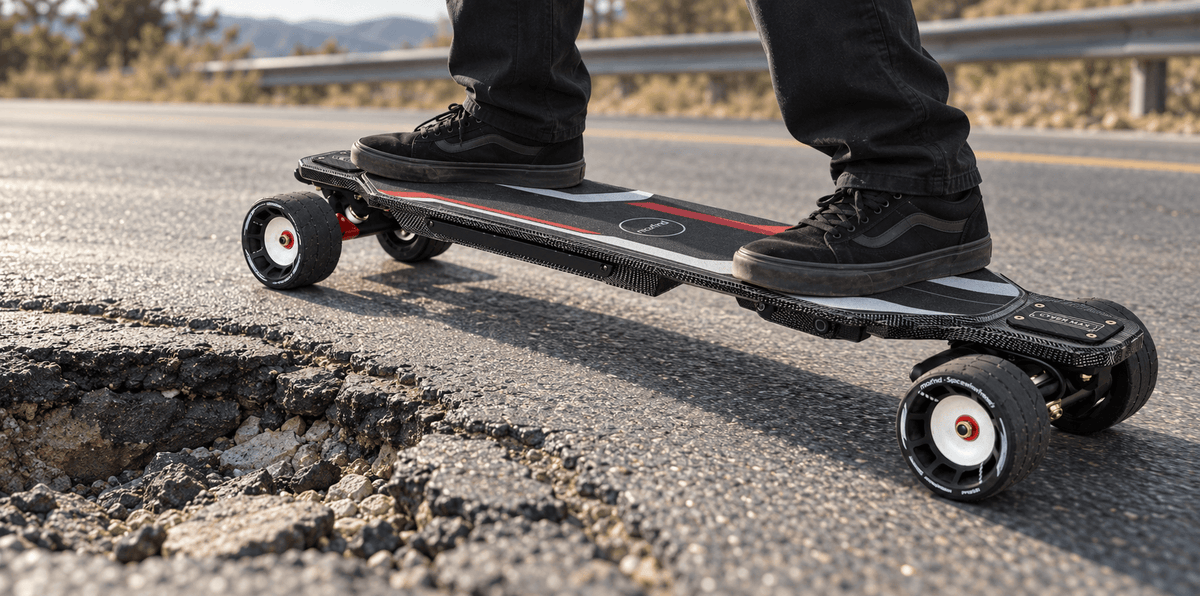
Standardräder aus Polyurethan eignen sich für gepflegte Asphalt- und Betonwege. Ziegelwege, erhöhte Fugen, Risse, loses Geröll und beschädigter Straßenbelag können mit kleineren Rädern jedoch weniger komfortabel sein. Größere Räder bieten in der Regel mehr Bodenfreiheit und absorbieren Vibrationen besser, erhöhen aber auch das Gewicht. Hügelige Strecken stellen höhere Anforderungen an Motorleistung, Akkuverbrauch und Bremsen.
Ein kompaktes Board lässt sich leichter in einem Fahrzeug, im Eingangsbereich einer Wohnung oder in einem zugelassenen Abstellbereich unterbringen. Ein Deck in voller Größe bietet Fahrern mehr Platz für die Füße, benötigt aber unter einem Schreibtisch oder neben einer Wand mehr Platz. Für ein Mini-Board gilt nicht automatisch eine Ausnahme von den Brandschutzbestimmungen des Campus, da die meisten Richtlinien für batteriebetriebene Geräte unabhängig von ihrer Größe gelten.
Das MAX2 PRO ist die praktischste Allround-Option für Studierende, die ein kompaktes Board für kürzere Strecken auf dem Campus benötigen. Käufer in den USA sollten die Konfiguration mit einem Motor bewerten und sich nicht auf die technischen Daten der nur in Kanada erhältlichen Versionen mit zwei Motoren und der X-Version verlassen.

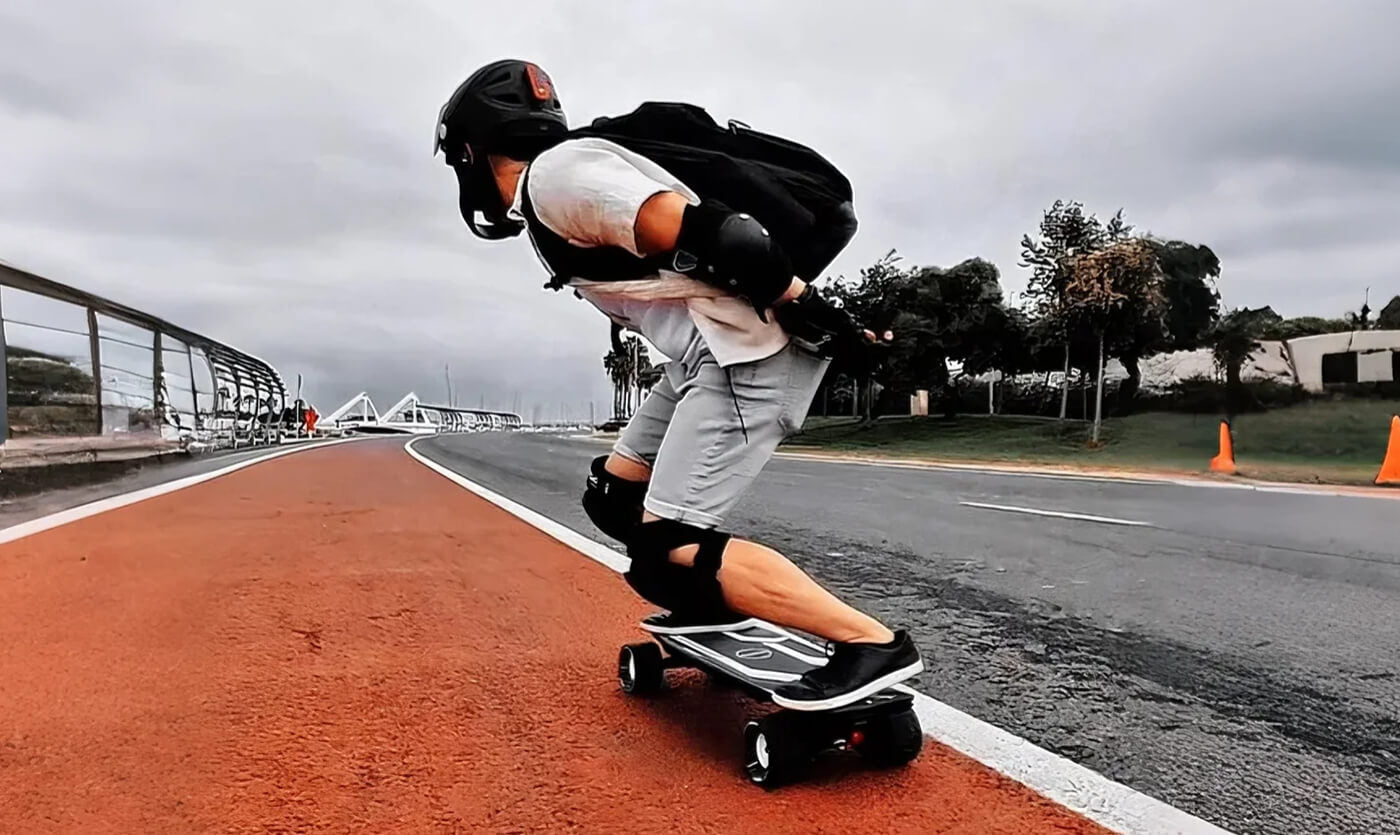
Die MAX2-PRO-Familie verfügt über ein 31 × 10,6 Zoll großes Deck, 90-mm-Räder, einen Hobbywing-V5.0-FOC-Controller, eine OLED-Fernbedienung mit vier Einstellmodi und eine angegebene Ladezeit von zwei Stunden. Für die in den USA angebotene Version mit einem Motor werden eine Reichweite von bis zu 15 Meilen und eine Höchstgeschwindigkeit von 20 mph angegeben. Maxfind gibt für die MAX2-PRO-Familie ein Gewicht von 14,5 Pfund an, macht jedoch keine separaten Gewichtsangaben für die einzelnen Konfigurationen. Dank des kurzen Decks und des vergleichsweise geringen angegebenen Gewichts lässt sich das Board zwischen Gebäuden leichter handhaben als ein großes elektrisches Longboard.
Das kürzere Deck bietet weniger Standfläche als das 38 Zoll lange MAX5S, und die 90-mm-Räder eignen sich besser für gepflegte Gehwege als für beschädigte Wege. Eine weitere wichtige Einschränkung ist die regionale Verfügbarkeit: Im aktuellen Produktauswahlmenü ist die Version mit einem Motor für die USA und Kanada aufgeführt, während die Versionen mit zwei Motoren und die X-Serie mit einer Reichweite von 21 Meilen nur für Kanada angegeben sind. Käufer sollten daher die genaue Konfiguration prüfen, bevor sie Reichweite, Geschwindigkeit oder Preis vergleichen.
Das MAX5S bietet mehr Platz auf der längeren und breiteren Fahrfläche, ist dafür aber weniger tragbar. Es eignet sich besser für Fahranfänger, denen ausreichend Platz zum Stehen und eine einstellbare Steuerung wichtiger sind als ein möglichst geringes Tragegewicht.

Das MAX5S verfügt über ein 38 × 11 Zoll großes Composite-Deck, zwei 650-W-Nabenmotoren, 90-mm-Räder, einen Hobbywing-V6.0-FOC-Controller und vier Fahrmodi. Maxfind gibt eine Reichweite von bis zu 15 Meilen und eine Höchstgeschwindigkeit von 24 mph bei einer angegebenen Ladezeit von zwei Stunden an. Das konkave U-förmige Deck und die 7 mm tiefe Fußmulde bieten mehr Platz für einen stabilen Stand. Über die App lassen sich außerdem Geschwindigkeit, Drehmoment und Bremsverhalten anpassen, sodass Anfänger zunächst sanftere Einstellungen wählen und die Reaktionsfähigkeit später erhöhen können.
Mit 20,5 Pfund und einer Länge von 38 Zoll lässt sich das MAX5S deutlich weniger bequem tragen als das MAX2 PRO oder das standardmäßige CYBER MINI. Außerdem benötigt es in einem Fahrzeug, einer Wohnung, einem Wohnheim oder einem zugelassenen Campus-Parkbereich mehr Stauraum. Studierende, die mehrere Treppen steigen, überfüllte öffentliche Verkehrsmittel nutzen oder das Board durch weitläufige Gebäude tragen müssen, sollten diesen Nachteil gegen die größere und stabilere Fahrfläche abwägen.
Die CYBER MINI- Reihe bietet mehr Konfigurationsmöglichkeiten als die anderen Empfehlungen. Sie reicht von einer leichten AIR-Version bis hin zu reichweitenstarken Riemenantriebsvarianten mit größeren Rädern.

Der Standard-CYBER-MINI ist etwa 32,9 Zoll lang, wiegt 16 Pfund, hat zwei 650-W-Nabenmotoren und 90-mm-Räder und ist für bis zu 15 Meilen Reichweite und 28 mph Höchstgeschwindigkeit ausgelegt. Die kompakten Abmessungen machen ihn handlicher als ein Longboard in voller Größe. Seine Höchstleistung übersteigt jedoch die Anforderungen der meisten Strecken auf dem Campus, daher sollten Studierende in Bereichen mit vielen Fußgängern niedrigere Fahrmodi verwenden.
Der Name CYBER MINI umfasst vier deutlich unterschiedliche Konfigurationen: Das AIR wiegt 12,4 Pfund und hat eine angegebene Reichweite von bis zu 9 Meilen, das Standardmodell wiegt 16 Pfund und ist für 15 Meilen ausgelegt, das PRO wiegt 18,7 Pfund und ist für 31 Meilen ausgelegt und das X wiegt 20,3 Pfund und ist für 34 Meilen ausgelegt. PRO und X verwenden außerdem 107-mm-Space-Wheels und haben eine angegebene Ladezeit von drei Stunden, während AIR und Standardversion 90-mm-Räder verwenden und in etwa zwei Stunden aufladen. Studierende sollten daher die genaue Modellvariante vergleichen, statt die Werte der X-Version auf die gesamte Produktreihe zu übertragen.
Die folgende Tabelle vergleicht konkrete Konfigurationen, die für Studierende in den USA relevant sind, statt jeweils die höchsten Werte der einzelnen Produktfamilien zusammenzufassen.
|
Merkmal |
MAX2 PRO Single Motor |
MAX5S |
Standard-CYBER-MINI |
|
Am besten für den Campus geeignet |
Kompaktes Verkehrsmittel für den Alltag |
Stabilität für Anfänger |
Kompakte Leistung |
|
Decklänge |
31 in |
38 in |
32,87 in |
|
Angegebenes Gewicht |
14,5 lb für die MAX2 PRO-Familie |
20,5 lb |
16 lb |
|
Angegebene Reichweite |
Bis zu 15 Meilen |
Bis zu 15 Meilen |
Bis zu 15 Meilen |
|
Angegebene Höchstgeschwindigkeit |
Bis zu 20 mph |
Bis zu 24 mph |
Bis zu 28 mph |
|
Räder |
90-mm-PU |
90-mm-PU |
90-mm-PU |
|
Angegebene Ladezeit |
Etwa 2 Stunden |
Etwa 2 Stunden |
Etwa 2 Stunden |
|
Wichtigster Kompromiss |
Weniger Standfläche |
Schwieriger zu tragen |
Höhere Leistung möglicherweise unnötig |
In der technischen Tabelle von Maxfinds MAX2 PRO ist ein Gewicht von 14,5 Pfund für die gesamte Produktfamilie angegeben, aber keine separaten Gewichtsangaben für die Konfigurationen Single Motor, Dual Motor und X. Reichweite und Leistung aller drei Boards können je nach Fahrergewicht, Geschwindigkeit, Temperatur, Steigungen, Beschleunigungshäufigkeit, Straßenbelag und Akkuzustand variieren.
Welches Modell am besten geeignet ist, hängt von der täglichen Strecke, der Qualität des Straßenbelags, den Höhenunterschieden, der regionalen Verfügbarkeit und davon ab, wie oft das Board getragen werden muss.
Bei kurzen Fahrten auf gepflegtem Straßenbelag sollten Sie auf ein handliches Gewicht und kontrolliertes Fahren bei niedriger Geschwindigkeit achten. Das in den USA angebotene MAX2 PRO mit einem Motor ist eine praktische Wahl, da es ein kompaktes 31-Zoll-Deck mit einer angegebenen Reichweite von bis zu 15 Meilen kombiniert. Studierende mit sehr kurzen Strecken könnten auch das 12,4 Pfund schwere CYBER MINI AIR in Betracht ziehen, sofern die Reichweite von 9 Meilen noch eine ausreichende Batteriereserve lässt.
Für Studierende in den USA, deren tägliche Strecke die komfortable Reichweite eines Boards mit 15 Meilen übersteigt, ist das CYBER MINI PRO die passendere Langstreckenoption. Seine Reichweite beträgt bis zu 31 Meilen, allerdings ist es mit 18,7 Pfund schwer und die angegebene Ladezeit von drei Stunden macht es weniger praktisch zum Tragen. Studierende in Kanada können auch das MAX2 PRO X mit 21 Meilen Reichweite in Betracht ziehen. Maxfind bietet diese Version derzeit jedoch nur in Kanada an und gibt kein separates Gewicht für die X-Version an.
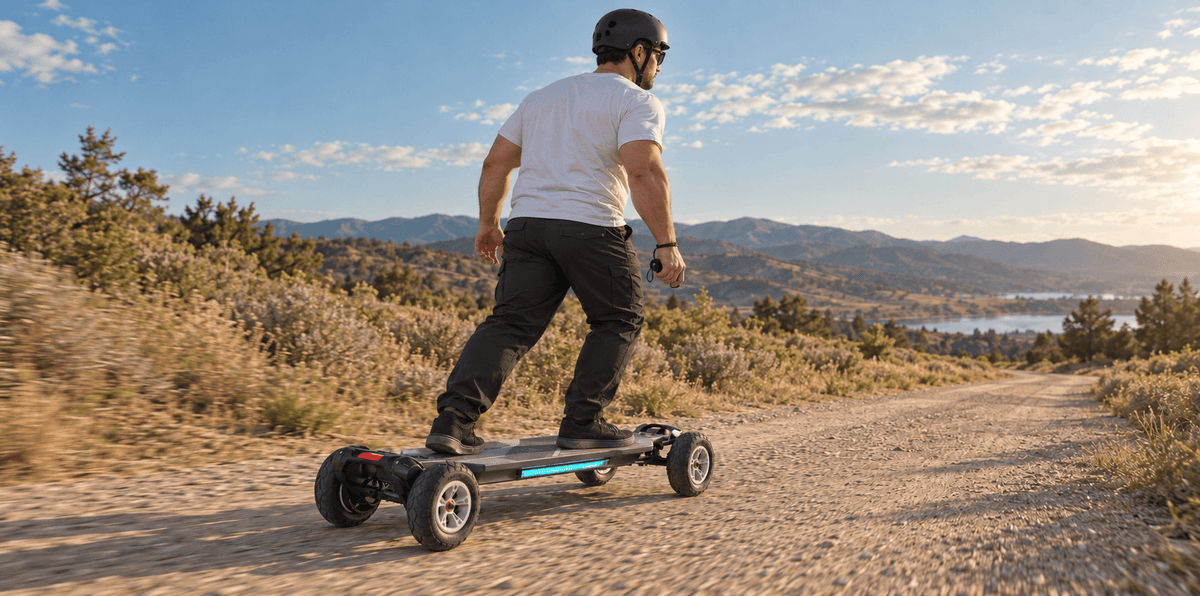
Das CYBER MINI PRO und das X eignen sich besser für anspruchsvolle Strecken, da sie über Riemenmotoren und 107-mm-Space-Wheels verfügen, die mehr Motorleistung und Bodenfreiheit bieten als die AIR- oder Standardversionen mit Nabenmotor. Diese Merkmale machen beschädigte Straßenbeläge jedoch nicht risikofrei. Tiefe Risse, Schotter, nasses Laub, Baustellen oder stark frequentierte Wege bergab können weiterhin erfordern, dass Fahrende langsamer werden oder absteigen.
Berechnen Sie die gesamte Strecke von zu Hause zum Campus, die Wege zwischen den Vorlesungen, Besorgungen und den Rückweg, statt nur die Strecke auf dem Universitätsgelände zu berücksichtigen. Ein Board mit 15 Meilen Reichweite kann für eine nahe gelegene Wohnung ausreichen, während ein längerer Arbeitsweg die Reichweite des CYBER MINI PRO von 31 Meilen rechtfertigen könnte. Sein zusätzliches Gewicht kann nach der Ankunft jedoch lästig sein, insbesondere wenn die Schule keine Aufbewahrung oder Ladung in Innenräumen erlaubt.
Das MAXFIND MAX2 PRO eignet sich am besten für Studierende, denen Transportfreundlichkeit wichtig ist. Das MAX5S bietet Anfängern mehr Stabilität, und das CYBER MINI ist für längere oder anspruchsvollere Strecken geeignet. Unabhängig davon, für welches Modell Sie sich entscheiden, sollten Sie sich vor dem Fahren, Aufbewahren oder Laden eines elektrischen Skateboards von MAXFIND über die Regeln auf Ihrem Campus informieren.
Mehr zum Thema:Sind elektrische Skateboards in Ihrer Region erlaubt? Leitfaden zu den gesetzlichen Bestimmungen
Teilen:
Elektrische Skateboards mit Luftreifen: AT-Räder für weniger Kniebelastung und müde Beine auf langen Fahrten auswählen
Sicherheit und Zuverlässigkeit beim Pendeln mit Maxfind: So beurteilen Sie, ob das Fahrzeug für den Regen gerüstet ist