


Promotion de rentrée scolaire ! 🏷️ Un excellent rapport qualité-prix !
--
Jours--
Heures--
Minutes--
SecondesChoisir entre un skateboard électrique et un vélo électrique pour les trajets urbains dépend de votre mode de vie. Les deux offrent des moyens écologiques de circuler en ville, mais ils diffèrent considérablement en matière de portabilité, de performances et d’expérience de conduite. Ce guide vous aidera à trouver le modèle idéal pour vos petits trajets quotidiens.
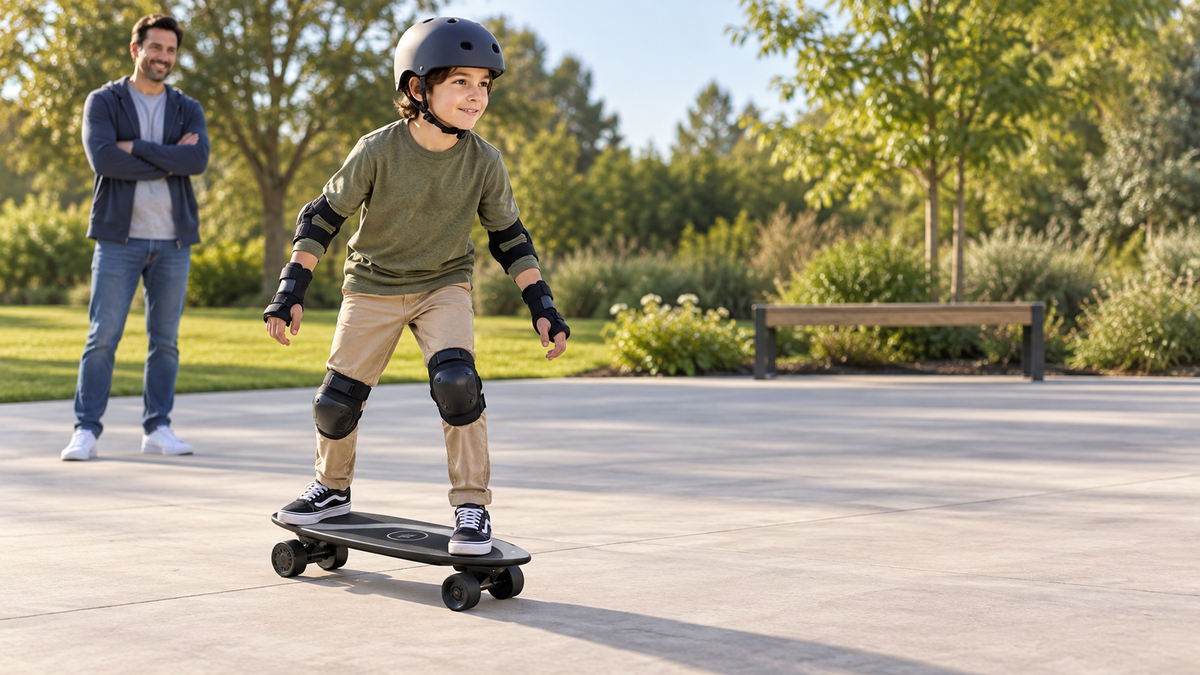
Un skateboard électrique moderne Un skateboard électrique utilise une batterie intégrée au plateau et des moteurs fixés aux roues. Le cycliste contrôle l’accélération et le freinage à l’aide d’une télécommande sans fil portative. Les variations de poids du corps déterminent la direction des virages, ce qui rend l’expérience de conduite très proche du surf ou du snowboard traditionnel sur le béton.

Un vélo électrique ressemble à un vélo traditionnel, mais il comprend un moteur et une batterie pour assister la propulsion. Les cyclistes peuvent pédaler avec une assistance électrique ou utiliser un accélérateur pour avancer sans effort physique. Cette configuration familière le rend très accessible à toute personne ayant déjà fait du vélo classique.

La principale différence de conception réside dans la position du cycliste et la structure du véhicule. Les planches exigent une position de profil et un contrôle actif de l’équilibre, en privilégiant l’agilité et le format compact. Les vélos offrent une position assise avec un guidon pour diriger, en privilégiant la stabilité, la capacité de transport et le confort sur les longues distances plutôt que la portabilité absolue.
|
Caractéristique |
Skateboard électrique |
Vélo électrique |
|
Poids moyen |
De 15 à 25 livres |
De 50 à 70 livres |
|
Espace de rangement |
Minimal |
Important |
|
Compatible avec les transports |
Excellent |
Mauvais à passable |
|
Méthode de transport |
Sous le bras ou dans un sac à dos |
En poussant ou en roulant |
Lorsque vous devez monter votre moyen de transport dans des escaliers, un skateboard électrique léger est incroyablement pratique. La plupart des planches pèsent entre quinze et vingt livres et se glissent facilement sous le bras. En revanche, les vélos électriques pèsent souvent plus de cinquante livres et nécessitent des emplacements de stationnement dédiés.

Intégrer vos trajets domicile-travail aux transports en commun est simple avec une planche. Elle se glisse sous les sièges des trains et se range parfaitement sous un bureau. Les vélos nécessitent généralement des compartiments spéciaux dans les trains et ne peuvent pas être introduits dans la plupart des immeubles de bureaux en raison de leur cadre encombrant et de leurs grandes roues.
Pour les environnements urbains denses où l’espace est limité, les véhicules plus petits sont avantagés. Ranger une planche dans un petit appartement ne nécessite aucun espace supplémentaire. Les vélos nécessitent souvent un garage ou des antivols extérieurs robustes, ce qui les rend légèrement plus encombrants à gérer au quotidien pour les habitants d’appartements.
Les deux options atteignent facilement vingt miles par heure, ce qui est largement suffisant pour la circulation urbaine. Les trajets avec arrêts et redémarrages fréquents sont faciles avec les deux, mais les planches accélèrent rapidement et permettent de manœuvrer facilement autour des piétons. Les vélos offrent généralement une autonomie bien plus longue, ce qui les rend plus adaptés aux trajets prolongés à travers la ville.
Les rues des villes sont rarement parfaites. Alors que les grandes roues d’un vélo franchissent facilement les nids-de-poule, les petites roues en uréthane peuvent être mises à rude épreuve. Opter pour un skateboard électrique tout-terrain résout ce problème en ajoutant des pneus à chambre à air et une meilleure absorption des chocs sur les surfaces accidentées. Cependant, les vélos restent le choix le plus sûr par temps humide.
La réussite de votre trajet dépend de l’itinéraire choisi. Un parcours principalement plat, avec des pistes cyclables lisses, est idéal pour les planches. Si votre trajet implique de transporter des courses, de franchir des pavés ou de rouler sous la pluie, l’encombrement plus important et la stabilité de la position assise d’un vélo offriront une expérience quotidienne plus fiable.
Les vélos sont équipés de freins à disque mécaniques et d’une géométrie stable, ce qui procure une puissance de freinage immédiate et de l’assurance dans la circulation dense. Les planches reposent sur un freinage électronique via le moteur. Bien qu’efficace, un freinage d’urgence sur une planche exige de retenir le poids de son corps, ce qui demande davantage d’habileté et d’anticipation de la part du conducteur.

La plupart des adultes peuvent conduire un vélo électrique en toute confiance en quelques minutes, car la mémoire musculaire est identique à celle acquise pendant l’enfance à vélo. Maîtriser une planche motorisée demande de la pratique. Développer la force des chevilles et l’équilibre nécessaires pour rouler en toute sécurité à vitesse élevée prend généralement quelques semaines d’entraînement assidu.
La légalité varie considérablement selon les régions. Les vélos électriques sont universellement reconnus et autorisés sur les pistes cyclables classiques. Le statut juridique des skateboards électriques est parfois plus ambigu. De nombreuses villes les traitent comme des vélos, tandis que d’autres les limitent aux trottoirs ou les interdisent complètement sur les routes principales.
Les planches d’entrée de gamme commencent à quelques centaines de dollars et offrent un excellent rapport qualité-prix pour les courts trajets. Les vélos électriques de qualité nécessitent généralement un investissement supérieur à mille dollars. Fait intéressant, le marché s’est élargi pour inclure des options hybrides comme les minivélo électriques, qui comblent l’écart de prix et de fonctionnalités.
Les planches comportent moins de pièces mobiles, ce qui signifie des coûts d’entretien moins élevés. Vous devrez peut-être remplacer occasionnellement les courroies ou les roues. Les vélos nécessitent un entretien courant, comme la lubrification de la chaîne, le remplacement des plaquettes de frein et la réparation des chambres à air. Les deux coûtent quelques centimes à recharger, ce qui rend leurs frais de fonctionnement quotidiens négligeables par rapport à ceux d’une voiture.
|
Facteur de coût |
Skateboard électrique |
Vélo électrique |
|
Prix d’entrée |
Plus faible |
Plus élevée |
|
Fréquence d’entretien |
Faible |
Modérée |
|
Pièces de rechange |
Courroies et roues |
Pneus, freins, chaînes |
|
Coût de la recharge quotidienne |
Négligeable |
Négligeable |
Vous devriez opter pour une planche si votre trajet fait moins de huit kilomètres, si vous utilisez les transports en commun pour une partie de votre parcours et si vous ne disposez pas d’un stationnement sécurisé à destination. C’est la solution idéale pour les utilisateurs qui privilégient la portabilité, l’agilité et un style de conduite actif et amusant.
Choisissez un vélo si votre trajet est long, si vous devez transporter de lourds sacs à dos ou des courses et si vous souhaitez une conduite détendue en position assise. Si un vélo classique est trop encombrant, un compact mini-vélo électrique peut offrir le compromis idéal entre le confort d’une position assise et la facilité de rangement.

Les deux options offrent une excellente alternative aux embouteillages urbains ou aux longues distances parcourues à pied. En fin de compte, la décision dépend de votre espace de rangement, des conditions habituelles de votre itinéraire et de votre niveau de confort personnel. Évaluez votre routine quotidienne, tenez compte du poids à transporter et choisissez le véhicule qui rend vos trajets urbains agréables.
Non. Les débutants doivent privilégier le contrôle, le ressenti du freinage, la stabilité, le confort et l’adéquation avec l’itinéraire avant la vitesse maximale. Un véhicule plus rapide n’est pas toujours préférable pour les courts trajets urbains, surtout dans les zones très fréquentées avec des piétons, des intersections et une chaussée irrégulière.
Vous pouvez pousser une planche motorisée comme un skateboard classique, bien qu’elle présente une légère résistance du moteur. Les vélos électriques peuvent être pédalés normalement, mais ils sont bien plus lourds que les vélos classiques.
Évaluez la distance, la qualité de la chaussée, les montées, la circulation, l’accès aux pistes cyclables, les possibilités de rangement et la nécessité de transporter le véhicule à l’intérieur. Un itinéraire court et lisse avec peu d’espace de rangement disponible favorise le skateboard électrique, tandis que les trajets plus longs ou plus accidentés favorisent le vélo électrique.
Il peut remplacer un vélo électrique pour les courts trajets urbains, les déplacements du dernier kilomètre, les trajets sur un campus ou les courses rapides. Toutefois, il ne remplacera pas complètement un vélo si vous avez besoin d’espace de chargement, d’une plus grande autonomie, d’une bonne fiabilité par temps humide ou d’une position de conduite plus détendue.
À lire également : Skateboard électrique ou trottinette électrique : votre guide complet

Partager:
Meilleur longboard électrique pour une conduite fluide : guide ultime du confort
Quel poids peut supporter un skateboard électrique ?