If your ride to work or campus includes cracked asphalt, brick crosswalks, patched utility cuts, and the occasional expansion joint, you already know the feeling: your front foot starts to go numb, your ankles work overtime to stay stable, and your knees feel more tired than the distance should justify. This article does not promote any product. It is a practical guide to reducing pavement vibration on an electric skateboard by focusing on the parts of the setup that actually shape comfort.
The big takeaway is simple. On rough roads, smoother riding depends more on wheel size, wheel material, deck construction, and stance than on raw top speed. A compact board can still be comfortable enough for short urban hops, a longer commuter board can make mixed pavement easier to live with, and an all-terrain setup can take the edge off routes that would otherwise feel punishing. In one current lineup, that spread looks like a portability-first mini at 12.3 pounds, a long-commute model with a claimed 37-mile range and 37 mph top speed, and a rougher-terrain option that can run either 175 mm all-terrain wheels or 107 mm wheels with up to 56 miles claimed range. [4] Vibration management is the thread that ties those choices together.
Why rough pavement causes foot fatigue, ankle strain, and knee discomfort
Road texture is not just an annoyance. It is a constant stream of small impacts moving from the ground into the wheels, through the deck, and into your body. Small hard wheels tend to pass more chatter upward. A stiffer deck tends to transmit more of that impact instead of softening it. A locked-out stance makes your joints absorb what your setup failed to filter.
Cracked pavement is usually the first comfort killer because it creates repeated, irregular hits rather than one clean bump. Patchy asphalt is different. It often feels busy and grainy, which means your feet are dealing with nonstop micro-vibration. Brick can be worse than it looks because the pattern creates a rhythmic buzz that travels straight into the soles of your shoes. Expansion joints are short, sharp events. They may not last long, but they can spike fatigue if you hit several in one ride.
Foot numbness usually starts when vibration is concentrated under the front foot. Riders often blame the deck first, but the more common cause is a combination of smaller wheels, hard contact points, and a stance that stays too rigid for too long. If the road surface is constantly sending fine chatter upward, your foot muscles tense to stabilize, and that tension can turn into numbness.
Ankle fatigue tends to show up when the board is reacting faster than the rider can comfortably correct. Uneven pavement asks your ankles to make hundreds of tiny balance adjustments. The rougher the route and the smaller the wheel, the more work those joints do.
Knee discomfort is often the last symptom to arrive, but it is the one commuters remember. Straight legs pass impact upward. Slightly bent knees act like suspension. That is why two riders on the same road can finish with very different levels of fatigue.
A generic image works well here: rough urban pavement, a campus path with patched sections, or a commuter route with brick and asphalt transitions. A product shot would miss the point.
Common comfort mistakes are usually predictable:
- Prioritizing speed over wheel diameter
- Choosing portability without thinking about the actual route
- Underestimating how much deck flex changes ride feel
The three comfort variables that matter most
When riders talk about a comfortable electric skateboard for commuting, they often jump straight to range or power. For rough pavement, three variables matter more.
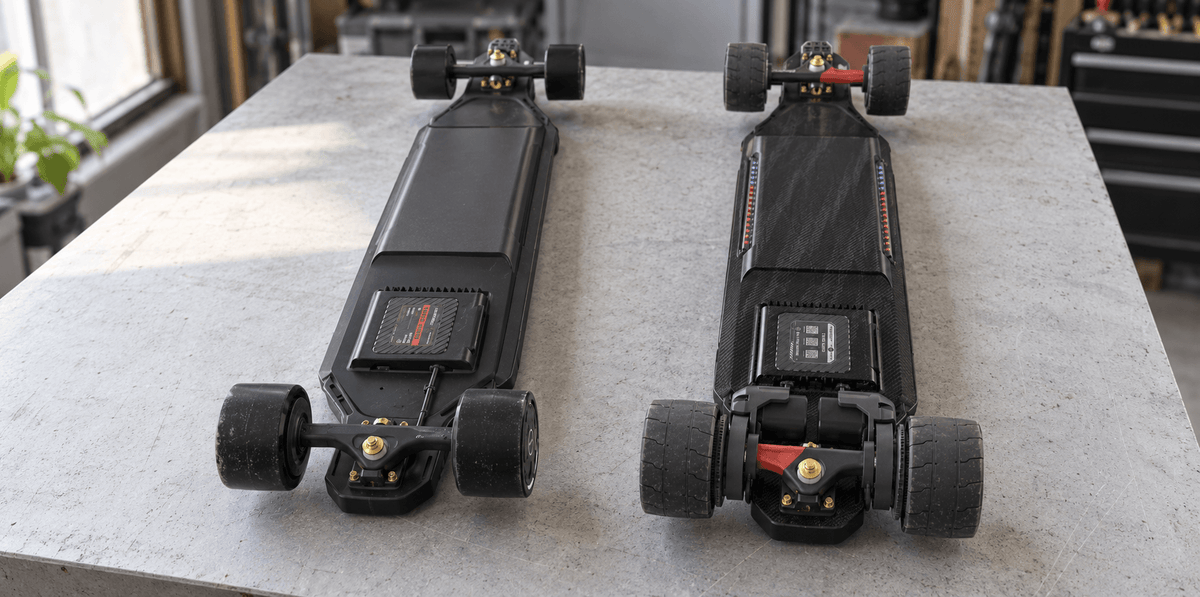
First is deck flex. A flex-composite deck is designed to take the sting out of pavement vibration before it reaches your feet. That is the logic behind X-Composite and similar flex-composite constructions. Electric Skateboard HQ described the Cyber Ultra’s PPS composite plus fiberglass deck as soft and semi-flexible, and noted that its 7 mm concave is more comfortable than a totally flat deck. On that board, the deck is 43 inches long and 13 inches wide, which also helps create a more planted stance on rougher surfaces.
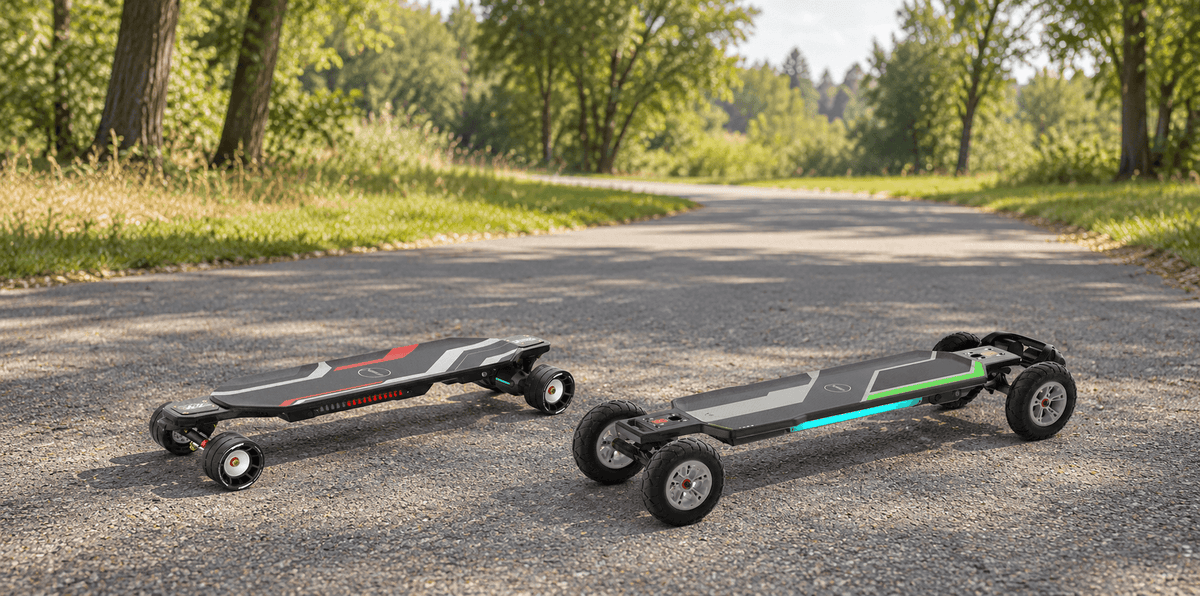
Second is wheel size. Larger wheels roll over cracks and edges with less drama. A 90 mm street wheel can feel quick and compact, but it will usually communicate more road texture than a 105 mm or 120 mm wheel. A 107 mm wheel gives another step up in rollover comfort, and 175 mm all-terrain wheels change the ride most dramatically when the route includes broken pavement or mixed surfaces. Bigger wheels are not magic, but they reduce how sharply the board reacts to small obstacles.
Third is wheel material. A 78A PU wheel is a useful reference point because softer urethane generally helps absorb vibration better than a harder-feeling street setup. Material also shapes grip and ride character. Some larger street-oriented wheels aim to keep rolling efficiency while softening chatter, while all-terrain wheels lean harder into impact reduction and obstacle tolerance.
Here is the tradeoff in plain terms:
| Setup Type |
Typical Wheel Size |
Comfort on Cracked Asphalt |
Portability |
Stability |
Best Use Case |
| Standard street setup |
90 mm PU |
Fair |
High |
Good |
Smooth bike lanes, short city hops |
| Larger street wheels |
105 mm to 120 mm |
Good |
Medium |
Good to very good |
Mixed urban commuting |
| All-terrain setup |
175 mm |
Very good |
Low |
Very good |
Rough pavement, broken streets, mixed terrain |
That table is not about winners. It is about matching the board to the road you actually ride.
How to match the right board type to your commute
Start with the route, not the spec sheet. The right board for a fourth-floor walk-up and a short campus ride is not the same board that feels right on a 12-mile mixed-surface commute. [3]
For portability-first commuting, a lighter mini board makes sense when carrying matters almost as much as riding. If you need to bring the board into an office, store it under a desk, carry it up apartment stairs, or move through campus buildings, weight changes the whole ownership experience. In one example lineup, the only place I would name a brand, Maxfind’s CYBER MINI is listed at 12.3 pounds with a claimed 34-mile range. [5] That combination tells you what this category is for: riders who need carryability without dropping into toy-like territory. The tradeoff is obvious. Shorter boards and more compact setups usually ask more from the rider when pavement gets ugly.
Long-distance urban commuting is a different problem. Here, deck length, stance confidence, and enough range to avoid charge anxiety matter more than ultra-light carry. A commuter-oriented longboard at $399 with a claimed 37-mile range and 35 percent hill climbing is the kind of setup that makes sense for riders crossing neighborhoods, bike paths, and patched city streets in one trip. You are not buying comfort from speed. You are buying it from a more stable platform and a setup that can accept the realities of mixed pavement.
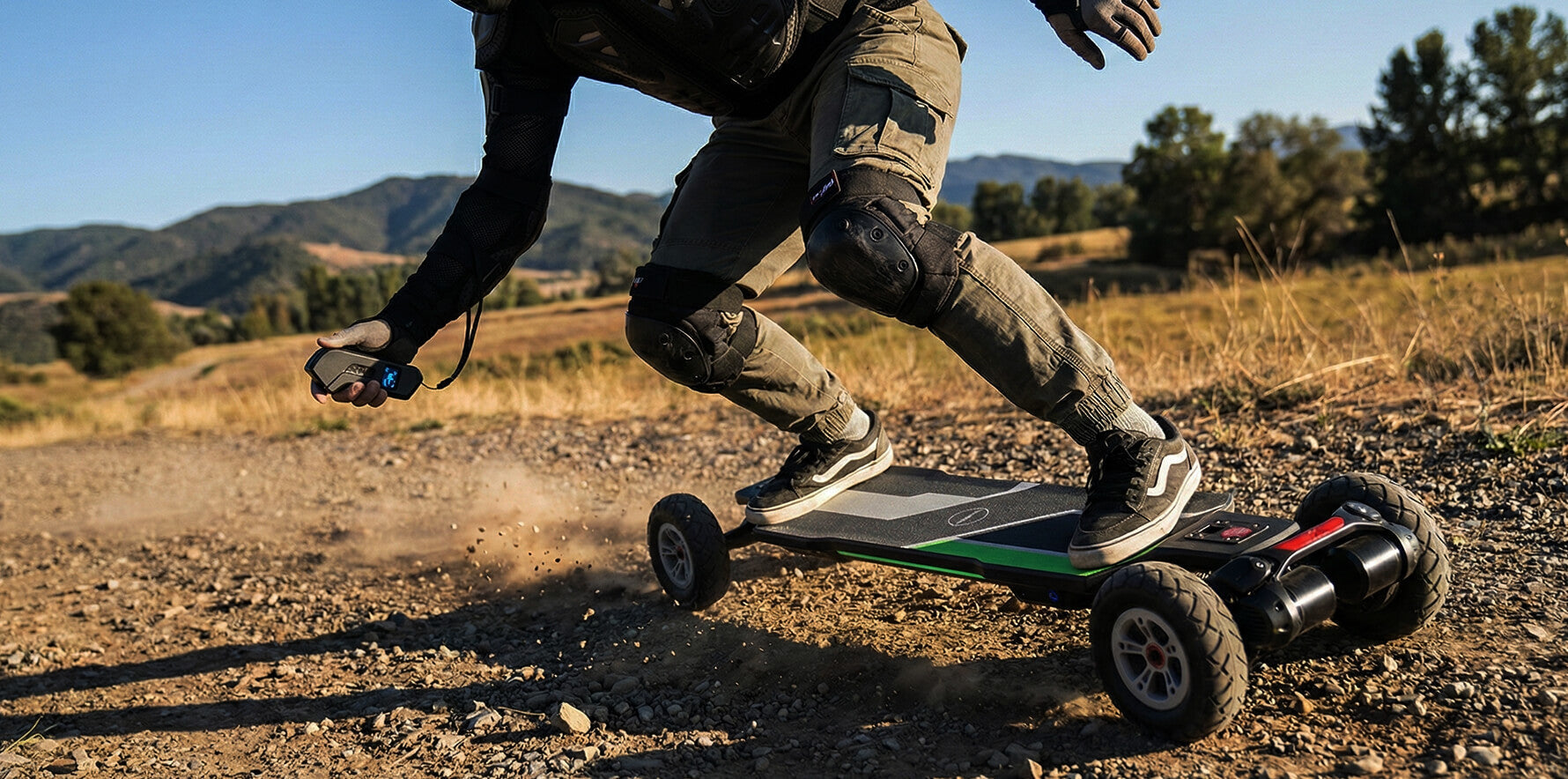
Rougher pavement or mixed-terrain routes call for a board type that is built around wheel choice. If your route includes broken asphalt, rough shoulders, brick, and occasional dirt connectors, larger wheels are often the smartest comfort upgrade available. A terrain-oriented model at $999 with a claimed 37-mile range on 175 mm all-terrain wheels or 56 miles on 107 mm wheels shows the core tradeoff clearly: more terrain tolerance on the bigger setup, more rolling efficiency on the smoother one. [2]
A useful image here would be a commuter checklist laid out by route type: shoes, charger, helmet, and a simple note card reading smooth route, mixed route, rough route.
What reviews and rider feedback reveal about ride feel

Third-party reviews are most helpful when they describe how a board feels, not just how fast it goes. Electric Skateboard HQ reviewed the Cyber Ultra as a $999 all-terrain board and tested the belt motor version with 175 mm all-terrain wheels. The review listed a 43-inch length, 13-inch width, 7 mm concave, PPS composite plus fiberglass deck, IPX5 water resistance, and a 648 Wh battery with LG 21700 cells. [2] It also said the battery enclosure is built into the deck to help achieve that IPX5 water resistance, and noted that the board uses a rubber-style grip tape and a Hobbywing ESC for smooth acceleration and predictable braking. [2]
That same review is especially useful for comfort-minded riders because it separates marketing range from route reality. On the 175 mm all-terrain setup, Electric Skateboard HQ said real-world range was closer to 45 km, or about 30 miles, rather than the marketed 37 miles. [4][5] The reviewer, Ziyad Khairi, called it “the jack of all trades in the best possible way.” That is a strong description of a board whose comfort comes from balance rather than one flashy trait.
Concrete Surfers adds a different angle. In its review of an earlier Maxfind electric skateboard, Chris gave it a 5.8 overall score and wrote, “Nice, smooth ride overall” and “Rides great on uneven surfaces.” The same review described a quality maple wood deck and listed the board at 12 pounds, which matters because portability and ride feel often pull in opposite directions.
User sentiment also points in the same direction. On Walmart, the Cyber Max X holds a 4.7 out of 5 rating from 113 ratings and 113 reviews. [4] Walmart’s review summary says riders praised high power performance, sturdy construction, smooth ride quality, and good flex. One reviewer wrote, “Love the ride feel, and the fact I feel zero road vibration is stunning.” Another called it “smooth as butter” and a great commuter board. The Cyber Mini holds a 4.9 out of 5 rating from 96 ratings and 96 reviews, and one rider said the long, wide deck made it feel “super stable and insanely comfortable.” None of that proves universal superiority. It does show that comfort-oriented setup choices are showing up in real rider feedback.
Practical setup changes that improve comfort on bad roads
You do not always need a new board to make a rough route feel better. Small setup and technique changes can make a noticeable difference on the next ride.
- Choose larger wheels if your route is consistently rough. Moving from a standard 90 mm street setup to 105 mm, 107 mm, or 120 mm class wheels usually improves rollover and reduces chatter.
- Wear supportive shoes with firmer soles. Thin casual shoes let more vibration reach your feet.
- Keep your knees slightly bent. Your legs should absorb road buzz before your joints do.
- Slow down on brick and patched asphalt. Those surfaces punish rigid riding more than they punish moderate speed.
- [2] Match wheel setup to commute length. A smoother, more efficient setup may make sense for longer paved rides, while a bigger wheel setup may be worth it for rougher routes even if it costs some range.
The comfort-versus-range tradeoff is real. Electric Skateboard HQ’s Cyber Ultra test is a good example. [3] The board is marketed at 37 miles on 175 mm all-terrain wheels, but the review said real-world range on that setup was closer to 30 miles. Bigger wheels can make a route feel easier on your body while asking more from the battery.
If you are deciding what to prioritize, use this quick checklist:
- Need to carry the board often: prioritize portability
- Ride cracked or patched streets daily: prioritize vibration reduction
- Mix pavement with rough shoulders or varied surfaces: prioritize terrain capability
FAQ: Choosing a more comfortable electric skateboard for rough pavement
Do larger wheels really reduce vibration on cracked roads?
Yes, usually. Larger wheels roll over cracks and edges with less abrupt impact than smaller wheels. A move from 90 mm street wheels to 105 mm, 107 mm, or 120 mm class wheels often improves comfort on mixed urban pavement, while 175 mm all-terrain wheels help even more on broken surfaces.
Is a mini electric skateboard always harsher on rough pavement?
Not always, but compact boards usually ask for more compromise. They are easier to carry and store, yet shorter platforms and smaller default setups can feel busier on bad roads. If your route is rough every day, wheel choice and stance matter even more on a mini board.
What matters more for comfort: deck flex or wheel size?
Wheel size usually changes rough-road comfort more dramatically, especially on cracked asphalt and brick. Deck flex still matters because it shapes how much vibration reaches your feet over time. The best result usually comes from combining a forgiving deck with wheels large enough for your route.
Is claimed range realistic for stop-and-go commuting?
Claimed range is a starting point, not a guarantee of your exact commute result. Surface quality, rider weight, speed, hills, and wheel setup all change real-world distance. One third-party review found about 30 miles on a 175 mm all-terrain setup where the marketed figure was 37 miles, which is a useful reminder to leave margin.
Can all-terrain wheels help with knee and ankle fatigue?
They often can, especially when the route includes broken pavement, rough shoulders, or repeated surface transitions. The main benefit is not just grip. It is the way larger wheels soften impacts and reduce the number of sharp corrections your ankles and knees have to make.
The comfort-first way to choose
A smoother ride on bad roads comes from matching the board to the pavement, not from chasing the highest speed number. Deck design, wheel size, wheel material, and your stance do most of the work when the route is rough.
If your daily ride includes stairs and tight storage, a compact option makes sense. If your route is longer and mostly urban, a commuter board with a stable platform is usually the better fit. If the pavement is consistently broken or mixed with rougher surfaces, a terrain-oriented setup earns its keep quickly. Choose for the road you actually ride, and your feet, ankles, and knees will notice.
References
- Maxfind Official Website
- Maxfind Cyber Ultra Review: The Polished All-Terrain Board for $999 - Electric Skateboard HQ
- Maxfind Electric Skateboard Review: A Great Option for Novices
- Customer reviews for Maxfind Cyber Max X 38" Electric Skateboard, 37 Miles Range, 37 Mph Top Speed, 2400W Dual Motors, Remote & App Control | Walmart.com
- Customer reviews for Maxfind Cyber Mini Electric Skateboard with Remote, 32.8", Dual Hub Motors, 24 mph, 15 Miles, App Control | Walmart.com




Partager:
Comment améliorer l’efficacité des déplacements urbains avec un skateboard électrique
Electric Skateboard for Adult Riders: Choosing the Right Board for Daily Life