

Promotion de rentrée scolaire ! 🏷️ Un excellent rapport qualité-prix !
--
Jours--
Heures--
Minutes--
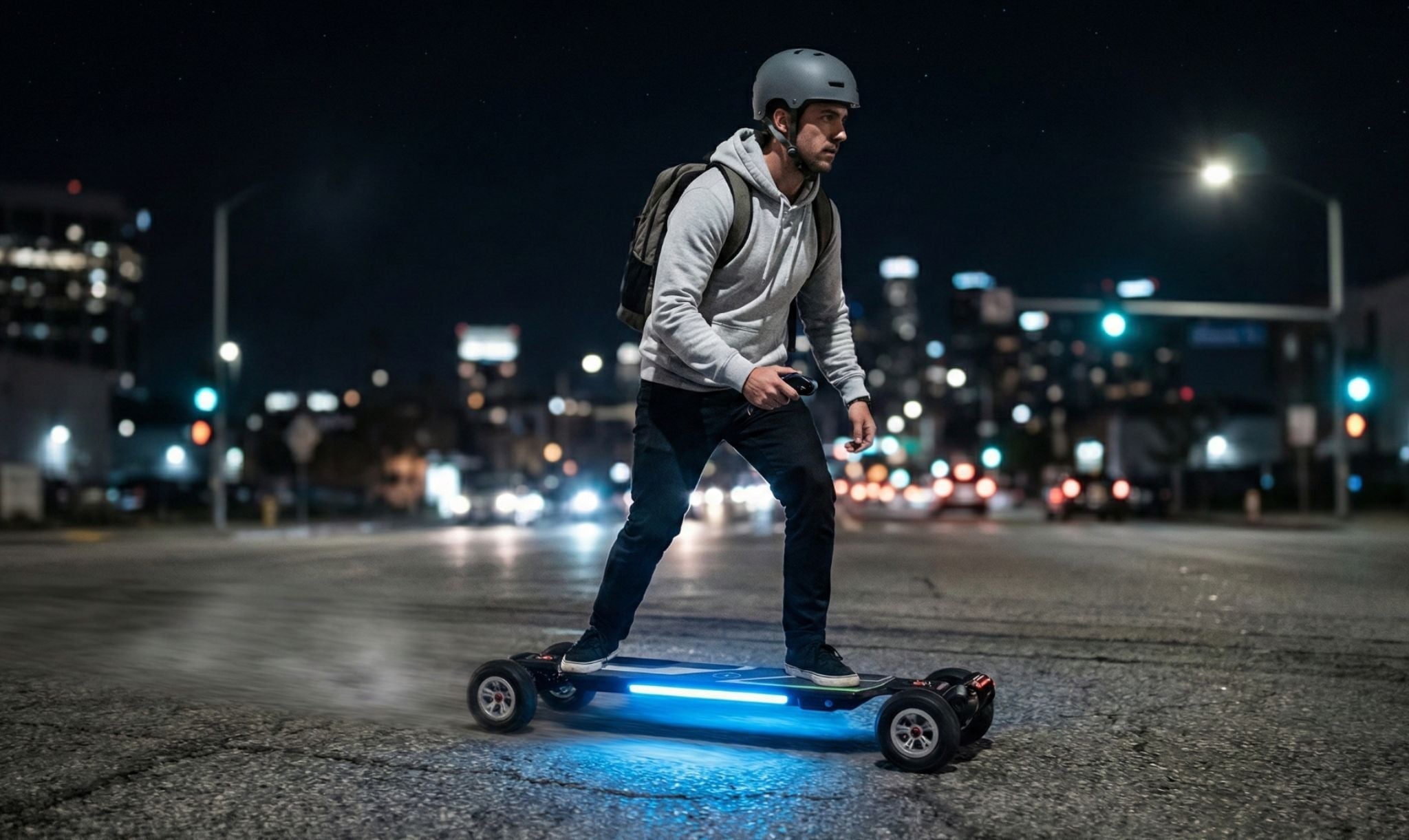
SecondesFaire du skateboard électrique après la tombée de la nuit peut rendre les trajets du soir et les déplacements tardifs plus pratiques, mais la faible luminosité laisse moins de temps pour réagir à la circulation, aux changements de revêtement et aux dangers imprévus. Ce guide explique comment préparer votre planche, adapter votre conduite et choisir des itinéraires plus sûrs la nuit.
Une meilleure visibilité poursuit deux objectifs : vous devez voir la route devant vous, et les autres usagers doivent vous voir. Un feu avant peut aider à repérer les nids-de-poule et les débris, mais la visibilité arrière et latérale est également importante près des voitures, des intersections et des sorties de garage.

Effectuez une inspection rapide dans un endroit bien éclairé avant de partir. Cela ne devrait prendre que quelques minutes, mais peut révéler des problèmes de batterie, de freinage ou d’éclairage plus difficiles à gérer une fois sur la route.
Vérifiez les roues, les trucks, les fixations et les composants visibles.
Testez la connexion de la télécommande, l’accélération et la réponse au freinage.
Assurez-vous que la planche, la télécommande et les feux disposent d’une batterie suffisante.
Portez l’équipement de sécurité essentiel pour skateboard électrique, notamment un casque, des chaussures fermées et des protections adaptées.
Attachez les vêtements amples, les lacets et les sangles de sac.
Vérifiez que chaque feu fonctionne et qu’il n’est pas masqué par votre corps ou vos vêtements.
Ne commencez pas votre trajet si les freins, la télécommande, les feux ou la planche réagissent différemment de la normale.
Une installation adaptée à la nuit doit vous aider à voir devant vous tout en vous rendant visible de l’arrière et sur les côtés. Chaque feu a une fonction différente ; un petit feu fixé à la planche peut donc ne pas suffire dans toutes les situations.
Orientez le feu avant vers la chaussée afin qu’il révèle les nids-de-poule, les pierres, les bordures et les autres dangers avant que vous ne les atteigniez. Le faisceau doit couvrir la zone proche de la planche ainsi qu’une portion suffisante de la route devant vous pour permettre un freinage en douceur. Les éclairages décoratifs du deck peuvent rendre la planche plus facile à repérer, mais ils ne doivent pas remplacer un feu orienté vers l’avant qui éclaire clairement votre itinéraire.
Utilisez un feu arrière qui reste visible lorsque vous êtes dans votre position normale de conduite, et vérifiez que votre veste, vos jambes ou votre sac à dos ne le masquent pas. Des éléments réfléchissants sur votre casque, vos vêtements, vos chaussures ou les côtés de la planche peuvent améliorer votre visibilité aux intersections, tandis qu’un feu placé plus haut sur un casque ou un sac à dos peut aider les conducteurs à remarquer le pratiquant plutôt qu’un simple feu bas près du sol.
Assurez-vous que les feux et les supports n’interfèrent pas avec les roues, les trucks, les moteurs ou la position de vos pieds. Effectuez un court essai à faible vitesse, puis vérifiez si les vibrations ont desserré le support ou modifié l’angle du faisceau. Examinez l’installation de face, de l’arrière et des deux côtés pour confirmer que chaque feu est visible.
Certaines planches disposent déjà de fonctionnalités favorisant la visibilité nocturne. Le Maxfind CYBER ULTRA, par exemple, utilise un éclairage d’ambiance pour rendre le contour de la planche plus visible et un feu arrière intelligent pour améliorer la visibilité arrière lors du freinage. Ces fonctionnalités peuvent aider les autres usagers à repérer la planche, mais les pratiquants ont toujours besoin d’un feu avant séparé pour voir clairement la route devant eux.

Les feux améliorent la visibilité, mais ils ne recréent pas les conditions de la journée. Vous devez toujours réduire votre vitesse, laisser davantage d’espace et éviter les mouvements brusques.
Roulez suffisamment lentement pour identifier un danger et réduire votre vitesse avant de l’atteindre. Ralentissez davantage sur les routes non éclairées, les descentes, les virages serrés, les chaussées dégradées et les voies partagées avec les piétons. Ne testez pas une nouvelle vitesse maximale, un nouveau mode de conduite ou une configuration de planche inconnue la nuit, car la visibilité limitée vous laisse moins de marge pour corriger une erreur.
Commencez à freiner plus tôt et appliquez le freinage progressivement au lieu d’attendre qu’un obstacle soit proche. Gardez une trajectoire régulière près des voitures, des piétons et des autres pratiquants, et évitez les changements de direction brusques qui pourraient être difficiles à comprendre pour les autres. Laissez davantage d’espace derrière les autres pratiquants, car ils peuvent vous masquer les dégradations de la chaussée.
L’itinéraire le plus court n’est pas toujours le meilleur pour faire du skateboard la nuit. Une route légèrement plus longue, mieux éclairée, avec un revêtement plus régulier et une circulation plus lente, peut être plus facile à gérer qu’un raccourci sombre.
Privilégiez les itinéraires familiers lorsque c’est possible, surtout si vous manquez encore d’assurance. Évitez les zones de travaux, les fortes descentes, les routes mal entretenues et les endroits où la circulation rapide passe près de votre trajectoire.
Ralentissez avant les intersections et les sorties de garage, même lorsque vous avez la priorité. Faites attention aux roues qui tournent, aux feux de freinage, aux portières qui s’ouvrent et aux véhicules qui quittent des places de stationnement. Laissez suffisamment d’espace entre vous et les voitures stationnées pour éviter la zone d’ouverture des portières, et ne partez jamais du principe qu’un conducteur a vu vos feux ou correctement évalué votre vitesse.
Les phares des véhicules arrivant en sens inverse, les panneaux lumineux et la chaussée mouillée peuvent rendre les détails de la route plus difficiles à distinguer. Évitez de regarder directement les sources lumineuses intenses et réduisez votre vitesse le temps que vos yeux s’adaptent. Gardez vos propres feux allumés même sous les lampadaires, car les arbres, les bâtiments, les voitures stationnées et les espaces entre les lampes peuvent créer des portions soudainement sombres.
Arrêtez-vous si votre feu principal tombe en panne, si un support se desserre ou si vous ne voyez pas assez loin devant vous pour ralentir en toute sécurité. Vous devez également vous arrêter lorsque la pluie, le brouillard, la chaussée mouillée, une batterie faible, des problèmes d’équipement ou une circulation dense rendent la planche difficile à contrôler. Un feu de secours peut aider à résoudre un petit problème matériel, mais ne doit pas servir de raison pour continuer dans des conditions dangereuses.

La conduite de nuit devient plus facile à gérer lorsque vos feux, votre équipement de sécurité, votre vitesse et votre itinéraire fonctionnent ensemble. Une bonne visibilité aide, mais un jugement prudent est tout aussi important : restez attentif, conduisez dans les limites de vos capacités et soyez prêt à vous arrêter lorsque les conditions changent.
Les règles varient selon les endroits. Consultez la réglementation locale applicable aux skateboards électriques et aux engins de micromobilité avant de circuler la nuit sur les routes publiques, les trottoirs ou les pistes cyclables.
Oui, à condition que les feux soient solidement fixés et qu’ils n’interfèrent pas avec les roues, les trucks, les moteurs ou votre position de conduite.
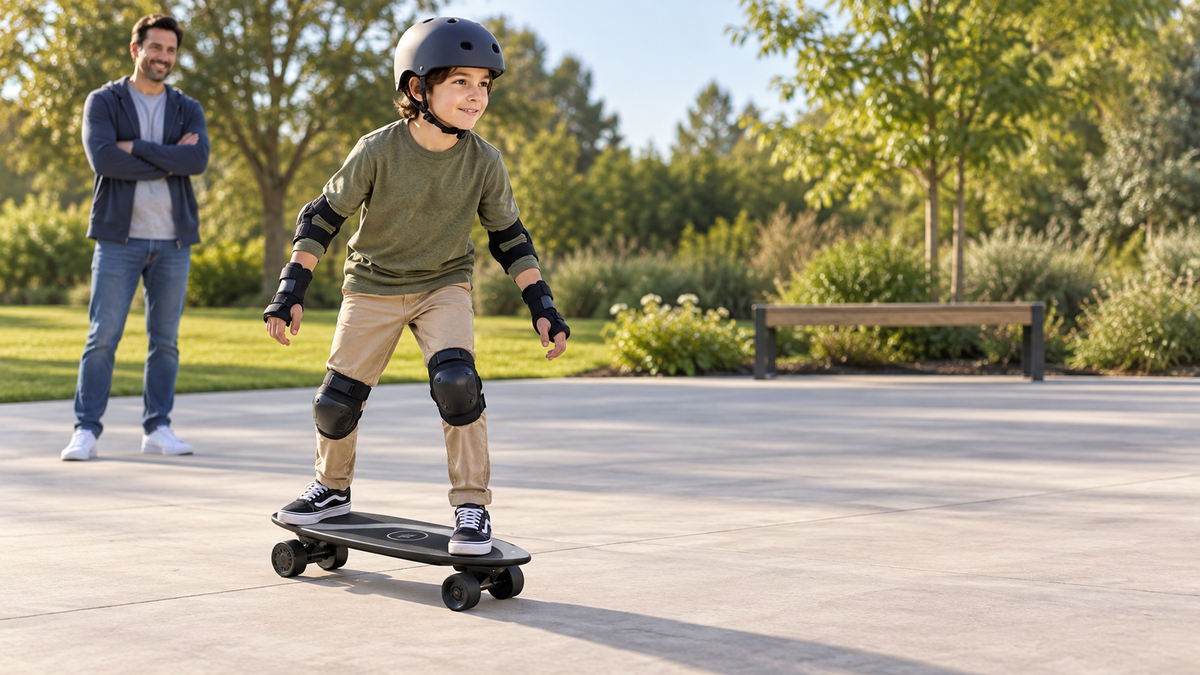
Les débutants doivent d’abord apprendre à démarrer, tourner, freiner et descendre de la planche en toute sécurité à la lumière du jour. Passez à un itinéraire familier et bien éclairé uniquement lorsque ces compétences sont bien maîtrisées.
Pour aller plus loin : Skateboard électrique en ville : ce que tout pratiquant urbain doit savoir

Partager:
Comment conduire une trottinette électrique en toute sécurité pour les débutants
Devriez-vous acheter un kit de conversion de skateboard électrique avec batterie ?